EN RO


#Exhibit of the Month

>>>

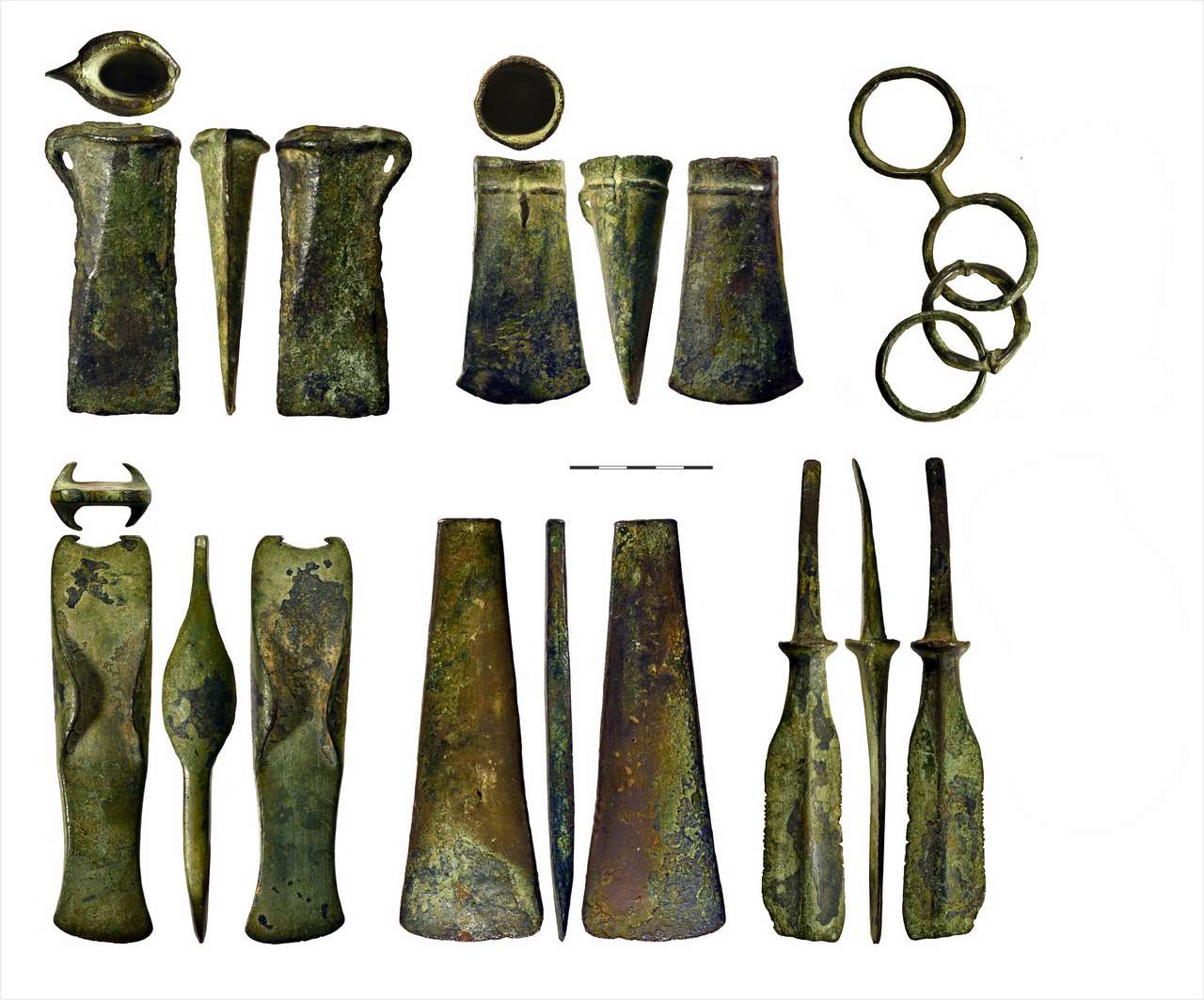
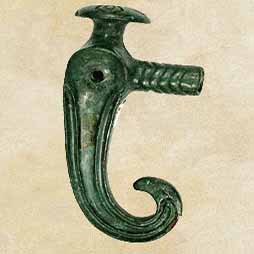
The bronze hoard was discovered on the territory of Mîndrești village, Telenești district, in 1968. It was identified accidentally by a group of students from the village school, and the materials later came to the attention of specialists at the Institute of History of the Academy of Sciences. According to documentary records, the hoard was composed of ten pieces: four socketed axes (celts), a dagger fragment, a sword fragment, a sickle, a winged axe, an adze-axe, and a chain consisting of four links.
Currently, of the mentioned assemblage, six objects are preserved in the collections of the National Museum of History of Moldova: two socketed axes (celts), the winged axe, the adze-axe, the dagger fragment, and the chain made of four links.- Socketed axe (celt) with one loop. Dimensions: Length - 10.2 cm; Weight - 186 g.
- Socketed axe (celt) with one frontal loop. Dimensions: Length - 8.4 cm; Width: 33-46 mm; Weight - 124 g.
- Winged axe. Dimensions: Length - 14.0 cm; Width - 2.5-3.4 cm; Weight - 285 g.
- Adze-axe. Dimensions: Length - 14.8 cm; Width - 2.3-5.0 cm; Weight - 286 g.
- Dagger fragment. Dimensions: Length - 16.5 cm; Blade length - 9.8 cm; Blade width - 2.8 cm; Weight - 81 g.
- Chain formed of four links. Dimensions: Length - 17.1 cm; Link diameter - 3.8; Weight - 32 g.The bronze hoard of Mîndrești is important due to the association of objects that find analogies in the regional repertoire with pieces that show clear analogies in Central Europe and the Carpathian Basin. The assemblage reflects a zone of contact and interaction where metallic forms of different origins and traditions circulated and were integrated into the repertoire of local communities.
Chronologically, the bronze hoard of Mîndrești is attributed to the Early Hallstatt period - HaA1, being dated to 1200-1100 BC.

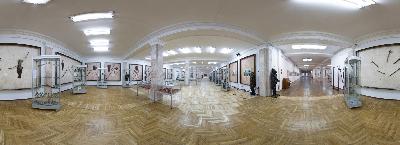
Virtual Tour


Events Archive

National flashmob "A light and a loaf of bread" dedicated to the memory of the victims of the famine of 1946-1947 in the Moldavian SSR

April 18, 2026

On April 18, 2026, a national flashmob with the title "A light and a loaf of bread" took place in the courtyard of the National Museum of History of Moldova, a commemorative action dedicated to the victims of the famine of 1946-1947 in the Moldavian SSR. The event was organized by the Association of Former Deportees and Political Prisoners of Moldova in cooperation with the National Museum of History of Moldova, the Metropolitanate of Bessarabia and the Exarchate of the Plains, the Diocese of Southern Bessarabia, the Diocese of Balti, the City Hall of Cahul, the Mieroszewski Center (Poland) and the Hanns Seidel Foundation (Republic of Moldova).

During the event, the general public was informed about the criminal policies of the Soviet state towards the population of the Moldavian SSR in 1946-1947, and in memory of the victims of the famine of 1946-1947, 250 loaves of bread were offered - a symbol of life and hope, as an act of remembrance and recognition of the suffering of those who died with the thought of a piece of bread.

"The famine caused by the Soviet regime in Bessarabia struck at the most sacred values and fundamental rights, trying to break the will of a society and dismantle its traditional structures. Today we set out to speak to the widest possible audience about the history of this tragedy", said the head of the Museum of Victims of Deportations and Political Repressions section within the NMHM, Dr. Ludmila Cojocaru.

"80 years after the tragedy, we have a duty to clearly state the truth: the organized famine of 1946-1947 was not only the consequence of a dry year, but also the result of criminal political decisions of the Soviet totalitarian regime. Commemorating these victims is an act of respect for their memory and, at the same time, a moral duty towards the younger generations, who must know the truth about our past," said Minister Cristian Jardan, present at the event.

"We decided to organize an information campaign about the atrocities that occurred 80 years ago and to hand out a symbol - the bread bun, which represents an alms for those who perished in the famine," said the president of the Association of Former Deportees and Political Prisoners of the Republic of Moldova, Alexandru Postica.

The commemorative action "A Light and a Loaf of Bread" was held simultaneously in the municipalities of Bălți and Cahul, paying tribute to the victims of the famine of 1946-1947 in the Moldavian SSR at the national level.


Independent Moldova
Moldavian Soviet Socialist Republic
Bessarabia and MASSR between the Two World Wars
Bessarabia and Moldavian Autonomous Soviet Socialist Republic in the Period between the Two World Wars
Revival of National Movement
Time of Reforms and their Consequences
Abolition of Autonomy. Bessarabia – a New Tsarist Colony
Period of Relative Autonomy of Bessarabia within the Russian Empire
Phanariot Regime
Golden Age of the Romanian Culture
Struggle for Maintaining of Independence of Moldova
Formation of Independent Medieval State of Moldova
Era of the
Great Nomad Migrations
Early Middle Ages
Iron Age and Antiquity
Bronze Age
Aeneolithic Age
Neolithic Age
Palaeolithic Age


Come to Museum! Discover the History!
  
Visit museum
Visit museum
Summer schedule: daily
10am – 6pm.

Winter schedule: daily
10am – 5pm.
Closed on Mondays.
Entrance fees:  adults - 50 MDL, Pensioners, students - 20 lei, pupils - 10 MDL. Free access: enlisted men (...)

WiFi Free Wi-Fi Zone in the museum: In the courtyard of the National History Museum of Moldova there is Wi-Fi Internet access for visitors.


#Exhibit of the Month

The bronze hoard was discovered on the territory of Mîndrești village, Telenești district, in 1968. It was identified accidentally by a group of students from the village school, and the materials later came to the attention of specialists at the Institute of History of the Academy of Sciences...

Read More >>


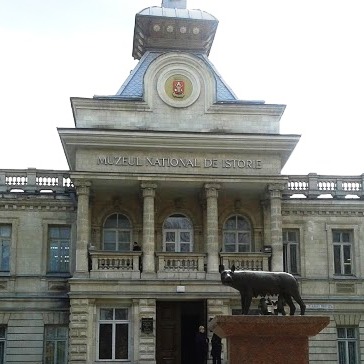
The National Museum of History of Moldova takes place among the most significant museum institutions of the Republic of Moldova, in terms of both its collection and scientific reputation.
©2006-2026 National Museum of History of Moldova
Visit museum 31 August 1989 St., 121 A, MD 2012, Chisinau, Republic of Moldova
Phones:
Secretariat: +373 (22) 24-43-25
Department of Public Relations and Museum Education: +373 (22) 24-04-26
Fax: +373 (22) 24-43-69
E-mail: office@nationalmuseum.md
Technical Support: info@nationalmuseum.md
Web site administration and maintenance: Andrei EMILCIUC


The National Museum of History of Moldova takes place among the most significant museum institutions of the Republic of Moldova, in terms of both its collection and scientific reputation.
©2006-2026 National Museum of History of Moldova
Visit museum 31 August 1989 St., 121 A, MD 2012, Chisinau, Republic of Moldova
Phones:
Secretariat: +373 (22) 24-43-25
Department of Public Relations and Museum Education: +373 (22) 24-04-26
Fax: +373 (22) 24-43-69
E-mail: office@nationalmuseum.md
Technical Support: info@nationalmuseum.md
Web site administration and maintenance: Andrei EMILCIUC

menu
The National Museum of History of Moldova takes place among the most significant museum institutions of the Republic of Moldova, in terms of both its collection and scientific reputation.
©2006-2026 National Museum of History of Moldova
Visit museum 31 August 1989 St., 121 A, MD 2012, Chisinau, Republic of Moldova
Phones:
Secretariat: +373 (22) 24-43-25
Department of Public Relations and Museum Education: +373 (22) 24-04-26
Fax: +373 (22) 24-43-69
E-mail: office@nationalmuseum.md
Technical Support: info@nationalmuseum.md
Web site administration and maintenance: Andrei EMILCIUC