Events Archive
Opening of the Photo Documentary Exhibition “Diplomacy Across Generations. 35 Years of Dialogue, Trust, and Cooperation”
August 25, 2026
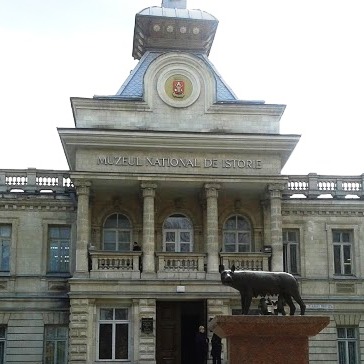
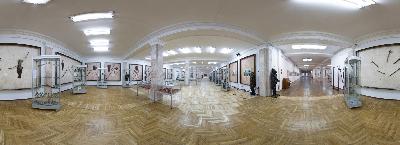
The Ministry of Foreign Affairs inaugurated, at the National Museum of History of Moldova, the photo documentary exhibition "Diplomacy Across Generations. 35 Years of Dialogue, Trust, and Cooperation", organized on the occasion of the 35th anniversary of the proclamation of the independence of the Republic of Moldova.
The event brought together foreign ministers, ambassadors, representatives of the diplomatic corps accredited in Chișinău, and diplomats from different generations. The ceremony was opened by Deputy Prime Minister and Minister of Foreign Affairs, Mihai Popșoi.
In his address, the head of Moldovan diplomacy highlighted the essential role of the diplomatic service in consolidating statehood, achieving international recognition, and promoting the interests of the country and its citizens:
"The success of our diplomacy is the result of the work and dedication of several generations of diplomats. These 35 years of diplomacy represent remarkable achievements, especially given the difficulties we faced from the very first days and moments of our country's independence. I thank those who, day by day and stone by stone, contributed to building the diplomatic service, so that today we can shape the peaceful and prosperous future of the Republic of Moldova. We will continue to be present wherever our citizens and our country's interests are found," stated Minister Mihai Popșoi.
Speeches were also delivered by Nicolae Țâu, the first Minister of Foreign Affairs of the Republic of Moldova (1990-1994), Mihai Popov, Minister of Foreign Affairs (1994-1997), and Natalia Gherman, Minister of Foreign Affairs (2013-2016), who addressed the audience through a video message. On behalf of the diplomatic corps accredited in Chișinău, the Ambassador of Poland to the Republic of Moldova, Tomasz Kobzdej, also spoke.
Recalling the early years of the diplomatic service, Nicolae Țâu spoke of the historic responsibility of opening Moldova's first doors to the world:
"Thirty five years ago we set out under very difficult conditions, practically building from the ground up the diplomacy of an independent state. Thirty five years is not much compared to the history of other states, which have centuries behind them. Yet the intensity of these years, which passed so quickly, speaks of a serious and active diplomacy of the Republic of Moldova."
For his part, Minister Mihai Popov emphasized the importance of institutional continuity and preserving diplomatic memory:
"For us, at that time, the main task was to create the diplomatic service and open our missions abroad. Today, diplomacy has a much more complex mission. These are different times and different challenges. The most important thing, however, is to seize together the historic opportunity to bring the Republic of Moldova into the European Union and to protect the interests of our citizens living and working abroad."
Through her video message, former Minister of Foreign Affairs Natalia Gherman (2013-2016) recalled two defining achievements of her mandate: visa liberalization and the signing of the Association Agreement with the European Union:
"Diplomacy finds its true value when its results reach people and change their lives. What we have today is the result of the work of generations of diplomats, public servants, and partners of the Republic of Moldova. And our history has shown us that what seems impossible today can, through perseverance, become tomorrow's reality," underlined Natalia Gherman.
Ambassador Tomasz Kobzdej conveyed congratulations to the diplomatic corps accredited in Chișinău and reaffirmed the support of external partners for the Republic of Moldova:
"You have built strong partnerships and alliances, attracted concrete international support, and strengthened relations with other states. You have also contributed to advancing European integration. If today the Republic of Moldova can proudly count itself among the countries at the forefront of the new wave of EU enlargement, this is largely thanks to the diplomatic service."
The exhibition invites the public, until September 25 of this year, on a journey through three and a half decades of Moldovan diplomacy. The 35 thematic panels bring together photographs, archival documents, and testimonies reflecting the moments, decisions, and relationships that have shaped the country's foreign policy - from the first steps toward international recognition and the raising of the State Flag at the United Nations headquarters to the European path of the Republic of Moldova.
The exhibition "Diplomacy Across Generations. 35 Years of Dialogue, Trust, and Cooperation" stands both as a tribute to the diplomatic legacy of the Republic of Moldova and as a reaffirmation of the values guiding its foreign action: dialogue, trust, responsibility, and cooperation.
|
















 31 August 1989 St., 121 A, MD 2012, Chisinau, Republic of Moldova