The grapevine plant, now widespread across the globe, traces its origins back to the Upper Cretaceous geological period, when species of Vitis Linn appeared on Earth (Mesozoic era), followed later by Vitis vinifera L., the latter already classified among cultivated agricultural plants. Most researchers link the origin of the cultivated grapevine (Vitis vinifera L.) to the wild forest species Vitis sylvestris Gmel. Thickets of Vitis sylvestris Gmel. can still sporadically be found in the groves along the Prut and Dniester floodplains.
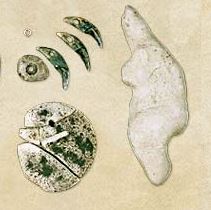
During the Precucuteni III - Trypillia A period (ca. 4750-4600 BC), the presence of cultivated grape seeds was clearly documented on pottery from the settlement of Ruseştii Noi I, layer I, kiln A, consisting of a seed impression on a ceramic fragment, with the elongated beak characteristic of the domesticated species Vitis vinifera L. Another seed impression of Vitis vinifera L. was recorded at the settlement of Vărvăreuca VIII, identified on the wall of a painted vessel from the Cucuteni B - Trypillia CI stage (3800-3500/3300 BC). In October, on the occasion of the National Wine Day, the National Museum of History of Moldova presents to your attention a unique relic in Southeastern Europe. The exhibit originates from the settlement Brînzeni VIII "Sâiece," belonging to the Cucuteni-Trypillia culture and dated to the Cucuteni AB2 - Trypillia B2 phase (ca. 4050-3800 BC), located in Brînzeni village, Edineț district. The site lies 2 km southwest of the locality, in a triangle formed by the confluence of the Racovăț and Drobiște streams and the local road L36 Bădragii Vechi-Brînzeni. Positioned on land 25-30 meters above the valley, it was discovered in 1966 by archaeologist Nicolaie Chetraru and investigated through excavations between 1978-1980 by Vsevolod Marchevici. The October exhibit is a grapevine leaf impression discovered in 1980. It comes from pit no. 5, partially investigated, with a maximum depth of 155 cm. From the same archaeological complex near dwelling no. 1, several grape seeds were also recovered, as noted in the excavation report. The grapevine leaf impression appears on a coarse clay lump, fired and vitrified due to secondary burning, reddish in color, with an irregular rectangular, flattened shape. The outer surface is uneven and rough. The impression surface is smoothed, with the leaf veins clearly highlighted. Measuring 99 mm in length, 110 mm in width, and 28-31 mm in thickness, the exhibit presents in full splendor an authentic grapevine leaf impression. Some researchers attribute it to the domesticated grapevine Vitis vinifera L., while others, more skeptical, consider it a wild species. Nevertheless, being discovered in a well-documented archaeological context, together with grape seeds near a dwelling, it provides evidence that grapevine was part of Cucuteni community life 6,000 years ago. These findings allow us to affirm that the process of domestication and the creation of table grapes was already underway. The diversity of Cucuteni ceramic forms, as well as the painting on some vessels, undoubtedly suggests their use as containers for various liquids. Accordingly, the emergence of wine among Cucuteni communities can be taken into consideration.
Манаджемент археологического насследия и кража древностей в Республике Молдова
Tyragetia, serie nouă, vol. IV [XIX], nr. 1, Arheologie. Istorie Antică
В данной статье автор анализирует вопрос об археологическом наследии и о нелегальной краже и продаже древностей в Республике Молдова. На основе нескольких примеров показывается солжность ситуации в области охраны археологичесго наследия, распространение феноменнов «чёрной археологии» и незаконная торговля древностей в Республике Молдова. Несмотря на то что национальное законодательство содержит административные и уголовные санкции направленные против тех которые совершают преступления, что ведут к повреждению и разрушению археологического наследия, до сих пор небыло никто небыл привлечён к ответсвенности. По неофициальным данным, в Республике Молдова, имеются более 1500 метал детекторов которые используются «чёрными архелолгами». Следы этих копателей можно заметить на самых известных памятников – Костешты, Яловенский район, Древний Орхей и.др. Незаконная торговля древностей в Республике Молдова реализуется в отрытую, доказательством может быть, так называемая «биржа» которая проводится в каждую суботу в здание ресторана «Garcorix», улица В. Александри 78 в городе Кищинэу, где можно найти помимо почтовых марок, современных монет и археологические предметы. В этой ситуации, правительство Республике Молдова должна, как можно быстрее разработать эфективную и долгосрочную программу по защите археологического наследия.
Sergiu Musteață
Marcin Woloszyn (Ed.), Byzantine coins in central Europe between 5th and 10th century. Proceedings from the conference organized by Polish Academy of Arts and Sciences and Institute of Archaeology University of Reszow under the patronage of Union Academique International. (Programme No. 57 Moravia Magna). Krakow, 23-26 IV 2007. Moravia Magna. Seria Polona III, Krakow, 2009, 684 pp., ISBN 978-83-7676-008-7
Tyragetia, serie nouă, vol. VI [XXI], nr. 1, Arheologie. Istorie Antică
Sergiu Musteață
Ethics and Professional Deontology in Archaeology
Tyragetia, serie nouă, vol. III [XVIII], nr. 1, Arheologie. Istorie Antică
Sergiu Musteață
A new law - a new perspective for the archaeological heritage preservation in the Republic of Moldova
Tyragetia, serie nouă, vol. V [XX], nr. 1, Arheologie. Istorie Antică
Sergiu Musteață
Stefan Ihrig, Wer sind die Moldawier? Rumänismus versus Moldowanismus in Historiographie und Schulbüchern der Republik Moldova, 1991-2006, Stuttgart: ibidem-Verlag, 2008, ISBN-10: 3-89821-466-4
Tyragetia, serie nouă, vol. III [XVIII], nr. 2, Istorie. Muzeologie
Sergiu Musteață
Florin Curta, (Ed.), The Other Europe in the Middle Ages. Avars, Bulgars, Khazars and Cumans, Florin Curta, General Editor, East Central and Eastern Europe in the Middle Ages, 450-1450, volume 2, Leiden/Boston: BRILL, 2008, ISSN 1872-8103, ISBN 978 90 04 16389 8
Tyragetia, serie nouă, vol. III [XVIII], nr. 1, Arheologie. Istorie Antică
The grapevine plant, now widespread across the globe, traces its origins back to the Upper Cretaceous geological period, when species of Vitis Linn appeared on Earth (Mesozoic era), followed later by Vitis vinifera L., the latter already classified among cultivated agricultural plants. Most researchers link the origin of the cultivated grapevine (Vitis vinifera L.) to the wild forest species Vitis sylvestris Gmel...
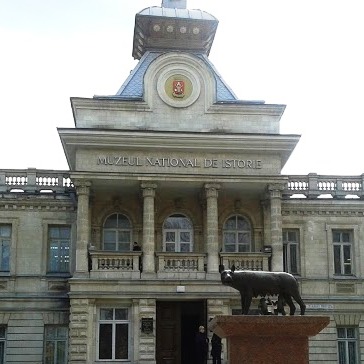
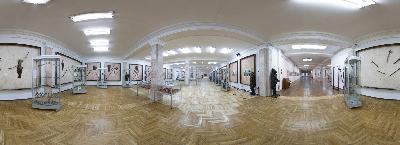
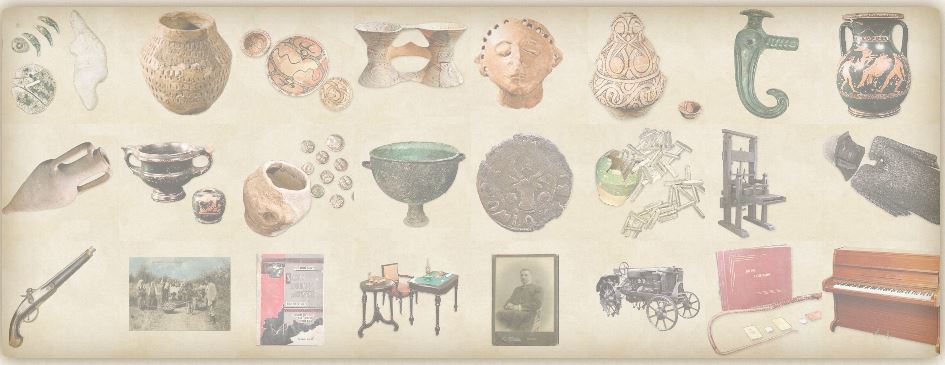
The National Museum of History of Moldova takes place among the most significant museum institutions of the Republic of Moldova, in terms of both its collection and scientific reputation.
The National Museum of History of Moldova takes place among the most significant museum institutions of the Republic of Moldova, in terms of both its collection and scientific reputation.
The National Museum of History of Moldova takes place among the most significant museum institutions of the Republic of Moldova, in terms of both its collection and scientific reputation.








































 31 August 1989 St., 121 A, MD 2012, Chisinau, Republic of Moldova