

EN RO


#Exhibit of the Month

>>>

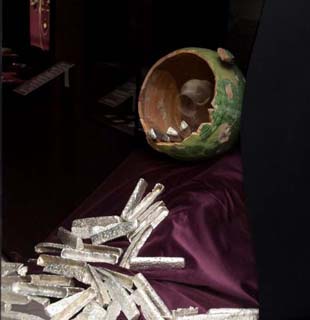
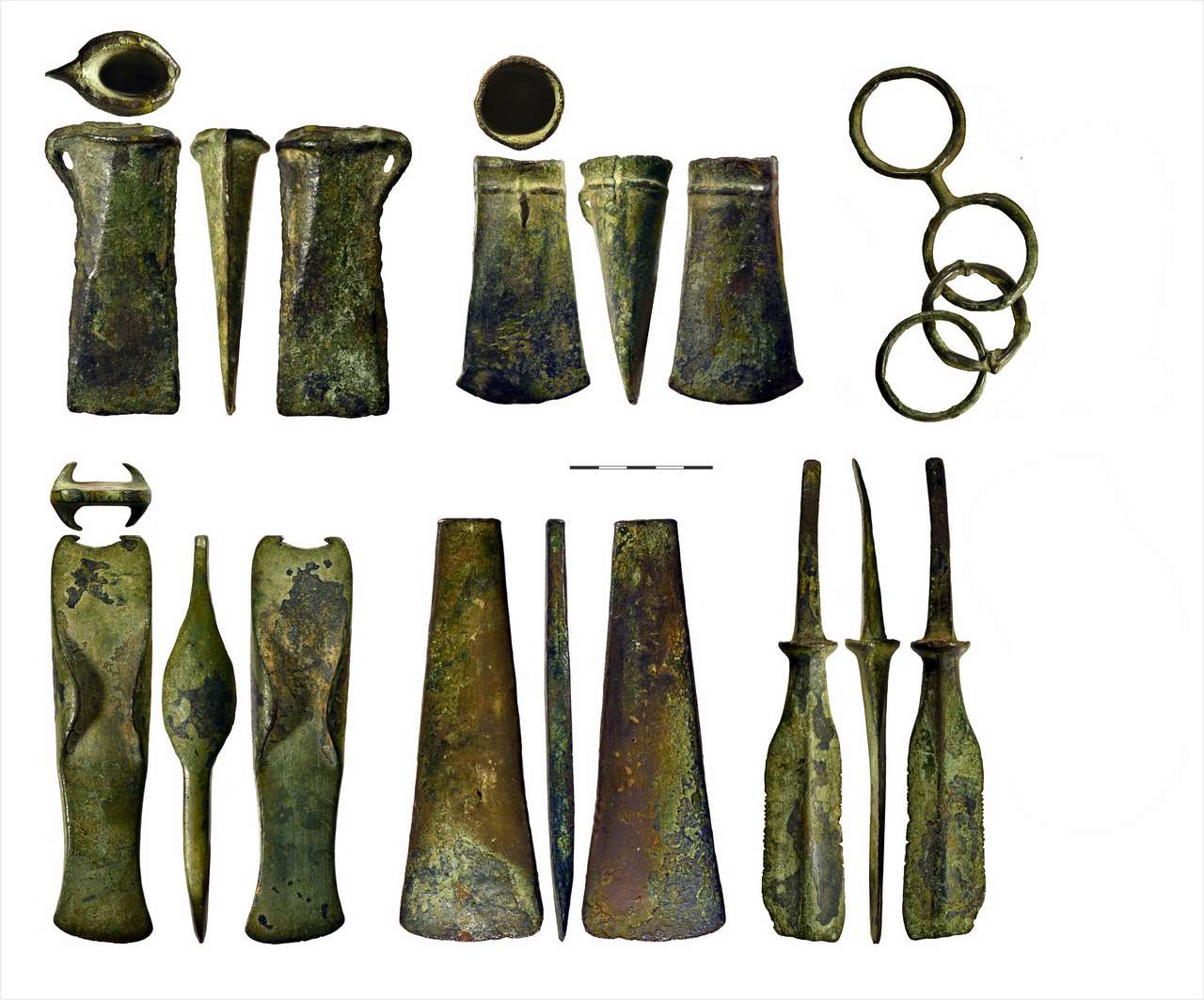
The bronze hoard was discovered on the territory of Mîndrești village, Telenești district, in 1968. It was identified accidentally by a group of students from the village school, and the materials later came to the attention of specialists at the Institute of History of the Academy of Sciences. According to documentary records, the hoard was composed of ten pieces: four socketed axes (celts), a dagger fragment, a sword fragment, a sickle, a winged axe, an adze-axe, and a chain consisting of four links.
Currently, of the mentioned assemblage, six objects are preserved in the collections of the National Museum of History of Moldova: two socketed axes (celts), the winged axe, the adze-axe, the dagger fragment, and the chain made of four links.- Socketed axe (celt) with one loop. Dimensions: Length - 10.2 cm; Weight - 186 g.
- Socketed axe (celt) with one frontal loop. Dimensions: Length - 8.4 cm; Width: 33-46 mm; Weight - 124 g.
- Winged axe. Dimensions: Length - 14.0 cm; Width - 2.5-3.4 cm; Weight - 285 g.
- Adze-axe. Dimensions: Length - 14.8 cm; Width - 2.3-5.0 cm; Weight - 286 g.
- Dagger fragment. Dimensions: Length - 16.5 cm; Blade length - 9.8 cm; Blade width - 2.8 cm; Weight - 81 g.
- Chain formed of four links. Dimensions: Length - 17.1 cm; Link diameter - 3.8; Weight - 32 g.The bronze hoard of Mîndrești is important due to the association of objects that find analogies in the regional repertoire with pieces that show clear analogies in Central Europe and the Carpathian Basin. The assemblage reflects a zone of contact and interaction where metallic forms of different origins and traditions circulated and were integrated into the repertoire of local communities.
Chronologically, the bronze hoard of Mîndrești is attributed to the Early Hallstatt period - HaA1, being dated to 1200-1100 BC.

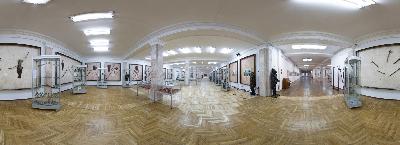
Virtual Tour


Exhibitions

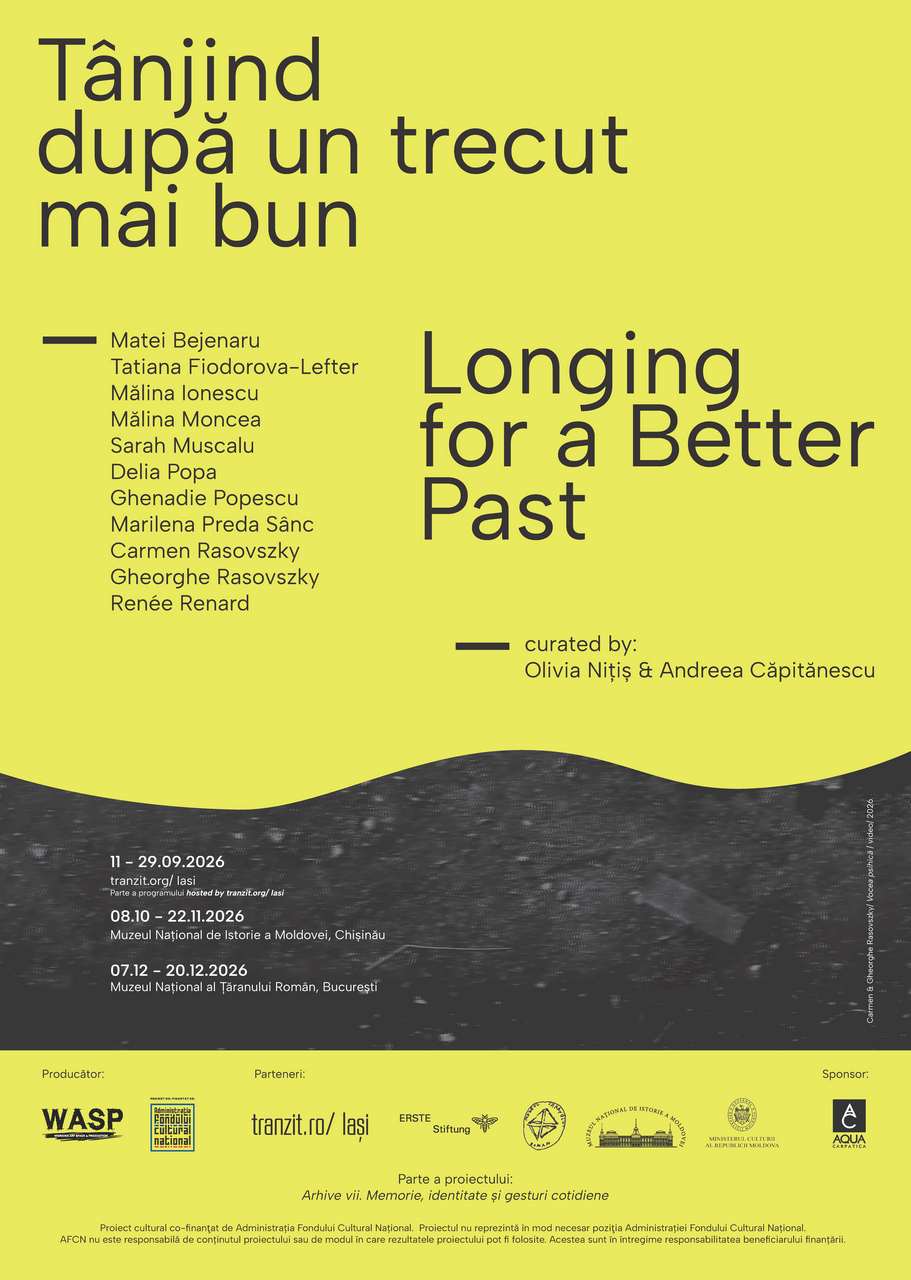
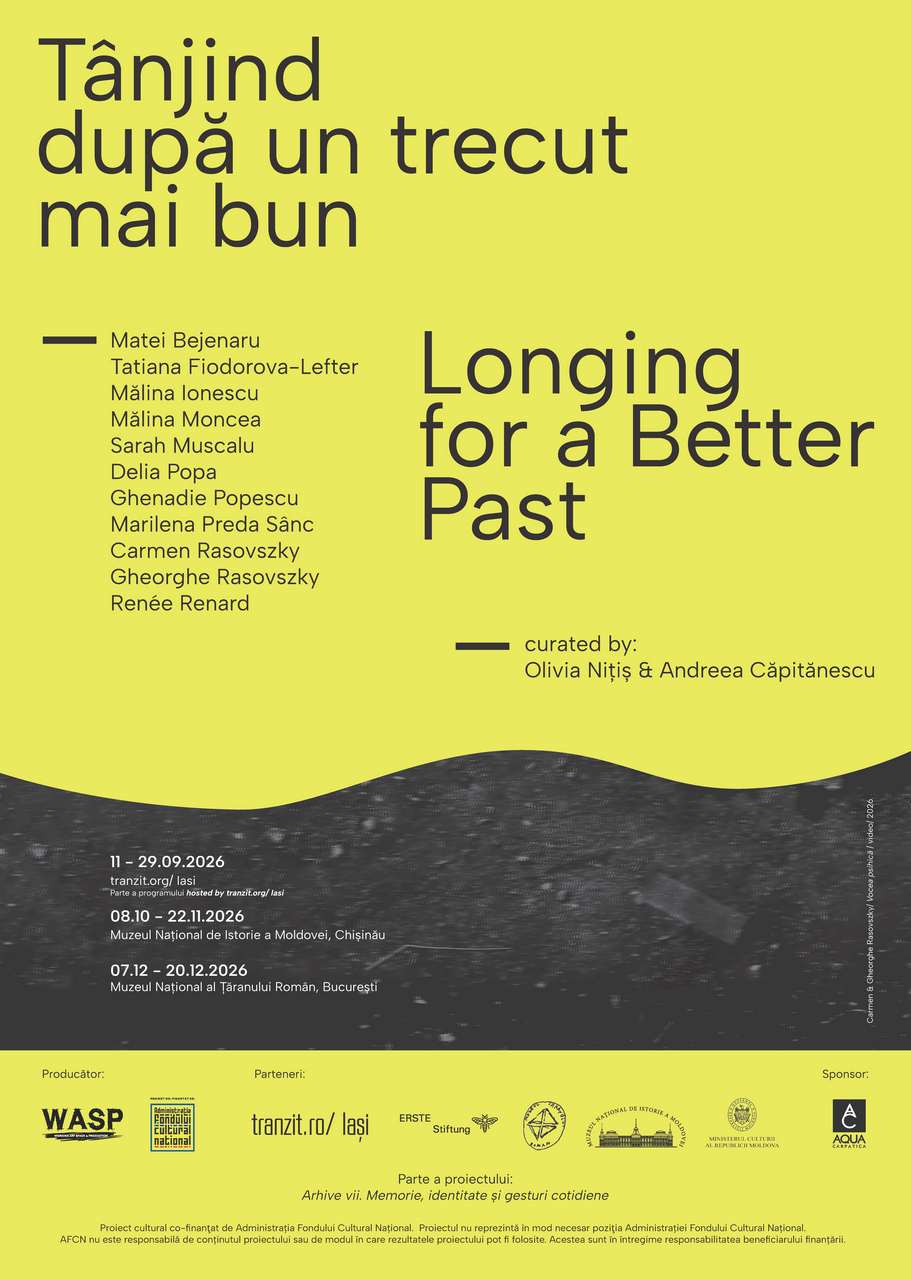
“Longing for a Better Past”

October 8 – November 22, 2026

The National Museum of History of Moldova, in partnership with WASP Studios and Tranzit Iași, is pleased to present the exhibition Longing for a Better Past / Tânjind după un trecut mai bun, curated by Olivia Nițiș and Andreea Căpitănescu. 

The project brings together artists from Romania and the Republic of Moldova - Tatiana Fiodorova, Renée Renard, Mălina Ionescu, Delia Popa, Marilena Preda Sânc, Matei Bejenaru, Ghenadie Popescu, Mălina Moncea, Sarah Muscalu, Gheorghe Raszovsky, Carmen Raszovsky - in a transgenerational dialogue about the memory of communism, collective and personal nostalgia, and the ways in which the past is re-signified in the present. 

The exhibition explores nostalgia as a multifaceted phenomenon, situated at the intersection of personal memory and collective memory, documented history and ideological fabrication. The works presented reflect how individual and social experiences intertwine, generating alternative discourses about the communist past - sometimes contradictory, sometimes complementary.

The project aims to analyze nostalgia not only as a personal emotion but also as a political and cultural instrument, capable of shaping perceptions of the present and the future. In this sense, the exhibition becomes a space for critical reflection on how the past is reinterpreted, idealized, or instrumentalized, and a framework for dialogue between generations, between artists and audiences, between memory and history.

The exhibition "Longing for a Better Past" can be visited between October 6 - November 22, 2026, in the Exhibition Hall 4 of the National Museum of History of Moldova, Chișinău, 31 August 1989 Street, no. 121A.

Producer: WASP Studios (Bucharest)
Partners: tranzit.org/ Iași; National Museum of History of Moldova, Chișinău; National Museum of the Romanian Peasant, Bucharest
Sponsor: AQUA Carpatica
Cultural project co-financed by the Administration of the National Cultural Fund.


Independent Moldova
Moldavian Soviet Socialist Republic
Bessarabia and MASSR between the Two World Wars
Bessarabia and Moldavian Autonomous Soviet Socialist Republic in the Period between the Two World Wars
Revival of National Movement
Time of Reforms and their Consequences
Abolition of Autonomy. Bessarabia – a New Tsarist Colony
Period of Relative Autonomy of Bessarabia within the Russian Empire
Phanariot Regime
Golden Age of the Romanian Culture
Struggle for Maintaining of Independence of Moldova
Formation of Independent Medieval State of Moldova
Era of the
Great Nomad Migrations
Early Middle Ages
Iron Age and Antiquity
Bronze Age
Aeneolithic Age
Neolithic Age
Palaeolithic Age


Come to Museum! Discover the History!
  
Visit museum
Visit museum
Summer schedule: daily
10am – 6pm.

Winter schedule: daily
10am – 5pm.
Closed on Mondays.
Entrance fees:  adults - 50 MDL, Pensioners, students - 20 lei, pupils - 10 MDL. Free access: enlisted men (...)

WiFi Free Wi-Fi Zone in the museum: In the courtyard of the National History Museum of Moldova there is Wi-Fi Internet access for visitors.


#Exhibit of the Month

The bronze hoard was discovered on the territory of Mîndrești village, Telenești district, in 1968. It was identified accidentally by a group of students from the village school, and the materials later came to the attention of specialists at the Institute of History of the Academy of Sciences...

Read More >>


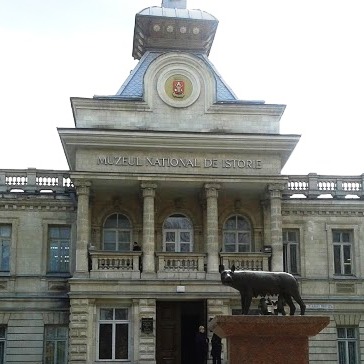
The National Museum of History of Moldova takes place among the most significant museum institutions of the Republic of Moldova, in terms of both its collection and scientific reputation.
©2006-2026 National Museum of History of Moldova

Visit museum 31 August 1989 St., 121 A, MD 2012, Chisinau, Republic of Moldova
Phones:
Secretariat: +373 (22) 24-43-25
Department of Public Relations and Museum Education: +373 (22) 24-04-26
Fax: +373 (22) 24-43-69
E-mail: office@nationalmuseum.md
Technical Support: info@nationalmuseum.md
Web site administration and maintenance: Andrei EMILCIUC



The National Museum of History of Moldova takes place among the most significant museum institutions of the Republic of Moldova, in terms of both its collection and scientific reputation.
©2006-2026 National Museum of History of Moldova
Visit museum 31 August 1989 St., 121 A, MD 2012, Chisinau, Republic of Moldova
Phones:
Secretariat: +373 (22) 24-43-25
Department of Public Relations and Museum Education: +373 (22) 24-04-26
Fax: +373 (22) 24-43-69
E-mail: office@nationalmuseum.md
Technical Support: info@nationalmuseum.md
Web site administration and maintenance: Andrei EMILCIUC
menu
The National Museum of History of Moldova takes place among the most significant museum institutions of the Republic of Moldova, in terms of both its collection and scientific reputation.
©2006-2026 National Museum of History of Moldova
Visit museum 31 August 1989 St., 121 A, MD 2012, Chisinau, Republic of Moldova
Phones:
Secretariat: +373 (22) 24-43-25
Department of Public Relations and Museum Education: +373 (22) 24-04-26
Fax: +373 (22) 24-43-69
E-mail: office@nationalmuseum.md
Technical Support: info@nationalmuseum.md
Web site administration and maintenance: Andrei EMILCIUC