EN RO


#Exhibit of the Month

>>>


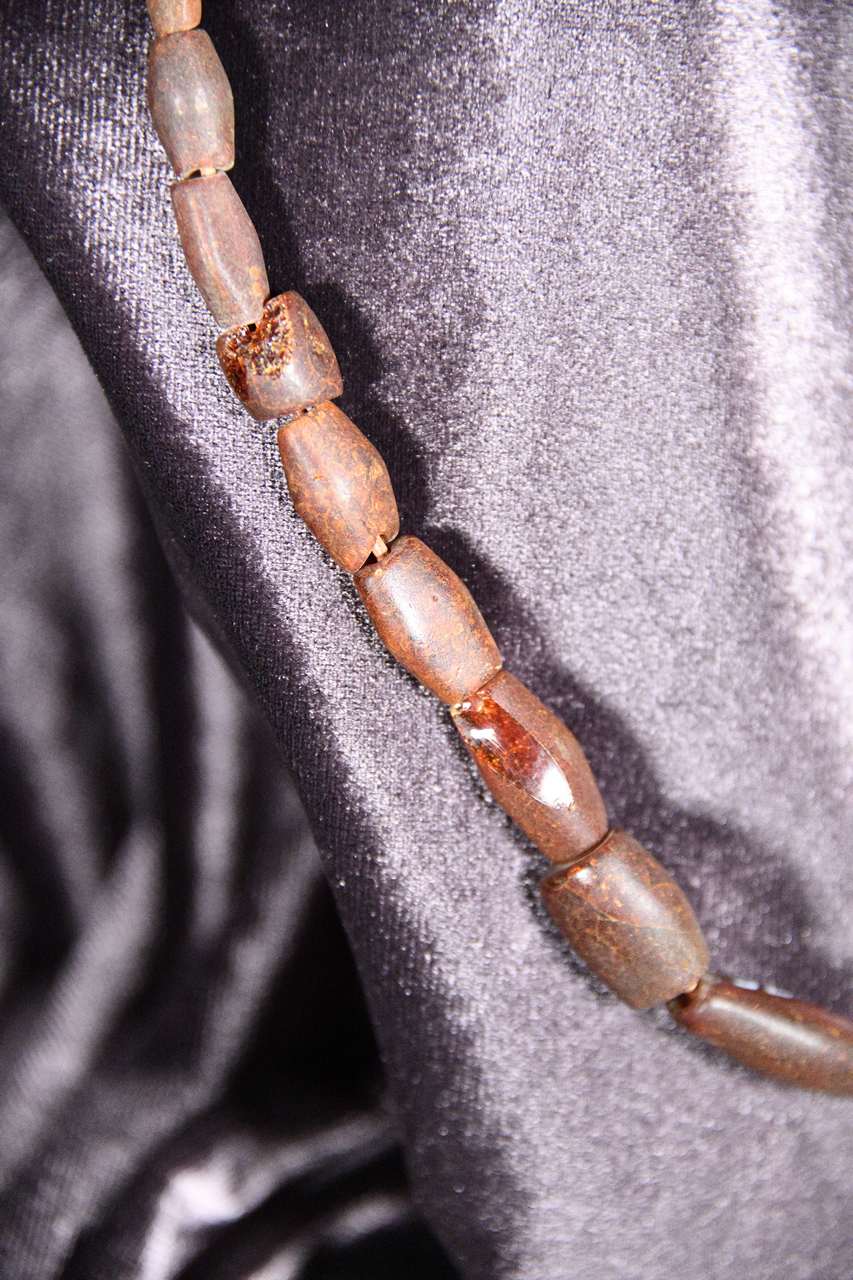
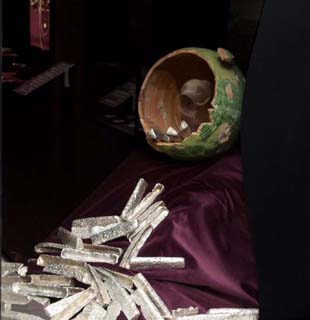
The 21 beads form part of a bronze hoard found in 2019 within a forested area close to the town of Nisporeni. Alongside the beads, the hoard included numerous bronze ornaments (2 Röschitz-Sanislău-type fibulae, 7 necklaces, 12 rings, 22 tubes, 23 bracelets, and approximately 80 appliqués), one coral bead and a pendant made from a wild animal's tooth. At present, the amber beads are preserved in the collections of the Muzeul Național de Istorie a Moldovei, while the remainder of the hoard is in the possession of a private collector.
The hoard was discovered accidentally in a pit about 50 cm deep. The objects in this hoard are of Western origin, with known parallels in archaeological complexes from Poland, Hungary, Serbia, and Slovakia, and, to a lesser extent, in Romania. The presence of this bronze hoard on the territory of the Republic of Moldova illustrates the cultural dynamics of the region during the Early Iron Age and a fundamental shift in the vector of cultural influences from east to west.
The amber bead strand comprises 16 whole beads and five fragmentary ones. They have an elongated biconical shape and vary in size. The beads are brown-reddish in color; their lengths range from 1.1 to 3.1 cm, widths from 0.6 to 1.4 cm, thicknesses from 0.6 to 1.1 cm, and the perforation diameter ranges between 0.2 and 0.3 cm.
Amber beads appear in several bronze hoards dated to the Late Bronze Age in the eastern half of Slovakia and in Transdanubian Hungary. Parallels are also known from the Cioclovina Cave in Romania. With the onset of the Iron Age, amber items disappear from the Carpathian Basin for approximately 300 years, reappearing alongside the arrival of Scythian elements.
The bronze hoard discovered at Nisporeni is dated to the HaA2-HaB1-2 interval (1050/1000 - 800/750 B.C.).

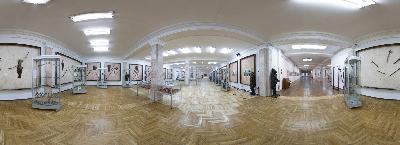
Virtual Tour


Exhibitions

“Digital War and Informational Peace”

9 December – 29 December 2025

The exhibition Digital War and Informational Peace, organised by Ziarul de Gardă, in partnership with the National Museum of History of Moldova, offers a critical and well-documented analysis of the contemporary dimensions of public integrity. Starting from the premise that integrity is the antonym of corruption, the project addresses the state, institutional and media conditions under which public trust is attempted to be restored when sanctioning mechanisms are delayed and the judiciary takes only tentative steps toward accountability.

The exhibition links this issue to the challenges of territorial security and the vulnerabilities of the informational space: how much sovereignty remains for a democracy when territorial integrity is contested?

The curated project brings together artworks, multimedia installations and documentary items that render, in both artistic and analytical registers, the tensions between law, memory and public communication. "Solul reintegrării teritoriale", "Cupa răbdării și nodul din gât", "Armata digitală și antidotul" and "Cum găsim calea spre strada Păcii?" are some of the unique exhibits that can be seen only within this presentation.

The exhibition's approach combines documentary rigour with contemporary aesthetic practices: archives, journalistic materials and interactive installations are arranged so that the visitor traverses an architecture of doubt as well as of possible remedies. Thus, the idea behind the displayed collection does not limit itself to the presentation of symptoms but offers tools for reflection-educational, technological and civic-designed to open informed discussions and to mobilize civic engagement.

Opening reception: Tuesday, 9 December 2025, 15:00, hall, 1st floor, National Museum of History of Moldova, Chișinău, Str. 31 August 1989, 121 A.

The exhibition is open to the public from 9 to 29 December 2025 in the hall on the 1st floor of the National Museum of History of Moldova, Chișinău, Str. 31 August 1989, 121 A.


Independent Moldova
Moldavian Soviet Socialist Republic
Bessarabia and MASSR between the Two World Wars
Bessarabia and Moldavian Autonomous Soviet Socialist Republic in the Period between the Two World Wars
Revival of National Movement
Time of Reforms and their Consequences
Abolition of Autonomy. Bessarabia – a New Tsarist Colony
Period of Relative Autonomy of Bessarabia within the Russian Empire
Phanariot Regime
Golden Age of the Romanian Culture
Struggle for Maintaining of Independence of Moldova
Formation of Independent Medieval State of Moldova
Era of the
Great Nomad Migrations
Early Middle Ages
Iron Age and Antiquity
Bronze Age
Aeneolithic Age
Neolithic Age
Palaeolithic Age


Come to Museum! Discover the History!
  
Visit museum
Visit museum
Summer schedule: daily
10am – 6pm.

Winter schedule: daily
10am – 5pm.
Closed on Mondays.
Entrance fees:  adults - 50 MDL, Pensioners, students - 20 lei, pupils - 10 MDL. Free access: enlisted men (...)

WiFi Free Wi-Fi Zone in the museum: In the courtyard of the National History Museum of Moldova there is Wi-Fi Internet access for visitors.


#Exhibit of the Month

The 21 beads form part of a bronze hoard found in 2019 within a forested area close to the town of Nisporeni. Alongside the beads, the hoard included numerous bronze ornaments (2 Röschitz-Sanislău-type fibulae, 7 necklaces, 12 rings, 22 tubes, 23 bracelets, and approximately 80 appliqués), one coral bead and a pendant made from a wild animal's tooth...

Read More >>


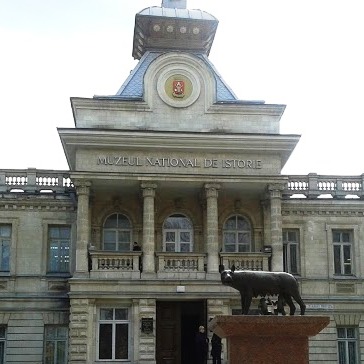
The National Museum of History of Moldova takes place among the most significant museum institutions of the Republic of Moldova, in terms of both its collection and scientific reputation.
©2006-2026 National Museum of History of Moldova
Visit museum 31 August 1989 St., 121 A, MD 2012, Chisinau, Republic of Moldova
Phones:
Secretariat: +373 (22) 24-43-25
Department of Public Relations and Museum Education: +373 (22) 24-04-26
Fax: +373 (22) 24-43-69
E-mail: office@nationalmuseum.md
Technical Support: info@nationalmuseum.md
Web site administration and maintenance: Andrei EMILCIUC


The National Museum of History of Moldova takes place among the most significant museum institutions of the Republic of Moldova, in terms of both its collection and scientific reputation.
©2006-2026 National Museum of History of Moldova
Visit museum 31 August 1989 St., 121 A, MD 2012, Chisinau, Republic of Moldova

Phones:
Secretariat: +373 (22) 24-43-25
Department of Public Relations and Museum Education: +373 (22) 24-04-26
Fax: +373 (22) 24-43-69
E-mail: office@nationalmuseum.md
Technical Support: info@nationalmuseum.md
Web site administration and maintenance: Andrei EMILCIUC

menu
The National Museum of History of Moldova takes place among the most significant museum institutions of the Republic of Moldova, in terms of both its collection and scientific reputation.
©2006-2026 National Museum of History of Moldova
Visit museum 31 August 1989 St., 121 A, MD 2012, Chisinau, Republic of Moldova
Phones:
Secretariat: +373 (22) 24-43-25
Department of Public Relations and Museum Education: +373 (22) 24-04-26
Fax: +373 (22) 24-43-69
E-mail: office@nationalmuseum.md
Technical Support: info@nationalmuseum.md
Web site administration and maintenance: Andrei EMILCIUC