EN RO


#Exhibit of the Month

>>>


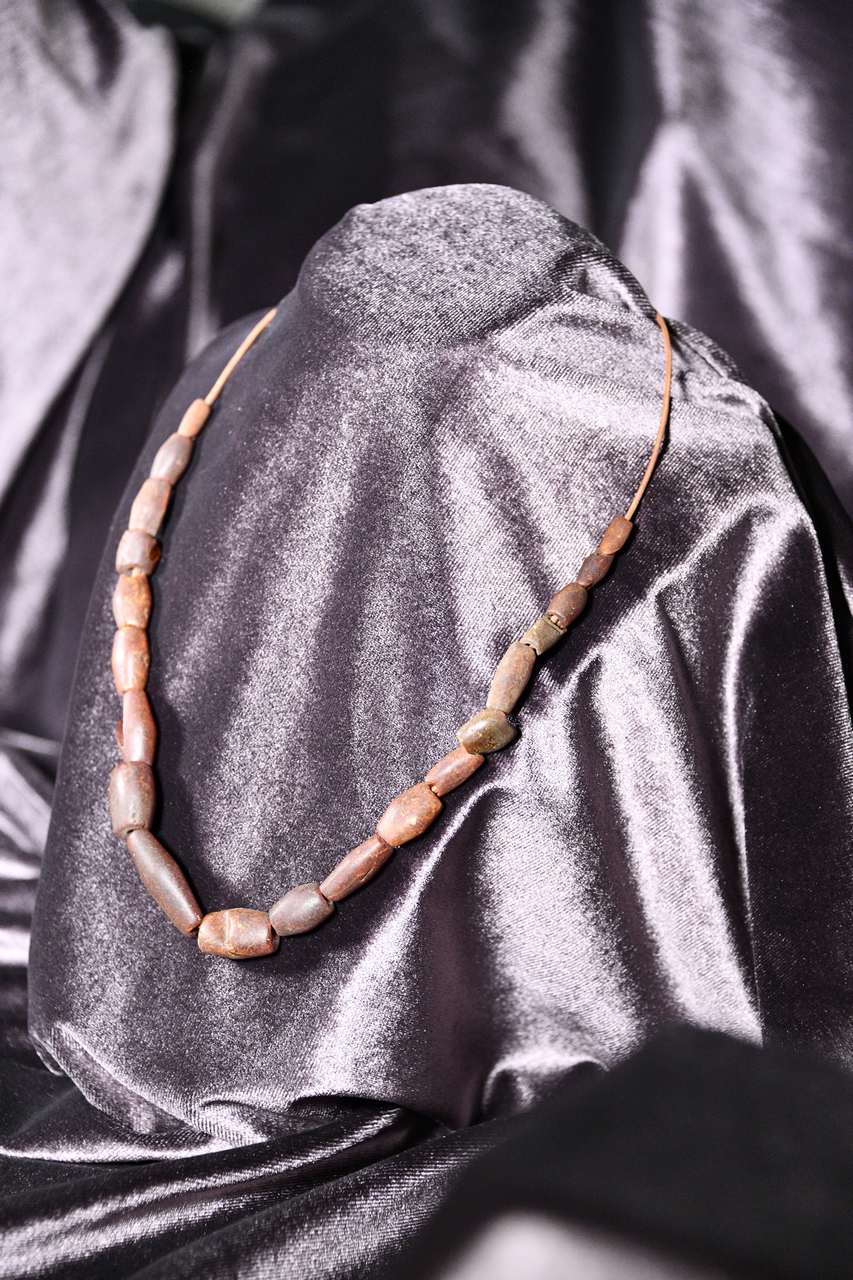
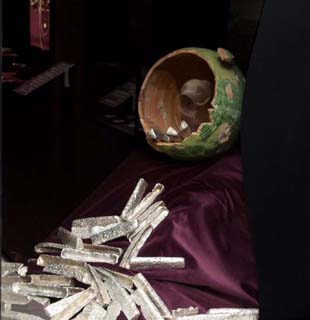
The 21 beads form part of a bronze hoard found in 2019 within a forested area close to the town of Nisporeni. Alongside the beads, the hoard included numerous bronze ornaments (2 Röschitz-Sanislău-type fibulae, 7 necklaces, 12 rings, 22 tubes, 23 bracelets, and approximately 80 appliqués), one coral bead and a pendant made from a wild animal's tooth. At present, the amber beads are preserved in the collections of the Muzeul Național de Istorie a Moldovei, while the remainder of the hoard is in the possession of a private collector.
The hoard was discovered accidentally in a pit about 50 cm deep. The objects in this hoard are of Western origin, with known parallels in archaeological complexes from Poland, Hungary, Serbia, and Slovakia, and, to a lesser extent, in Romania. The presence of this bronze hoard on the territory of the Republic of Moldova illustrates the cultural dynamics of the region during the Early Iron Age and a fundamental shift in the vector of cultural influences from east to west.
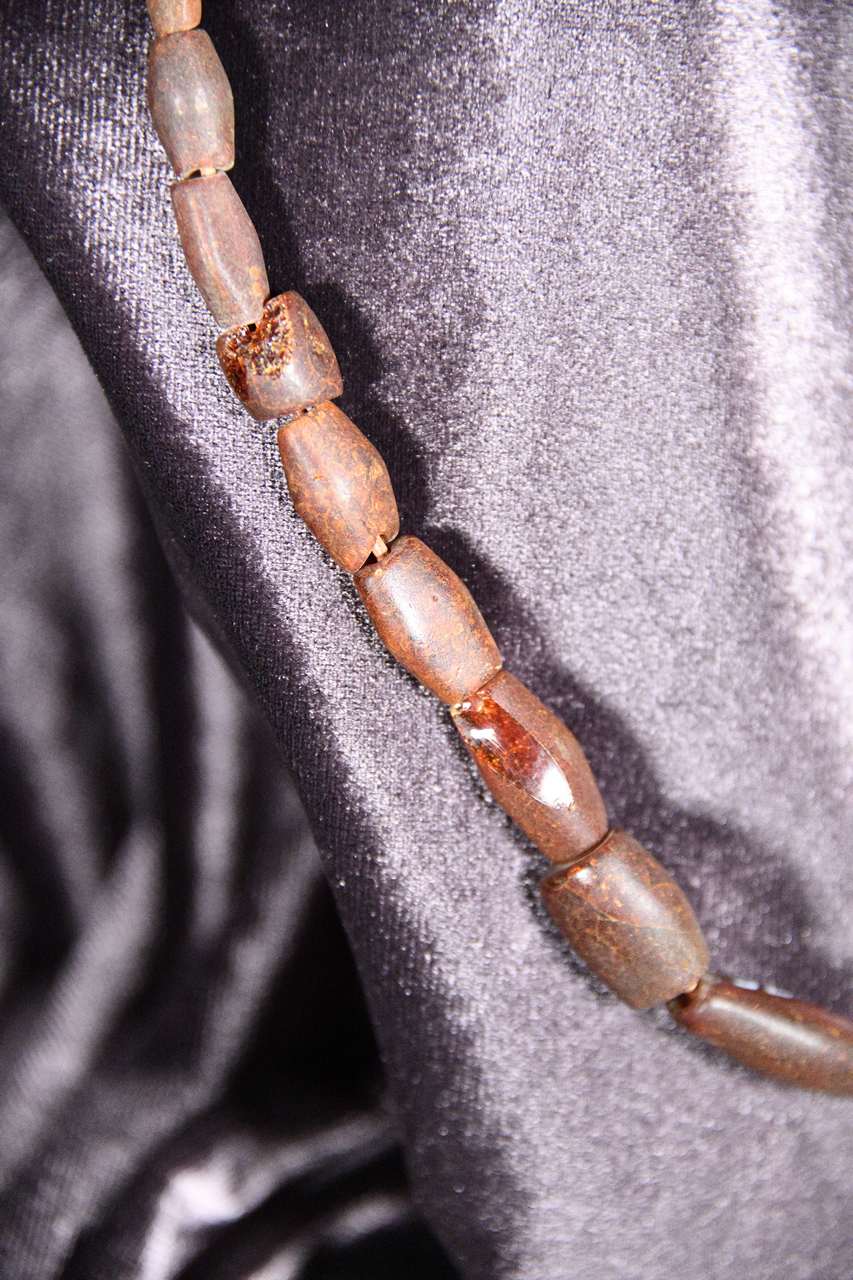
The amber bead strand comprises 16 whole beads and five fragmentary ones. They have an elongated biconical shape and vary in size. The beads are brown-reddish in color; their lengths range from 1.1 to 3.1 cm, widths from 0.6 to 1.4 cm, thicknesses from 0.6 to 1.1 cm, and the perforation diameter ranges between 0.2 and 0.3 cm.
Amber beads appear in several bronze hoards dated to the Late Bronze Age in the eastern half of Slovakia and in Transdanubian Hungary. Parallels are also known from the Cioclovina Cave in Romania. With the onset of the Iron Age, amber items disappear from the Carpathian Basin for approximately 300 years, reappearing alongside the arrival of Scythian elements.
The bronze hoard discovered at Nisporeni is dated to the HaA2-HaB1-2 interval (1050/1000 - 800/750 B.C.).

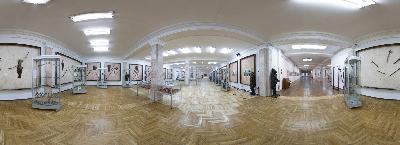
Virtual Tour


#Exhibit of the Month

December 2025

Altar Gospel (1890)

The Gospel is a fundamental liturgical book of the Orthodox Church that brings together the four apostolic testimonies about the Son of God - Matthew, Mark, Luke, and John - "inspired by the same Holy Spirit, the one true and sole author of the Gospel." The Gospel, or the Good News, testifying to the Glory of Christ, refers to the full teaching and deeds of the Savior; the four Gospels are regarded as the four sustaining pillars of the Church.

St. Jerome (c. 340-420), author of the first complete Latin translation of the Holy Scriptures, assigned to the four evangelists the living creatures that appear in the vision of the prophet Ezekiel (1:5). Thus, the Evangelist Matthew, the first to relate the Nativity of the Lord, is accompanied in imagery by the angel who announced the miracle; the Evangelist Mark, likened to St. John the Baptist - "the voice of one crying in the wilderness" - is associated with the lion. The Evangelist Luke, who opens his Gospel with the priest Zechariah, is personified by the winged ox, recalling the ox's sacrificial role; and the Evangelist John, for his elevated theological vision, is associated with the eagle. 

This altar Gospel, printed in 1890 at the Lavra Pecerska printing house in Kyiv, contains - in addition to the four canonical Gospels - other liturgical texts: readings for Vespers, the Divine Liturgy, prayers, and services. 

It is a large-format Gospel measuring 37 × 48 cm, bound in cardboard and leather. The gilded metal cover is fitted with two metal clasps and gilt edges. Five vertical-oval icon plaques in polychrome enamel are applied to the cover, which is engraved with vegetal and geometric ornamentation. The central plaque depicts the "Resurrection of the Lord"; in the corners of the upper register appear the faces of the Evangelists Matthew and John, and in the lower register those of Luke and Mark. Printed in red and black, the volume comprises 428 leaves; the text is enriched with various typographic ornaments - vignettes, initials, engravings, frontispieces, etc. Pagination is indicated on the leaves, the folio number appearing in the upper right. 

The Gospel of Matthew is printed on pages 1-105, the opening page accompanied by the scene of the Nativity of the Lord. The Gospel of Mark continues on pages 104-168, its representative scene being the Baptism of the Lord. The Gospel according to Luke occupies pages 172-273, its opening page bearing the scene of the Annunciation. The Gospel according to John is included between pages 280-358, the evocative scene being the Crucifixion of the Lord. 

The Lavra Pecerska printing house, cited in the colophon, has long roots - traditionally founded by Archimandrite Elisei Pletenetsky (1595-1624) in 1615 - although the precise dates of its earliest publications remain a matter of debate. This copy entered the collections of the National Museum of History of Moldova under inventory number FB-23062-35; acquired in 1982, it was transferred to the MNIM collections in 1996 from the holdings of the Museum of the History of Religion.


Independent Moldova
Moldavian Soviet Socialist Republic
Bessarabia and MASSR between the Two World Wars
Bessarabia and Moldavian Autonomous Soviet Socialist Republic in the Period between the Two World Wars
Revival of National Movement
Time of Reforms and their Consequences
Abolition of Autonomy. Bessarabia – a New Tsarist Colony
Period of Relative Autonomy of Bessarabia within the Russian Empire
Phanariot Regime
Golden Age of the Romanian Culture
Struggle for Maintaining of Independence of Moldova
Formation of Independent Medieval State of Moldova
Era of the
Great Nomad Migrations
Early Middle Ages
Iron Age and Antiquity
Bronze Age
Aeneolithic Age
Neolithic Age
Palaeolithic Age
  
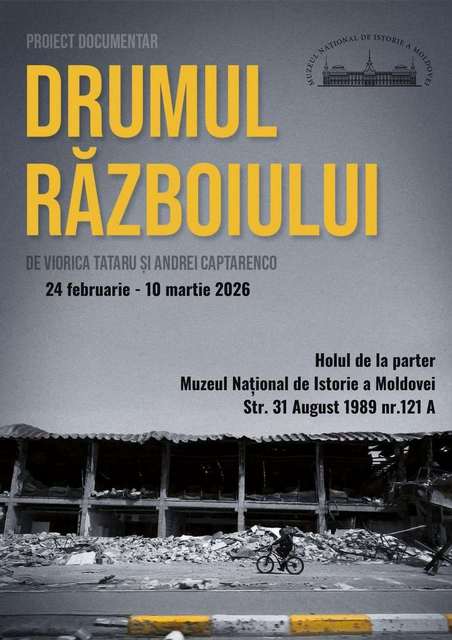
24 February – 10 March 2026
 
September 25, 2025 – September 1, 2026
 
August 11, 2025 – January 31, 2026
 
Over 2500 pieces made of precious metals with historic, artistic and symbolic value
  

Come to Museum! Discover the History!
  
Visit museum
Visit museum
Summer schedule: daily
10am – 6pm.

Winter schedule: daily
10am – 5pm.
Closed on Mondays.
Entrance fees:  adults - 50 MDL, Pensioners, students - 20 lei, pupils - 10 MDL. Free access: enlisted men (...)

WiFi Free Wi-Fi Zone in the museum: In the courtyard of the National History Museum of Moldova there is Wi-Fi Internet access for visitors.


#Exhibit of the Month

The 21 beads form part of a bronze hoard found in 2019 within a forested area close to the town of Nisporeni. Alongside the beads, the hoard included numerous bronze ornaments (2 Röschitz-Sanislău-type fibulae, 7 necklaces, 12 rings, 22 tubes, 23 bracelets, and approximately 80 appliqués), one coral bead and a pendant made from a wild animal's tooth...

Read More >>


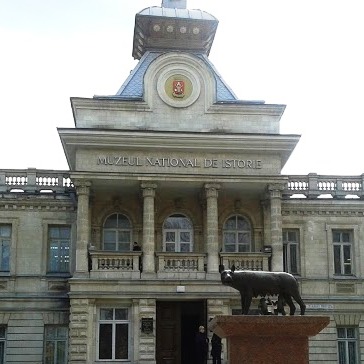
The National Museum of History of Moldova takes place among the most significant museum institutions of the Republic of Moldova, in terms of both its collection and scientific reputation.
©2006-2026 National Museum of History of Moldova
Visit museum 31 August 1989 St., 121 A, MD 2012, Chisinau, Republic of Moldova
Phones:
Secretariat: +373 (22) 24-43-25
Department of Public Relations and Museum Education: +373 (22) 24-04-26
Fax: +373 (22) 24-43-69
E-mail: office@nationalmuseum.md
Technical Support: info@nationalmuseum.md
Web site administration and maintenance: Andrei EMILCIUC


The National Museum of History of Moldova takes place among the most significant museum institutions of the Republic of Moldova, in terms of both its collection and scientific reputation.
©2006-2026 National Museum of History of Moldova
Visit museum 31 August 1989 St., 121 A, MD 2012, Chisinau, Republic of Moldova
Phones:
Secretariat: +373 (22) 24-43-25
Department of Public Relations and Museum Education: +373 (22) 24-04-26
Fax: +373 (22) 24-43-69
E-mail: office@nationalmuseum.md
Technical Support: info@nationalmuseum.md
Web site administration and maintenance: Andrei EMILCIUC

menu
The National Museum of History of Moldova takes place among the most significant museum institutions of the Republic of Moldova, in terms of both its collection and scientific reputation.
©2006-2026 National Museum of History of Moldova
Visit museum 31 August 1989 St., 121 A, MD 2012, Chisinau, Republic of Moldova
Phones:
Secretariat: +373 (22) 24-43-25
Department of Public Relations and Museum Education: +373 (22) 24-04-26
Fax: +373 (22) 24-43-69
E-mail: office@nationalmuseum.md
Technical Support: info@nationalmuseum.md
Web site administration and maintenance: Andrei EMILCIUC