EN RO


#Exhibit of the Month

>>>

The Gospel is a fundamental liturgical book of the Orthodox Church that brings together the four apostolic testimonies about the Son of God - Matthew, Mark, Luke, and John - "inspired by the same Holy Spirit, the one true and sole author of the Gospel." The Gospel, or the Good News, testifying to the Glory of Christ, refers to the full teaching and deeds of the Savior; the four Gospels are regarded as the four sustaining pillars of the Church.
St. Jerome (c. 340-420), author of the first complete Latin translation of the Holy Scriptures, assigned to the four evangelists the living creatures that appear in the vision of the prophet Ezekiel (1:5). Thus, the Evangelist Matthew, the first to relate the Nativity of the Lord, is accompanied in imagery by the angel who announced the miracle; the Evangelist Mark, likened to St. John the Baptist - "the voice of one crying in the wilderness" - is associated with the lion. The Evangelist Luke, who opens his Gospel with the priest Zechariah, is personified by the winged ox, recalling the ox's sacrificial role; and the Evangelist John, for his elevated theological vision, is associated with the eagle. 
This altar Gospel, printed in 1890 at the Lavra Pecerska printing house in Kyiv, contains - in addition to the four canonical Gospels - other liturgical texts: readings for Vespers, the Divine Liturgy, prayers, and services. 
It is a large-format Gospel measuring 37 × 48 cm, bound in cardboard and leather. The gilded metal cover is fitted with two metal clasps and gilt edges. Five vertical-oval icon plaques in polychrome enamel are applied to the cover, which is engraved with vegetal and geometric ornamentation. The central plaque depicts the "Resurrection of the Lord"; in the corners of the upper register appear the faces of the Evangelists Matthew and John, and in the lower register those of Luke and Mark. Printed in red and black, the volume comprises 428 leaves; the text is enriched with various typographic ornaments - vignettes, initials, engravings, frontispieces, etc. Pagination is indicated on the leaves, the folio number appearing in the upper right. 
The Gospel of Matthew is printed on pages 1-105, the opening page accompanied by the scene of the Nativity of the Lord. The Gospel of Mark continues on pages 104-168, its representative scene being the Baptism of the Lord. The Gospel according to Luke occupies pages 172-273, its opening page bearing the scene of the Annunciation. The Gospel according to John is included between pages 280-358, the evocative scene being the Crucifixion of the Lord. 

The Lavra Pecerska printing house, cited in the colophon, has long roots - traditionally founded by Archimandrite Elisei Pletenetsky (1595-1624) in 1615 - although the precise dates of its earliest publications remain a matter of debate. This copy entered the collections of the National Museum of History of Moldova under inventory number FB-23062-35; acquired in 1982, it was transferred to the MNIM collections in 1996 from the holdings of the Museum of the History of Religion.

Virtual Tour


Events Archive

Opening of the Exhibition "The Story of a Painting"

October 22, 2024

On October 22, 2024, at the National Museum of History of Moldova, the opening of the exhibition "History of a painting" signed by the artist Ghenadie Jalbă took place. The exhibition, dedicated to the commemoration of 520 years since the death of Stephen the Great, brought to the public's attention a deep exploration of the creation process of the work "Battle of Lipnic", highlighting the stages of development and the meanings that accompany it.

The President of the Union of Visual Artists from the Republic of Moldova, Mrs. Florina Breazu, emphasized the exceptional contribution of the artist to the national cultural landscape. You highlighted the fact that Mr. Jalbă's works are more than simple visual creations, they are specific "windows to the soul," offering viewers a deep introspection on human nature. He also mentioned the chromatic depth and the fineness of the details, which highlight a unique vision of space and time.


The artist Ghenadie Jalbă expressed his sincere gratitude to the organizers and all those present. In his speech, he shared the story behind the central painting of the exhibition, explaining that each detail and sketch in the preparation process symbolizes the pursuit of balance between aesthetic form and philosophical message. "The Story of a Painting," Jalbă explained, "is not just a narrative of technical achievement, but a journey of reflection and inner experiences, a dialogue between thought and image."

The exhibition included the final painting "Ștefan cel Mare at Lipnic" and the sketches that laid the groundwork for its creation, offering the public an intimate glimpse into Ghenadie Jalbă's creative process. Visitors had the opportunity to witness the subtle evolution of ideas from the initial sketches to the final piece, revealing the complexity and finesse of his work. This unique perspective not only deepened the understanding of how art comes to life, but also invited reflection on the nature of art itself, opening a new vision of the world as seen through the eyes of the creator.

The public is invited to discover the exhibition until November 8, 2024, in the second-floor gallery of the museum, where each detail of Ghenadie Jalbă's creation reveals its secrets in a remarkable setting.


Independent Moldova
Moldavian Soviet Socialist Republic
Bessarabia and MASSR between the Two World Wars
Bessarabia and Moldavian Autonomous Soviet Socialist Republic in the Period between the Two World Wars
Revival of National Movement
Time of Reforms and their Consequences
Abolition of Autonomy. Bessarabia – a New Tsarist Colony
Period of Relative Autonomy of Bessarabia within the Russian Empire
Phanariot Regime
Golden Age of the Romanian Culture
Struggle for Maintaining of Independence of Moldova
Formation of Independent Medieval State of Moldova
Era of the
Great Nomad Migrations
Early Middle Ages
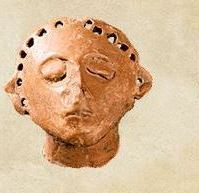
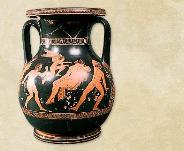
Iron Age and Antiquity
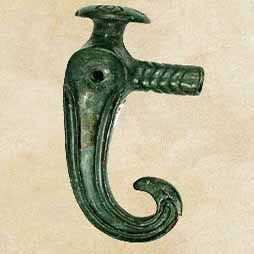
Bronze Age
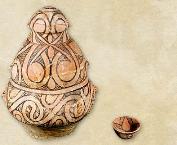
Aeneolithic Age
Neolithic Age
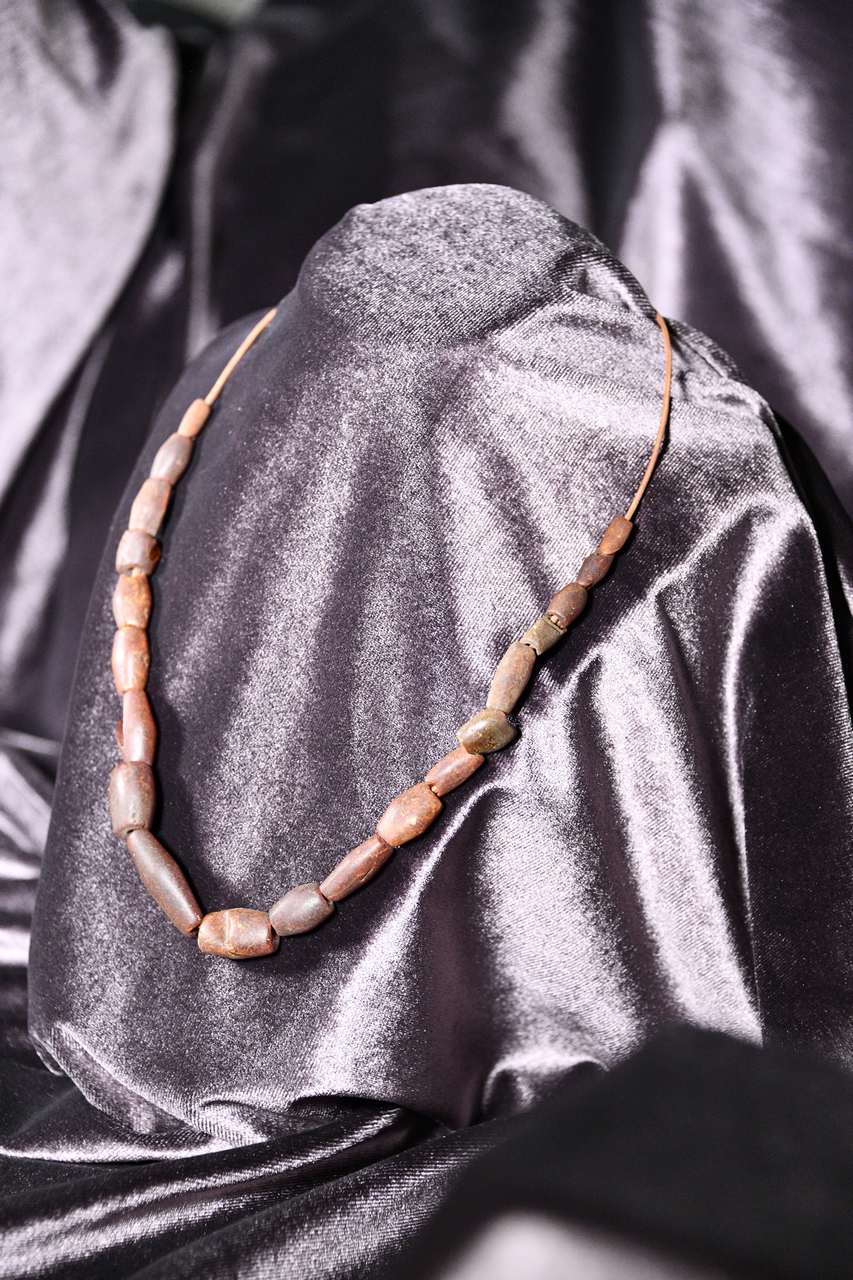
Palaeolithic Age
  
Exhibition ”Art Speaks Where the Voice Is Silent”
 
27 November – 11 December 2025
 
25 November – 19 December 2025
 
2 December 2025 – 4 January 2026
 
October 28 – November 28, 2025
 
September 25, 2025 – September 1, 2026
 
August 11, 2025 – January 31, 2026
 
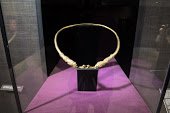
Over 2500 pieces made of precious metals with historic, artistic and symbolic value
  

Come to Museum! Discover the History!
  
Visit museum
Visit museum
Summer schedule: daily
10am – 6pm.

Winter schedule: daily
10am – 5pm.
Closed on Mondays.
Entrance fees:  adults - 50 MDL, Pensioners, students - 20 lei, pupils - 10 MDL. Free access: enlisted men (...)

WiFi Free Wi-Fi Zone in the museum: In the courtyard of the National History Museum of Moldova there is Wi-Fi Internet access for visitors.


#Exhibit of the Month

The Gospel is a fundamental liturgical book of the Orthodox Church that brings together the four apostolic testimonies about the Son of God - Matthew, Mark, Luke, and John - "inspired by the same Holy Spirit, the one true and sole author of the Gospel." ...

Read More >>


The National Museum of History of Moldova takes place among the most significant museum institutions of the Republic of Moldova, in terms of both its collection and scientific reputation.
©2006-2025 National Museum of History of Moldova
Visit museum 31 August 1989 St., 121 A, MD 2012, Chisinau, Republic of Moldova
Phones:
Secretariat: +373 (22) 24-43-25
Department of Public Relations and Museum Education: +373 (22) 24-04-26
Fax: +373 (22) 24-43-69
E-mail: office@nationalmuseum.md
Technical Support: info@nationalmuseum.md
Web site administration and maintenance: Andrei EMILCIUC


The National Museum of History of Moldova takes place among the most significant museum institutions of the Republic of Moldova, in terms of both its collection and scientific reputation.
©2006-2025 National Museum of History of Moldova
Visit museum 31 August 1989 St., 121 A, MD 2012, Chisinau, Republic of Moldova
Phones:
Secretariat: +373 (22) 24-43-25
Department of Public Relations and Museum Education: +373 (22) 24-04-26
Fax: +373 (22) 24-43-69
E-mail: office@nationalmuseum.md
Technical Support: info@nationalmuseum.md
Web site administration and maintenance: Andrei EMILCIUC

menu
The National Museum of History of Moldova takes place among the most significant museum institutions of the Republic of Moldova, in terms of both its collection and scientific reputation.
©2006-2025 National Museum of History of Moldova
Visit museum 31 August 1989 St., 121 A, MD 2012, Chisinau, Republic of Moldova
Phones:
Secretariat: +373 (22) 24-43-25
Department of Public Relations and Museum Education: +373 (22) 24-04-26
Fax: +373 (22) 24-43-69
E-mail: office@nationalmuseum.md
Technical Support: info@nationalmuseum.md
Web site administration and maintenance: Andrei EMILCIUC