EN RO


#Exhibit of the Month

>>>


The 21 beads form part of a bronze hoard found in 2019 within a forested area close to the town of Nisporeni. Alongside the beads, the hoard included numerous bronze ornaments (2 Röschitz-Sanislău-type fibulae, 7 necklaces, 12 rings, 22 tubes, 23 bracelets, and approximately 80 appliqués), one coral bead and a pendant made from a wild animal's tooth. At present, the amber beads are preserved in the collections of the Muzeul Național de Istorie a Moldovei, while the remainder of the hoard is in the possession of a private collector.
The hoard was discovered accidentally in a pit about 50 cm deep. The objects in this hoard are of Western origin, with known parallels in archaeological complexes from Poland, Hungary, Serbia, and Slovakia, and, to a lesser extent, in Romania. The presence of this bronze hoard on the territory of the Republic of Moldova illustrates the cultural dynamics of the region during the Early Iron Age and a fundamental shift in the vector of cultural influences from east to west.
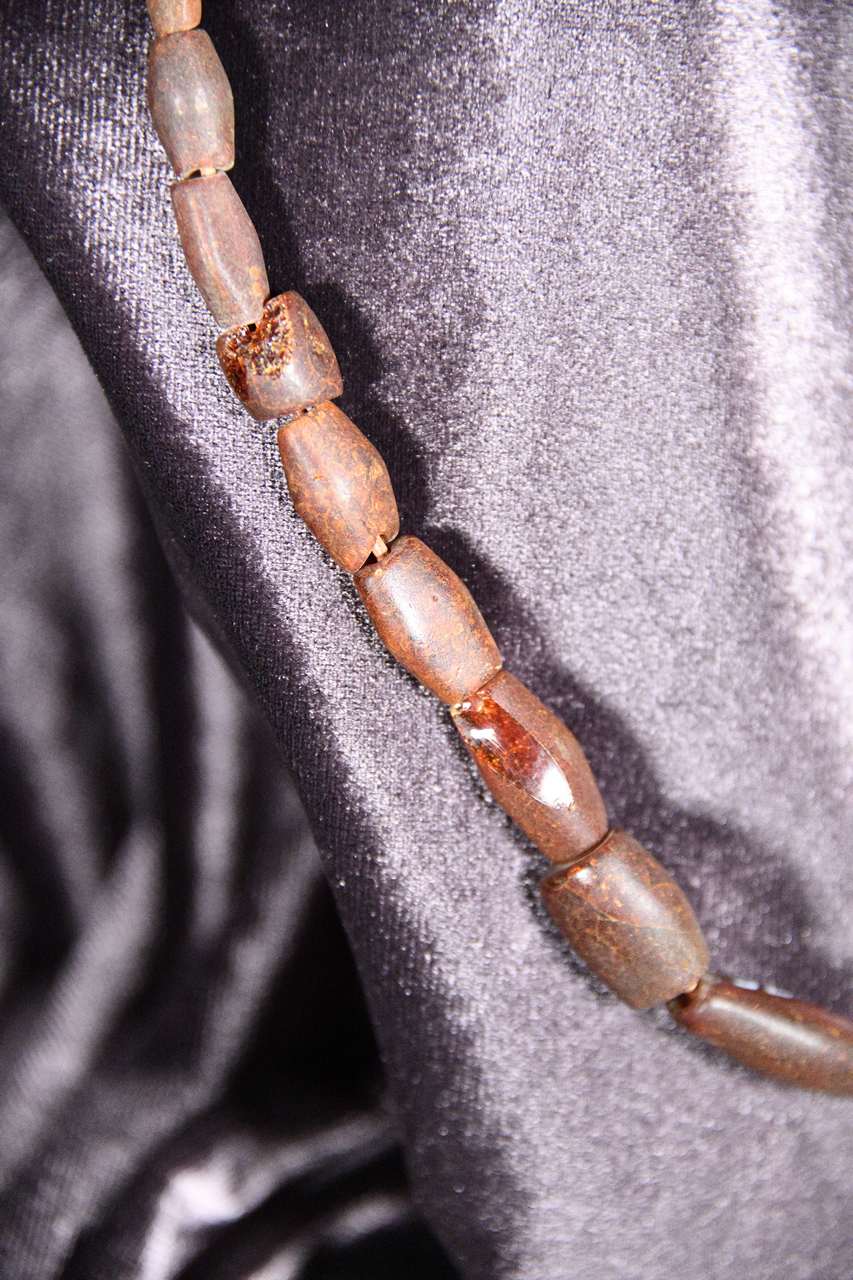
The amber bead strand comprises 16 whole beads and five fragmentary ones. They have an elongated biconical shape and vary in size. The beads are brown-reddish in color; their lengths range from 1.1 to 3.1 cm, widths from 0.6 to 1.4 cm, thicknesses from 0.6 to 1.1 cm, and the perforation diameter ranges between 0.2 and 0.3 cm.
Amber beads appear in several bronze hoards dated to the Late Bronze Age in the eastern half of Slovakia and in Transdanubian Hungary. Parallels are also known from the Cioclovina Cave in Romania. With the onset of the Iron Age, amber items disappear from the Carpathian Basin for approximately 300 years, reappearing alongside the arrival of Scythian elements.
The bronze hoard discovered at Nisporeni is dated to the HaA2-HaB1-2 interval (1050/1000 - 800/750 B.C.).

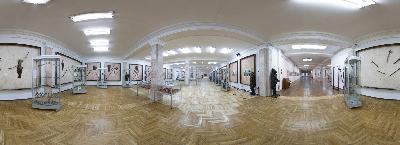
Virtual Tour


Exhibitions

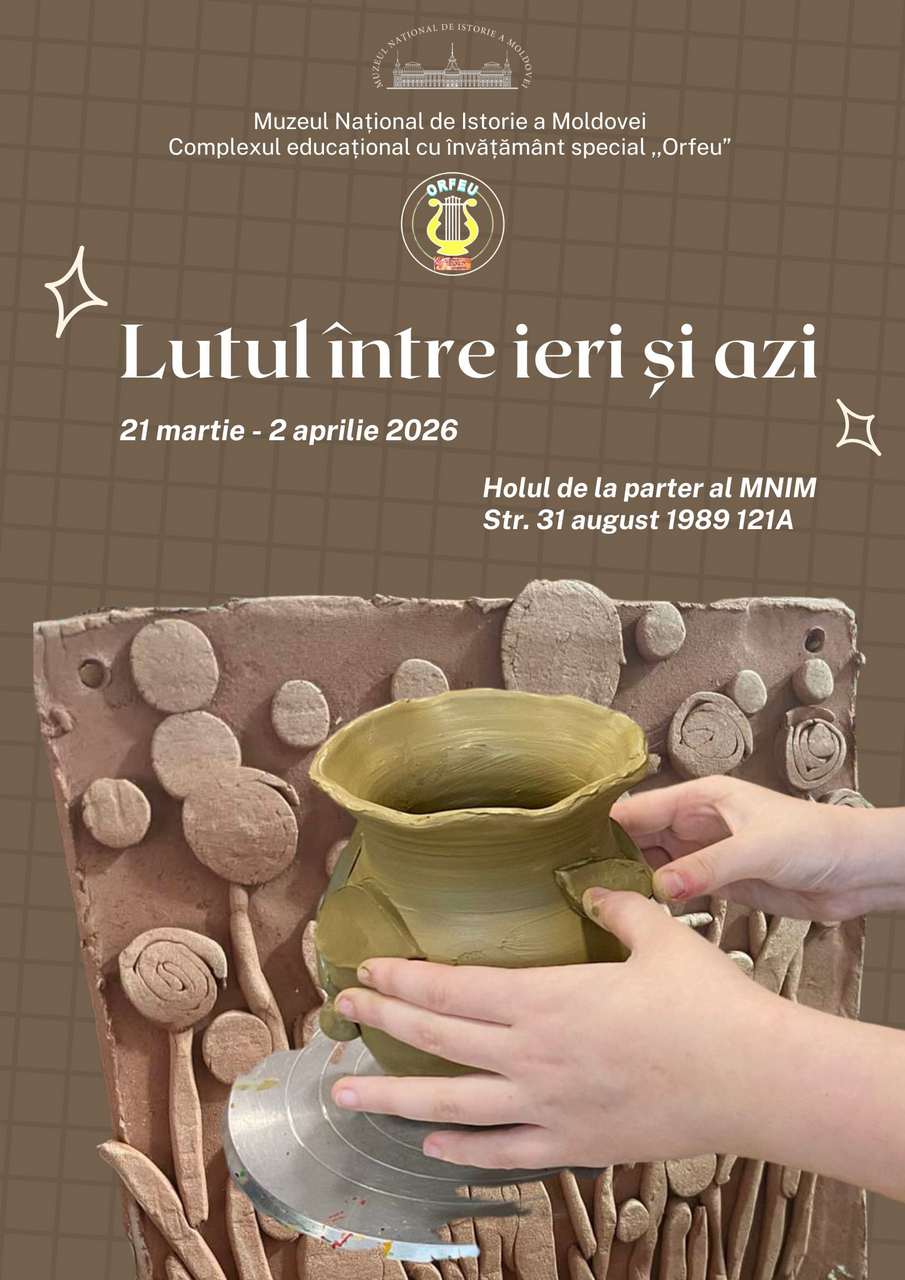
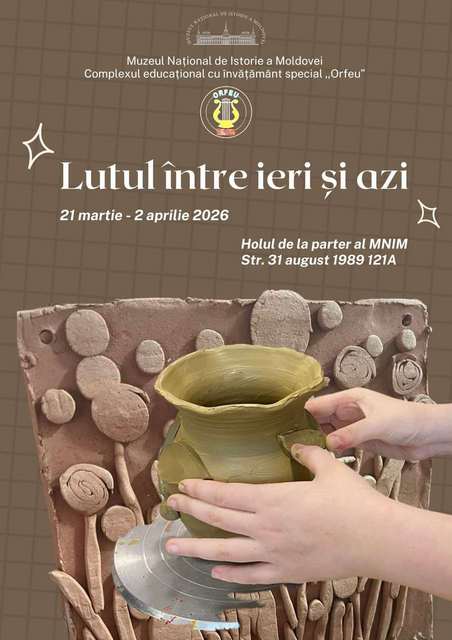
“Clay Between Yesterday and Today”

21 March – 2 April 2026

From 21 March to 2 April, the National Museum of History of Moldova is hosting the ceramics collection "Clay Between Yesterday and Today," created by pupils with severe intellectual disabilities from the Special Education Complex "Orfeu" as part of the project "Ceramics - an Art Form, from Traditional to Contemporary."

The exhibition is dedicated to marking and raising awareness of World Down Syndrome Day and World Autism Awareness Day. The collection comprises around 60 objects, each expressing a message conveyed to the community. Ceramic art provides an essential form of non-verbal communication for pupils with special educational needs, helping them release emotional tension and develop fine motor skills. In a digital age, direct contact with clay reconnects the pupil with tactile reality.

The project highlights the need to move beyond the rigid forms of tradition toward the freedom of contemporary artistic expression, allowing every child to create without fear of making mistakes and transforming "imperfection" into a personal artistic signature. The transition from pupil to exhibiting artist changes the social status of the child with special needs in the eyes of visitors.

The works created by the pupils within the project help change the community's perception of students with special needs. Visitors will interact directly with the results of the children's work, promoting social inclusion and the visibility of pupils with special educational needs through the art of ceramics.

The exhibition "Lutul între ieri și azi" can be visited from 21 March to 2 April 2026, on the ground-floor corridor of the National Museum of History of Moldova, Chișinău, 121 A 31 August 1989 Street.


Independent Moldova
Moldavian Soviet Socialist Republic
Bessarabia and MASSR between the Two World Wars
Bessarabia and Moldavian Autonomous Soviet Socialist Republic in the Period between the Two World Wars
Revival of National Movement
Time of Reforms and their Consequences
Abolition of Autonomy. Bessarabia – a New Tsarist Colony
Period of Relative Autonomy of Bessarabia within the Russian Empire
Phanariot Regime
Golden Age of the Romanian Culture
Struggle for Maintaining of Independence of Moldova
Formation of Independent Medieval State of Moldova
Era of the
Great Nomad Migrations
Early Middle Ages
Iron Age and Antiquity
Bronze Age
Aeneolithic Age
Neolithic Age
Palaeolithic Age
  
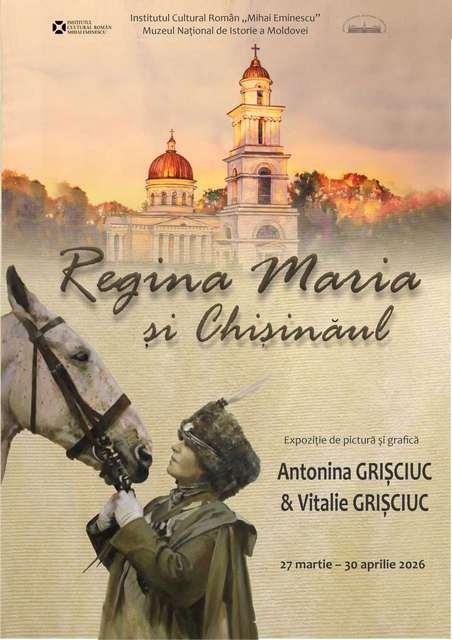
27 March – 30 April 2026
 
September 25, 2025 – September 1, 2026
 
August 11, 2025 – January 31, 2026
 
Over 2500 pieces made of precious metals with historic, artistic and symbolic value
  

Come to Museum! Discover the History!
  
Visit museum
Visit museum
Summer schedule: daily
10am – 6pm.

Winter schedule: daily
10am – 5pm.
Closed on Mondays.
Entrance fees:  adults - 50 MDL, Pensioners, students - 20 lei, pupils - 10 MDL. Free access: enlisted men (...)

WiFi Free Wi-Fi Zone in the museum: In the courtyard of the National History Museum of Moldova there is Wi-Fi Internet access for visitors.


#Exhibit of the Month

The 21 beads form part of a bronze hoard found in 2019 within a forested area close to the town of Nisporeni. Alongside the beads, the hoard included numerous bronze ornaments (2 Röschitz-Sanislău-type fibulae, 7 necklaces, 12 rings, 22 tubes, 23 bracelets, and approximately 80 appliqués), one coral bead and a pendant made from a wild animal's tooth...

Read More >>


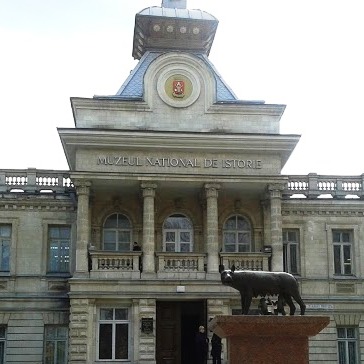
The National Museum of History of Moldova takes place among the most significant museum institutions of the Republic of Moldova, in terms of both its collection and scientific reputation.
©2006-2026 National Museum of History of Moldova
Visit museum 31 August 1989 St., 121 A, MD 2012, Chisinau, Republic of Moldova
Phones:
Secretariat: +373 (22) 24-43-25
Department of Public Relations and Museum Education: +373 (22) 24-04-26
Fax: +373 (22) 24-43-69
E-mail: office@nationalmuseum.md
Technical Support: info@nationalmuseum.md
Web site administration and maintenance: Andrei EMILCIUC


The National Museum of History of Moldova takes place among the most significant museum institutions of the Republic of Moldova, in terms of both its collection and scientific reputation.
©2006-2026 National Museum of History of Moldova
Visit museum 31 August 1989 St., 121 A, MD 2012, Chisinau, Republic of Moldova

Phones:
Secretariat: +373 (22) 24-43-25
Department of Public Relations and Museum Education: +373 (22) 24-04-26
Fax: +373 (22) 24-43-69
E-mail: office@nationalmuseum.md
Technical Support: info@nationalmuseum.md
Web site administration and maintenance: Andrei EMILCIUC

menu
The National Museum of History of Moldova takes place among the most significant museum institutions of the Republic of Moldova, in terms of both its collection and scientific reputation.
©2006-2026 National Museum of History of Moldova
Visit museum 31 August 1989 St., 121 A, MD 2012, Chisinau, Republic of Moldova
Phones:
Secretariat: +373 (22) 24-43-25
Department of Public Relations and Museum Education: +373 (22) 24-04-26
Fax: +373 (22) 24-43-69
E-mail: office@nationalmuseum.md
Technical Support: info@nationalmuseum.md
Web site administration and maintenance: Andrei EMILCIUC