EN RO


#Exhibit of the Month

>>>

Christmas bells entered the Romanian cultural space through a long process in which archaic traditions blended with Christian belief and European influences. Long before the holiday of Christmas developed as we know it, metallic sounds played an important ritual role in old communities: they were used to drive away evil spirits, to purify spaces, and to protect people during transitional moments at the turn of the year. These beliefs have been preserved in winter customs such as caroling, the Plugușor, and masked dances, where bells and jingles were indispensable.
With the spread of Christianity, the sound of the bell also acquired a profound religious meaning, becoming an announcer of major feasts and a symbol of the Nativity. Small bells, however, were not originally used as decorations but primarily as functional or ritual objects.
The first decorated Christmas tree in the Romanian lands was the one at the palace of Prince Carol I of Hohenzollern, following his arrival in the Romanian Principalities in 1866. From that moment the tradition took root, and on Christmas Eve princes and princesses invited to the palace would take part in decorating the tree. Among the ornaments used were small metal bells, symbolizing joy, the good news, and divine protection for the home.
In the twentieth century, Christmas bells spread across all Romanian provinces and became a visual emblem of the holiday, appearing in both decorations and carols. Even during periods when religious expression was curtailed, bells remained in people's homes as signs of joy and the continuity of tradition. Today they retain this dual meaning: the echo of ancient beliefs and, at the same time, the announcement of the Birth of Christ - a symbol of hope, light, and the link between past and present.
These tinkling pieces are part of a generous heritage collection at the National Museum of History of Moldova (NMHM), which includes more than 200 cultural items. A substantial contribution to the museum's collection of decorative bells was made by Dorina Raischi, a teacher at School No. 94 in Chișinău, who donated 174 bells, of which around 30 are winter-themed. Made of ceramic, porcelain, glass, and metal, they were brought from different parts of the world and together offer a succinct picture of the global culture of bells. They add a festive note to the home and even to a gift, and it is hard to imagine Christmas without their cheerful tinkling.

Virtual Tour


Events Archive

International scientific conference „Polish historical traces in Moldova"

March 10, 2021

On June 3, 2021, from 10:00 at the National Museum of History of Moldova (31 August 1989 Street, 121A), the international scientific conference "Polish Historical Traces in Moldova" (with the possibility of online participation) organized by the National Museum of History of Moldova in collaboration with the Embassy of the Republic of Poland to the Republic of Moldova will be held.

The conference will be attended by researchers from five countries: Poland, Romania, Germany, the Russian Federation and the Republic of Moldova. The conference will address issues related to the history of the Polish community from the time of the founding of the Principality of Moldavia to the present day. The scientific communications will be focused on different fields: archeology, numismatics, history, museography, linguistics, sociology, art, religion, and so on.

The conference is organized within the institutional project "Museum heritage and historical memory: research, interpretation, presentation" (20.80009.0807.43).
Participants directly attending the conference are asked to observe the protection measures in pandemic conditions.

Contact phone: + 373 69 44 01 18, Dr. Lilia Zabolotnaia

PROGRAM


Scientific Conference opening session / Plenary session (10:00-11:00)
https://us02web.zoom.us/j/84190965815?pwd=cW9lMHErdHhDdUZ4OTJJWHQwTGdLdz09
Meeting ID: 841 9096 5815
Passcode: 001658
 
History Section (12:00-15:00)
https://us02web.zoom.us/j/82810288859?pwd=MW5pVlViTU5xU3pIOXEvR1RxMU1vdz09
Meeting ID: 828 1028 8859
Passcode: 421815

Religion, Culture, Architecture Section (12:00-15:00)
https://zoom.us/j/94776069745?pwd=UVpNVUlWQnpLNWJYWjFPalVOQmthdz09
Meeting ID: 947 7606 9745
Passcode: 463077


Independent Moldova
Moldavian Soviet Socialist Republic
Bessarabia and MASSR between the Two World Wars
Bessarabia and Moldavian Autonomous Soviet Socialist Republic in the Period between the Two World Wars
Revival of National Movement
Time of Reforms and their Consequences
Abolition of Autonomy. Bessarabia – a New Tsarist Colony
Period of Relative Autonomy of Bessarabia within the Russian Empire
Phanariot Regime
Golden Age of the Romanian Culture
Struggle for Maintaining of Independence of Moldova
Formation of Independent Medieval State of Moldova
Era of the
Great Nomad Migrations
Early Middle Ages
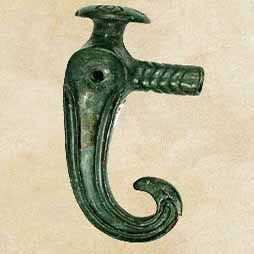
Iron Age and Antiquity
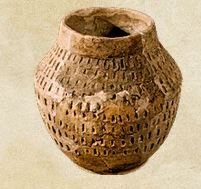
Bronze Age
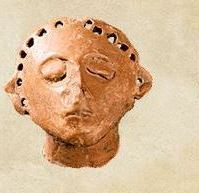
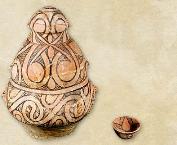
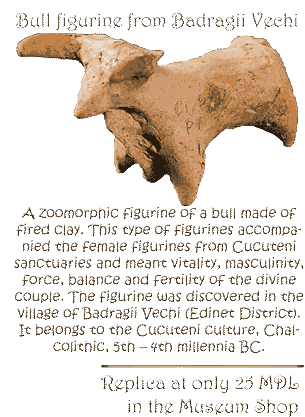
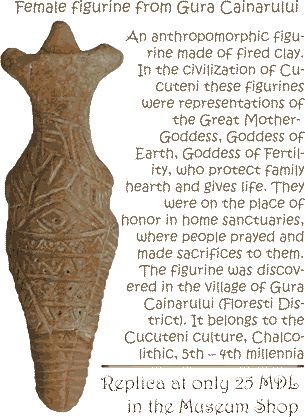
Aeneolithic Age
Neolithic Age
Palaeolithic Age
  
September 25, 2025 – September 1, 2026
 
August 11, 2025 – January 31, 2026
 
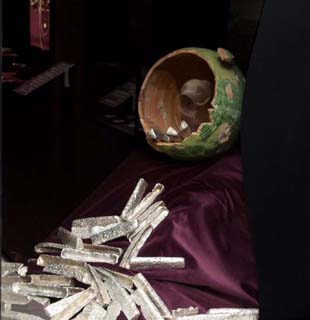
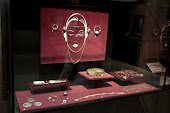
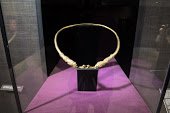
Over 2500 pieces made of precious metals with historic, artistic and symbolic value
  

Come to Museum! Discover the History!
  
Visit museum
Visit museum
Summer schedule: daily
10am – 6pm.

Winter schedule: daily
10am – 5pm.
Closed on Mondays.
Entrance fees:  adults - 50 MDL, Pensioners, students - 20 lei, pupils - 10 MDL. Free access: enlisted men (...)

WiFi Free Wi-Fi Zone in the museum: In the courtyard of the National History Museum of Moldova there is Wi-Fi Internet access for visitors.


#Exhibit of the Month

Christmas bells entered the Romanian cultural space through a long process in which archaic traditions blended with Christian belief and European influences. Long before the holiday of Christmas developed as we know it, metallic sounds played an important ritual role in old communities: they were used to drive away evil spirits, to purify spaces, and to protect people during transitional moments at the turn of the year...

Read More >>


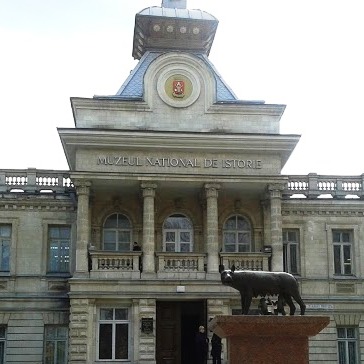
The National Museum of History of Moldova takes place among the most significant museum institutions of the Republic of Moldova, in terms of both its collection and scientific reputation.
©2006-2026 National Museum of History of Moldova
Visit museum 31 August 1989 St., 121 A, MD 2012, Chisinau, Republic of Moldova
Phones:
Secretariat: +373 (22) 24-43-25
Department of Public Relations and Museum Education: +373 (22) 24-04-26
Fax: +373 (22) 24-43-69
E-mail: office@nationalmuseum.md
Technical Support: info@nationalmuseum.md
Web site administration and maintenance: Andrei EMILCIUC


The National Museum of History of Moldova takes place among the most significant museum institutions of the Republic of Moldova, in terms of both its collection and scientific reputation.
©2006-2026 National Museum of History of Moldova
Visit museum 31 August 1989 St., 121 A, MD 2012, Chisinau, Republic of Moldova
Phones:
Secretariat: +373 (22) 24-43-25
Department of Public Relations and Museum Education: +373 (22) 24-04-26
Fax: +373 (22) 24-43-69
E-mail: office@nationalmuseum.md
Technical Support: info@nationalmuseum.md
Web site administration and maintenance: Andrei EMILCIUC

menu
The National Museum of History of Moldova takes place among the most significant museum institutions of the Republic of Moldova, in terms of both its collection and scientific reputation.
©2006-2026 National Museum of History of Moldova
Visit museum 31 August 1989 St., 121 A, MD 2012, Chisinau, Republic of Moldova
Phones:
Secretariat: +373 (22) 24-43-25
Department of Public Relations and Museum Education: +373 (22) 24-04-26
Fax: +373 (22) 24-43-69
E-mail: office@nationalmuseum.md
Technical Support: info@nationalmuseum.md
Web site administration and maintenance: Andrei EMILCIUC