EN RO


#Exhibit of the Month

>>>

The ceramic vessel set was discovered accidentally in October 2025 in the southwestern part of the village of Bălceana, Hâncești District, approximately 1.2 km from the Lăpușnița River. The archaeological materials were recovered by the National Archaeological Agency.

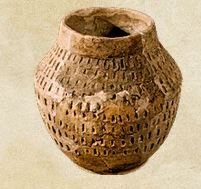
The ceramic assemblage consists of a large storage vessel (pithos) with a capacity of 20 litres (h = 39.2 cm; d = 35.0 cm), decorated with a raised band below the rim; a medium-sized bowl with a capacity of 2.5 litres (h = 16.9 cm; d = 23.2 cm); a medium-sized jug with a capacity of 0.6 litres (h = 12.0 cm; d = 13.4 cm); and the base of a jar-shaped vessel.

The coarse handmade pottery was produced using the coil-building technique, by stacking and shaping coils of clay prepared from a paste tempered with crushed fired clay (grog) and sand. The vessel surfaces are uneven and covered with a yellowish-red slip featuring black patches, while the core of the vessel walls is black in colour.

The three vessels preserved intact display well-defined biconical shapes, with their maximum diameter at the middle of the body and straight or slightly oblique rims with rounded edges. Pottery of this type is characteristic of the Early Medieval cultural area of the northern and northwestern Black Sea region, dating from the 5th to the 7th centuries. East of the Dniester River, on the territory of present-day Ukraine, analogous pottery is found in Penkovka-type settlements, while in the Carpathian-Dniester region it is characteristic of settlements belonging to the Costișa-Botoșana-Hansca cultural group.

Within the Prut-Dniester region, coarse biconical pottery is generally represented by fragments and only relatively rarely by complete vessels, such as those discovered at Hansca, Dănceni, Recea, Seliște, Păhărniceni, and other sites. This type of pottery constituted an indispensable component of the local material culture during the 5th-7th centuries. In this context, the discovery at Bălceana of an almost intact set of coarse biconical vessels represents a relatively rare find of considerable scientific importance.

According to certain hypotheses, the tradition of coarse biconical pottery dating to the 5th-7th centuries originated in the North Pontic region. At the same time, it cannot be ruled out that these biconical ceramic vessels were the result of contemporary ethnocultural interactions, developing simultaneously across the vast territory extending from the Carpathian Mountains to the Dnieper River and the Seversky Donets.

Virtual Tour


Events Archive

The national colloquium "The 21st century museum: between traditionalism and modernity"

March 10, 2023

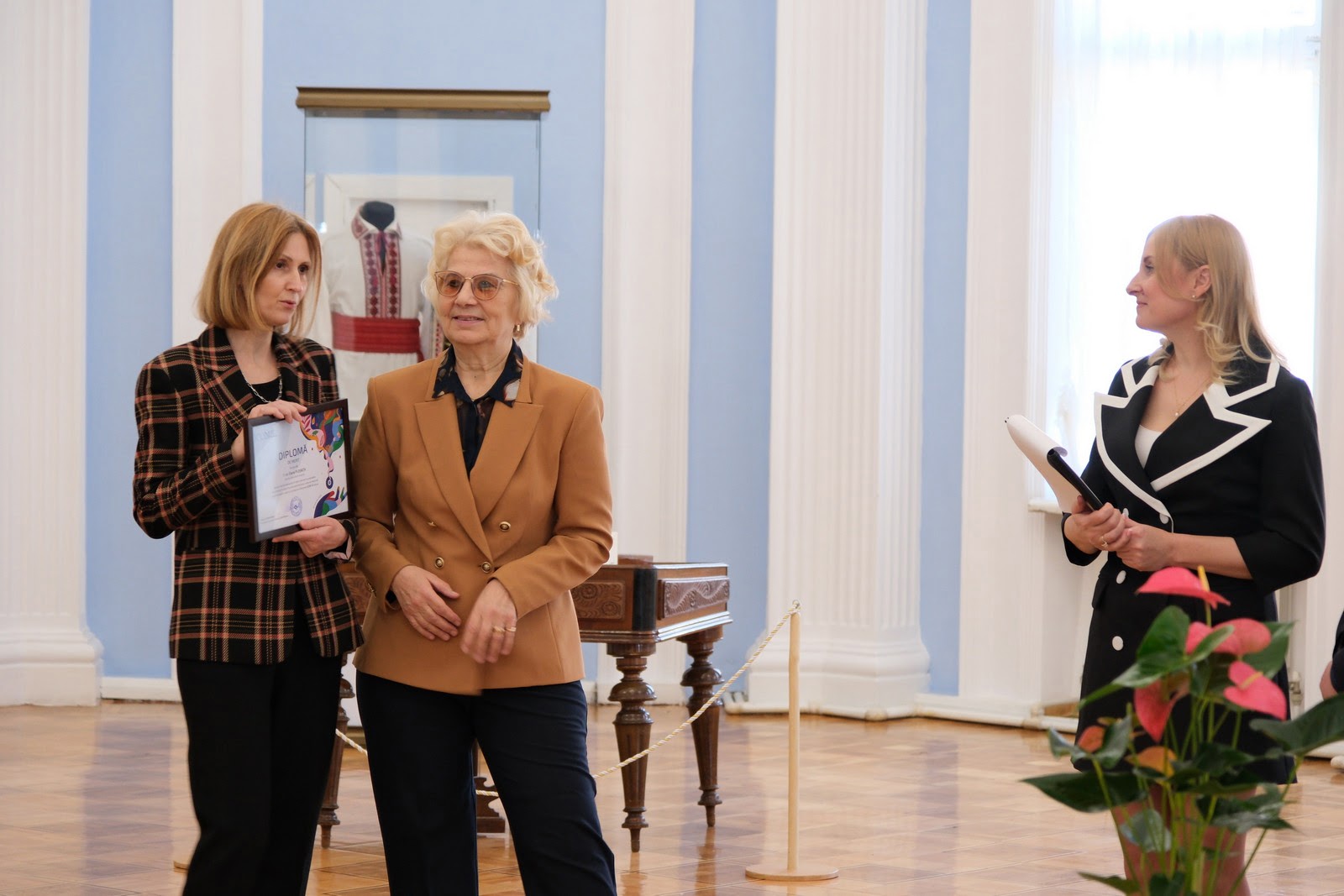
On March 10, 2023, at the National Museum of History of Moldova, took place the colloquium "The 21st century museum between traditionalism and modernity", a generous, vast, complex theme. Directors of national museum institutions, museographers and researchers from the Republic of Moldova and Romania were present during the colloquium. Also, have honored the colloquium with their presence: Dr. Ioan Opriș from Bucharest, Dr. Virgil Nițulescu, director of the Romanian National Museum from Bucharest, Dr. Aurica Ichim, director of the "Regina Maria" Iași Municipal Museum. The participants of the event were greeted by local and foreign scientific personalities.

The colloquium provided a favorable framework for debates on museum management. The participants in the event exclusively addressed management issues, which is one of the factors that determine the prosperity of a museum institution. The respective subject was chosen, because successful management practices have a positive impact and ensure the efficiency of the museum's activity, and that modern management needs to be applied in the institutions of the Republic of Moldova. Several communications of wide interest were heard, with obvious references to the immediate current affairs, which provoked heated discussions. Discussions focused on several important issues: the need for autonomy of museums in setting the price of museum admission, so that the costs reflect the expenses associated with the organization of the exhibitions and the fees for the services offered by the museum; developing the entrepreneurial capacities of the museum administration; development of the museums' marketing strategy; the need to develop an educational program in partnership with the Ministry of Education and Research. The participants of the demonstration brought back to the discussion the public policy proposal regarding the modernization and efficiency of the museum activity, approved in 2012 and canceled in 2013, considering that if this proposal had been implemented, the museums of the Republic of Moldova would have been at a different level of development today and closer to the modern museums of Europe. During the discussions, the portrait of a successful manager was drawn. It has been established that in contemporary museums a modern management is needed to apply marketing strategies, to improve museum performance and the application of entrepreneurship as one of the new trends in museum management could diversify funding sources, lead to the creation of innovative educational programs , adapted to different categories of public.

The works of the colloquium ended with the presentation of two monographs: Elena Ploșnița, Museum. Museification of immovable cultural heritage, Chisinau, Bons Offices publishing house, 2021 and Elena Ploșnița, Museum. Traditionalism and modernity, Chisinau, Bons Offices publishing house, 2022.


Independent Moldova
Moldavian Soviet Socialist Republic
Bessarabia and MASSR between the Two World Wars
Bessarabia and Moldavian Autonomous Soviet Socialist Republic in the Period between the Two World Wars
Revival of National Movement
Time of Reforms and their Consequences
Abolition of Autonomy. Bessarabia – a New Tsarist Colony
Period of Relative Autonomy of Bessarabia within the Russian Empire
Phanariot Regime
Golden Age of the Romanian Culture
Struggle for Maintaining of Independence of Moldova
Formation of Independent Medieval State of Moldova
Era of the
Great Nomad Migrations
Early Middle Ages
Iron Age and Antiquity
Bronze Age
Aeneolithic Age
Neolithic Age
Palaeolithic Age
  
September 25, 2025 – September 1, 2026
 
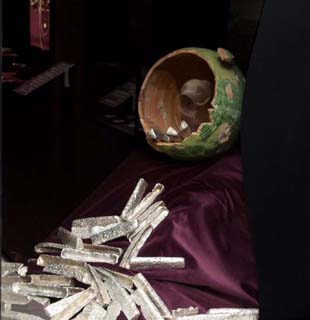
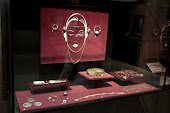
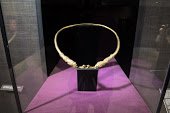
Over 2500 pieces made of precious metals with historic, artistic and symbolic value
  

Come to Museum! Discover the History!
  
Visit museum
Visit museum
Summer schedule: daily
10am – 6pm.

Winter schedule: daily
10am – 5pm.
Closed on Mondays.
Entrance fees:  adults - 50 MDL, Pensioners, students - 20 lei, pupils - 10 MDL. Free access: enlisted men (...)

WiFi Free Wi-Fi Zone in the museum: In the courtyard of the National History Museum of Moldova there is Wi-Fi Internet access for visitors.


#Exhibit of the Month

The ceramic vessel set was discovered accidentally in October 2025 in the southwestern part of the village of Bălceana, Hâncești District, approximately 1.2 km from the Lăpușnița River. The archaeological materials were recovered by the National Archaeological Agency...

Read More >>


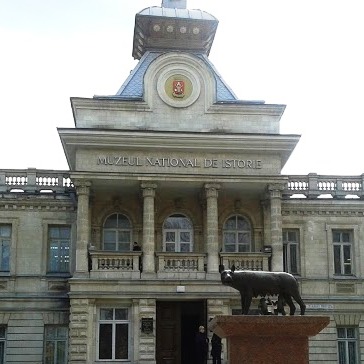
The National Museum of History of Moldova takes place among the most significant museum institutions of the Republic of Moldova, in terms of both its collection and scientific reputation.
©2006-2026 National Museum of History of Moldova
Visit museum 31 August 1989 St., 121 A, MD 2012, Chisinau, Republic of Moldova
Phones:
Secretariat: +373 (22) 24-43-25
Department of Public Relations and Museum Education: +373 (22) 24-04-26
Fax: +373 (22) 24-43-69
E-mail: office@nationalmuseum.md
Technical Support: info@nationalmuseum.md
Web site administration and maintenance: Andrei EMILCIUC


The National Museum of History of Moldova takes place among the most significant museum institutions of the Republic of Moldova, in terms of both its collection and scientific reputation.
©2006-2026 National Museum of History of Moldova
Visit museum 31 August 1989 St., 121 A, MD 2012, Chisinau, Republic of Moldova

Phones:
Secretariat: +373 (22) 24-43-25
Department of Public Relations and Museum Education: +373 (22) 24-04-26
Fax: +373 (22) 24-43-69
E-mail: office@nationalmuseum.md
Technical Support: info@nationalmuseum.md
Web site administration and maintenance: Andrei EMILCIUC

menu
The National Museum of History of Moldova takes place among the most significant museum institutions of the Republic of Moldova, in terms of both its collection and scientific reputation.
©2006-2026 National Museum of History of Moldova
Visit museum 31 August 1989 St., 121 A, MD 2012, Chisinau, Republic of Moldova
Phones:
Secretariat: +373 (22) 24-43-25
Department of Public Relations and Museum Education: +373 (22) 24-04-26
Fax: +373 (22) 24-43-69
E-mail: office@nationalmuseum.md
Technical Support: info@nationalmuseum.md
Web site administration and maintenance: Andrei EMILCIUC