The grapevine plant, now widespread across the globe, traces its origins back to the Upper Cretaceous geological period, when species of Vitis Linn appeared on Earth (Mesozoic era), followed later by Vitis vinifera L., the latter already classified among cultivated agricultural plants. Most researchers link the origin of the cultivated grapevine (Vitis vinifera L.) to the wild forest species Vitis sylvestris Gmel. Thickets of Vitis sylvestris Gmel. can still sporadically be found in the groves along the Prut and Dniester floodplains.
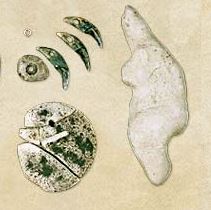
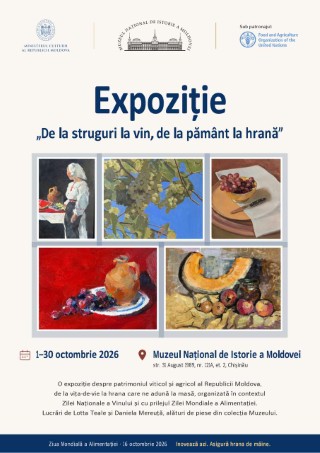
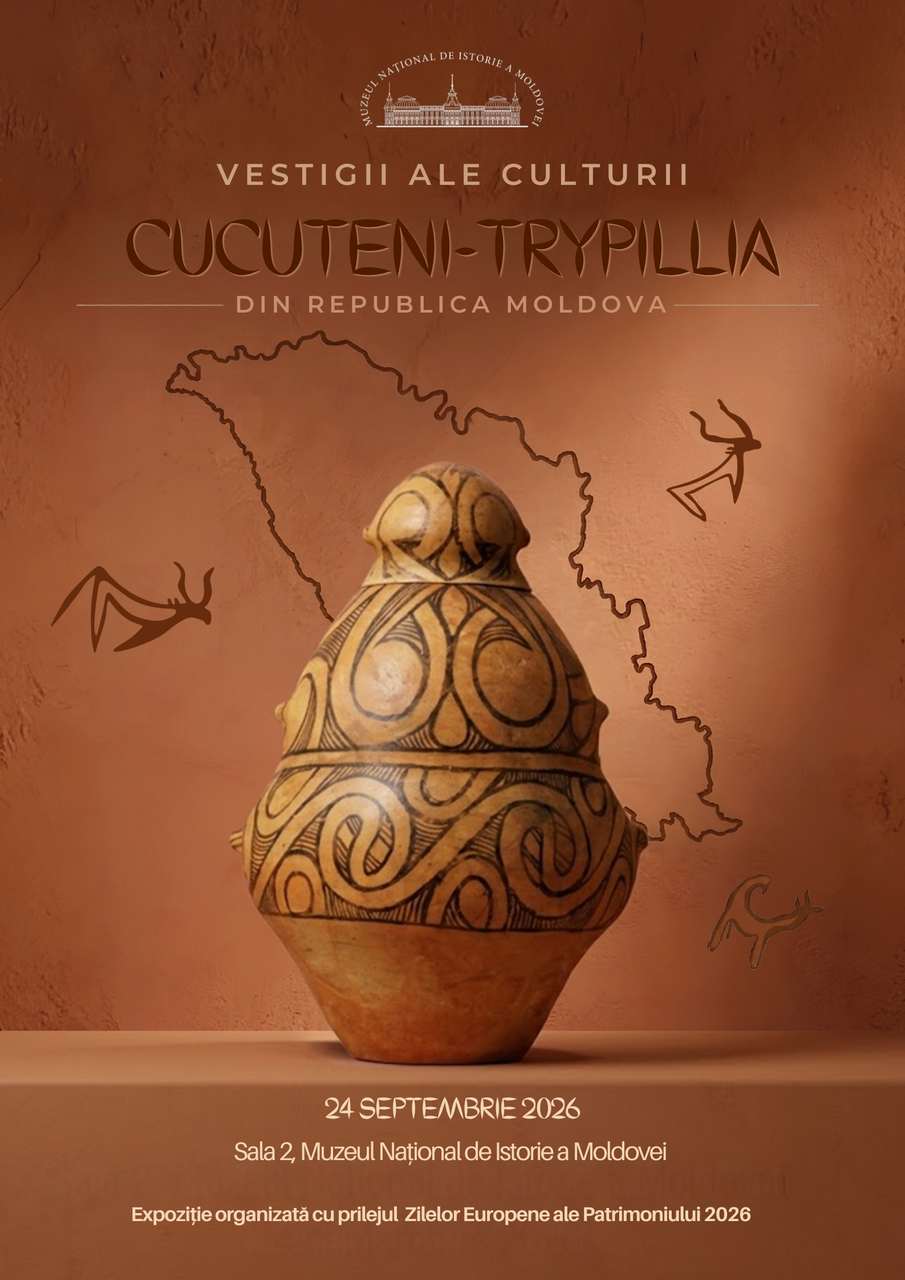
During the Precucuteni III - Trypillia A period (ca. 4750-4600 BC), the presence of cultivated grape seeds was clearly documented on pottery from the settlement of Ruseştii Noi I, layer I, kiln A, consisting of a seed impression on a ceramic fragment, with the elongated beak characteristic of the domesticated species Vitis vinifera L. Another seed impression of Vitis vinifera L. was recorded at the settlement of Vărvăreuca VIII, identified on the wall of a painted vessel from the Cucuteni B - Trypillia CI stage (3800-3500/3300 BC). In October, on the occasion of the National Wine Day, the National Museum of History of Moldova presents to your attention a unique relic in Southeastern Europe. The exhibit originates from the settlement Brînzeni VIII "Sâiece," belonging to the Cucuteni-Trypillia culture and dated to the Cucuteni AB2 - Trypillia B2 phase (ca. 4050-3800 BC), located in Brînzeni village, Edineț district. The site lies 2 km southwest of the locality, in a triangle formed by the confluence of the Racovăț and Drobiște streams and the local road L36 Bădragii Vechi-Brînzeni. Positioned on land 25-30 meters above the valley, it was discovered in 1966 by archaeologist Nicolaie Chetraru and investigated through excavations between 1978-1980 by Vsevolod Marchevici. The October exhibit is a grapevine leaf impression discovered in 1980. It comes from pit no. 5, partially investigated, with a maximum depth of 155 cm. From the same archaeological complex near dwelling no. 1, several grape seeds were also recovered, as noted in the excavation report. The grapevine leaf impression appears on a coarse clay lump, fired and vitrified due to secondary burning, reddish in color, with an irregular rectangular, flattened shape. The outer surface is uneven and rough. The impression surface is smoothed, with the leaf veins clearly highlighted. Measuring 99 mm in length, 110 mm in width, and 28-31 mm in thickness, the exhibit presents in full splendor an authentic grapevine leaf impression. Some researchers attribute it to the domesticated grapevine Vitis vinifera L., while others, more skeptical, consider it a wild species. Nevertheless, being discovered in a well-documented archaeological context, together with grape seeds near a dwelling, it provides evidence that grapevine was part of Cucuteni community life 6,000 years ago. These findings allow us to affirm that the process of domestication and the creation of table grapes was already underway. The diversity of Cucuteni ceramic forms, as well as the painting on some vessels, undoubtedly suggests their use as containers for various liquids. Accordingly, the emergence of wine among Cucuteni communities can be taken into consideration.
The journal asks authors to pay attention to the following aspects:
- temporarily does not publish materials of researchers from the Russian Federation (according to the decision of the Scientific Council of NMHM of 19.12.2022);
- the journal does not publish materials that may be considered plagiarized;
- for publication are only accepted novel, previously unpublished materials. The author is obliged to inform the editorial board if submitted article was submitted for publication in other journals or if there is an already published modified version of the same article;
- the editorial board is taking consideration of the fact that submitted for peer review and publication materials are confidential. Unpublished material will not be used under any circumstances by the editor, reviewers or publishers for personal purposes or any other purpose;
- we encourage all authors to be respectful and to be guided by academic fairness in articles containing criticism of colleagues. Otherwise, the editor reserves the right to reject or edit the material to meet these requirements;
- analysis and review of materials by the editorial board of the journal focuses exclusively on scholarly value, clarity of presentation and scholarly ethics requirements. The process of accepting articles for publication excludes all discrimination based on sex, age, race, religion, nationality or any other discriminatory criterion.
Structure of the journal
The journal has the following sections:
I. Studies
II. Materials and research
III. Reviews and book presentations
Upon need, two other compartments are added: Tribute and In memoriam
Instructions for authors
Contributions should be submitted in Romanian, Russian, English, German, French.
The volume of the manuscripts shouldn’t exceed 100,000 signs, (approximately 2,5 ens), including bibliography, summaries and illustrations.
The texts of the contributions should be submitted as digital copies: Microsoft Word; Times New Roman (with diacritics specific to the text language); Font size 12; Spaсe 1,5.
Articles should have keywords (5-7 words) and summaries (max. 1500 signs) in three languages: Romanian, Russian, English (German or French).
Plates (illustrations) should be provided in clear graphic (GRAYSCALE, format TIF, JPG – minimum 300 dpi and higher) and should respect the maximum size of page mirror (16×23,5 cm or 7,5×23,5, including the legend). Each object on the plate will be numbered using numbers (if necessary letters), using font Georgia, font size 10. Illustrative material must also be accompanied by a list of illustrations (Microsoft Word, Times New Roman, font size 10) with a comprehensive legend in Romanian, Russian, English (German or French).
Bibliographic notes should be presented in original, inside the manuscript text: (Teodor 2005, 172, fig. 7/4-6; Müller 1953, 123, Abb. 15/4-6; Петров 1999, 15, рис. 3/4-6).
Explanations, comments and references to archive and museum funds will be made at the footer (continuous numbering).
References to illustrations (figures) from text should be done in parenthesis, in short, according the following example (fig. 2/7; Abb. 2/7; рис. 2/7).
Bibliography should be presented in alphabetical order at the end of the text.
Citation of monographs:
Boardman 1988: J. Boardman, Grecii de peste mări. Colonizarea greacă și comerțul timpuriu (București 1988).
Козуб 1974: Ю.I. Козуб, Некрополь Ольвiï V-IV ст. до н.e. (Киïв 1974).
Citation of articles published in collections of scholarly articles:
Behren 2005: Claudia von Behren, Sklaven und Freigelassene auf bosporanischen Grabreliefs. In: (Ed. V. Cojocaru) Ethnic Contacts and Cultural Exchanges North and West of the Black Sea from the Greek Colonization to the Ottoman Conquest (Iași 2005), 167-194.
Ванчугов 1981: В.П. Ванчугов, Поселение позднего бронзового века Ялпуг-IV в Нижнем Подунавье. В сб.: (Отв. ред. П.О. Карышковский) Памятники древних культур Северо-Западного Причерноморья (Киев 1981), 91-102.
Citation of works published in periodical editions (journals, yearbooks etc.):
Postică 2005: Gh. Postică, Complexul monumental din piatră din secolul XV descoperit în citadela Orheiului Vechi. Revista Arheologică S.N. I/2, 2005, 371-387.
Рехо 1973: М. Рехо, Атическа рисувана керамика в тракийския погребален контекст. Наблюдения върху съдовете, открити в България. Aрхеология 31/2, 1973, 11-19.
Citation of materials published in volumes of symposiums and scholarly conferences:
Trohani 2004: G. Trohani, Aspects concernant des rituels de fondation chez les geto-daces. Tracians and circumpontics world. Proceedings of the Ninth International Congress of Thracology, Chișinău-Vadul lui Vodă, 6-11 september 2004, II (Chișinău 2004), 332-337.
Бибикова 1972: В.И. Бибикова, О доместикации лошади на Юго-Востоке Европы. Матерiали XIII конференцiï Iнституту археологiï АН УРСС, Киïв, 1968 (Киïв 1972), 106-110.
If abbreviations are used in text and bibliography, a list of abbreviations should be attached in the end.
Data about the author is attached at the end of the text: name, surname; academic degree; position; institution; address; telephone, fax, e-mail.
Deadlines
To facilitate the timely issue of the journal please respect the deadline for paper submission – March 1 of each year.
Taxes
The journal does not charge for processing and editing articles. Authors receive a copy of the journal in which the article was published without any charge.
Copyright
The journal allows authors to hold and keep copyrights on articles without restrictions.
The grapevine plant, now widespread across the globe, traces its origins back to the Upper Cretaceous geological period, when species of Vitis Linn appeared on Earth (Mesozoic era), followed later by Vitis vinifera L., the latter already classified among cultivated agricultural plants. Most researchers link the origin of the cultivated grapevine (Vitis vinifera L.) to the wild forest species Vitis sylvestris Gmel...
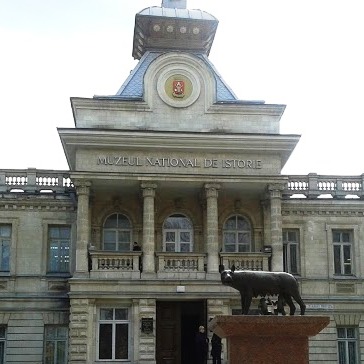
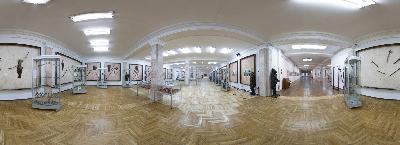
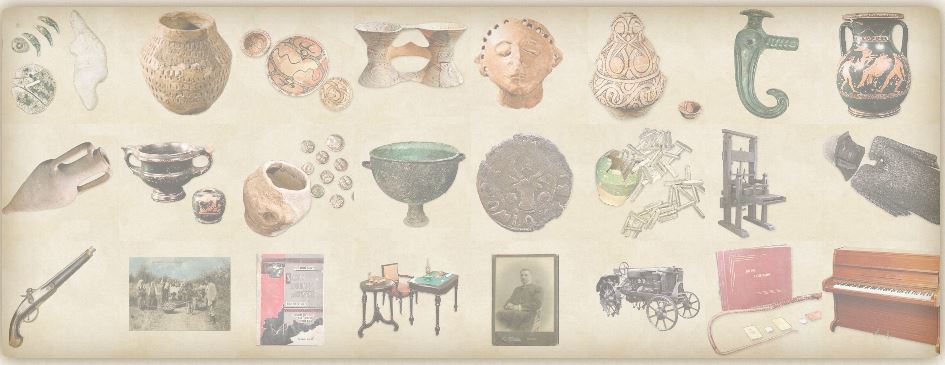
The National Museum of History of Moldova takes place among the most significant museum institutions of the Republic of Moldova, in terms of both its collection and scientific reputation.
The National Museum of History of Moldova takes place among the most significant museum institutions of the Republic of Moldova, in terms of both its collection and scientific reputation.
The National Museum of History of Moldova takes place among the most significant museum institutions of the Republic of Moldova, in terms of both its collection and scientific reputation.






















 31 August 1989 St., 121 A, MD 2012, Chisinau, Republic of Moldova