EN RO


#Exhibit of the Month

>>>

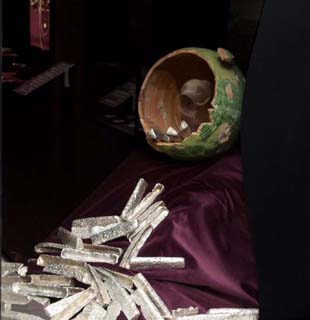
The ceramic vessel set was discovered accidentally in October 2025 in the southwestern part of the village of Bălceana, Hâncești District, approximately 1.2 km from the Lăpușnița River. The archaeological materials were recovered by the National Archaeological Agency.

The ceramic assemblage consists of a large storage vessel (pithos) with a capacity of 20 litres (h = 39.2 cm; d = 35.0 cm), decorated with a raised band below the rim; a medium-sized bowl with a capacity of 2.5 litres (h = 16.9 cm; d = 23.2 cm); a medium-sized jug with a capacity of 0.6 litres (h = 12.0 cm; d = 13.4 cm); and the base of a jar-shaped vessel.

The coarse handmade pottery was produced using the coil-building technique, by stacking and shaping coils of clay prepared from a paste tempered with crushed fired clay (grog) and sand. The vessel surfaces are uneven and covered with a yellowish-red slip featuring black patches, while the core of the vessel walls is black in colour.

The three vessels preserved intact display well-defined biconical shapes, with their maximum diameter at the middle of the body and straight or slightly oblique rims with rounded edges. Pottery of this type is characteristic of the Early Medieval cultural area of the northern and northwestern Black Sea region, dating from the 5th to the 7th centuries. East of the Dniester River, on the territory of present-day Ukraine, analogous pottery is found in Penkovka-type settlements, while in the Carpathian-Dniester region it is characteristic of settlements belonging to the Costișa-Botoșana-Hansca cultural group.

Within the Prut-Dniester region, coarse biconical pottery is generally represented by fragments and only relatively rarely by complete vessels, such as those discovered at Hansca, Dănceni, Recea, Seliște, Păhărniceni, and other sites. This type of pottery constituted an indispensable component of the local material culture during the 5th-7th centuries. In this context, the discovery at Bălceana of an almost intact set of coarse biconical vessels represents a relatively rare find of considerable scientific importance.

According to certain hypotheses, the tradition of coarse biconical pottery dating to the 5th-7th centuries originated in the North Pontic region. At the same time, it cannot be ruled out that these biconical ceramic vessels were the result of contemporary ethnocultural interactions, developing simultaneously across the vast territory extending from the Carpathian Mountains to the Dnieper River and the Seversky Donets.

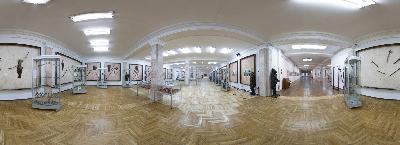
Virtual Tour


#Exhibit of the Month

February 2022

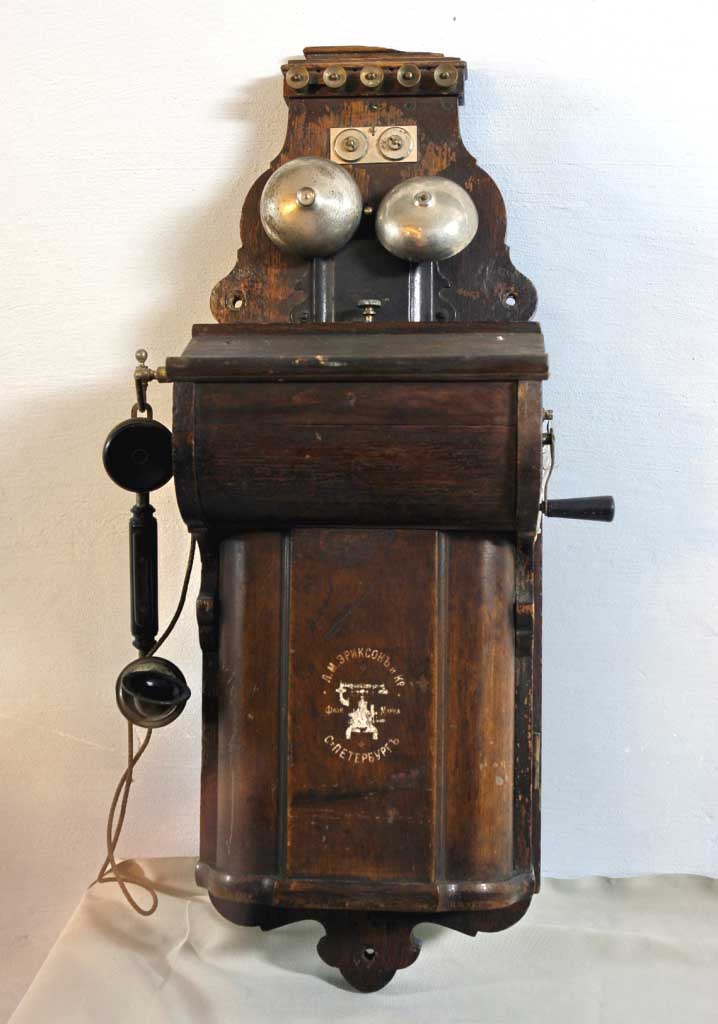
L.M. ERICSSON & Co wall telephone

The date of invention of the telephone, a device capable of transmitting and receiving spoken words, is considered February 14, 1876. On the same day, four hours apart, two patent applications were filed with the New York Patent Office. The first application was made by Alexander Graham Bell and the second by Elisha Gray. For many years in a row, after the invention was introduced, there was a series of lawsuits between them, during which Bell had to prove his primacy.

In 1876, the famous Swedish telephone company Ericsson began its activities, when Lars Magnus Ericsson and his friend Karl Anderson founded the L.M. Ericsson and Co electromechanical workshop. This workshop initially repaired telephones and other signaling equipment, but in 1878 the production of self-designed telephones began. Ericsson opened its own production thanks to the telephones of the American Bell Telephone Company, which appeared on the Swedish market in 1877 and were often repaired. By repairing these phones, Ericsson was able to not only study their design, but significantly improve it. Ericsson devices were much more convenient, had better sound quality, and cost less than American devices. Gradually L.M. Ericsson & Co devices gained popularity not only in Sweden but also abroad. At the beginning of the 20th century, the Swedish company Ericsson opened its branch also in Russia.

The wall telephone shown in this display case is a model produced in 1907-1915 in St. Petersburg, Russian Empire. This is a phone that came into the possession of the National Museum of History of Moldova in 1984 by transfer from the State Museum of History and Local Lore. The exhibit is one of the rarities of great historical and scientific technical value.

The telephone is mounted in a wooden case having the shape of a parallelepiped. Above the case, on a plate in the form of a truncated cone with wavy edges, five clamps are mounted for connecting telephone and grounding lines, a transmitter microphone and two bells. In the upper part of the case there is a compartment for the inductor, and in the lower part there is a battery compartment. The inductor handle is installed on the right. On the left, on a metal lever, is a receiver with an ebonite handle, connected to the device via a textile-coated cord. The phone was equipped with electromagnets. For use, it was necessary to pick up the receiver, turn the handle, which actuated the inductor that transmits the signal to the telephone exchange, where it was received by the telephone operator, who connected with the requested subscriber.

This type of device was intended for railways. In 1917, this telephone was used at the Lipcani railway station in the Khotin Uyezd of the Bessarabia Governorate (now the Briceni district). The Ocniţa - Lipcani railway line was put into operation in 1893 along with two other lines of Mogilev - Ocnita and Bălți - Ocnita.


Independent Moldova
Moldavian Soviet Socialist Republic
Bessarabia and MASSR between the Two World Wars
Bessarabia and Moldavian Autonomous Soviet Socialist Republic in the Period between the Two World Wars
Revival of National Movement
Time of Reforms and their Consequences
Abolition of Autonomy. Bessarabia – a New Tsarist Colony
Period of Relative Autonomy of Bessarabia within the Russian Empire
Phanariot Regime
Golden Age of the Romanian Culture
Struggle for Maintaining of Independence of Moldova
Formation of Independent Medieval State of Moldova
Era of the
Great Nomad Migrations
Early Middle Ages
Iron Age and Antiquity
Bronze Age
Aeneolithic Age
Neolithic Age
Palaeolithic Age


Come to Museum! Discover the History!
  
Visit museum
Visit museum
Summer schedule: daily
10am – 6pm.

Winter schedule: daily
10am – 5pm.
Closed on Mondays.
Entrance fees:  adults - 50 MDL, Pensioners, students - 20 lei, pupils - 10 MDL. Free access: enlisted men (...)

WiFi Free Wi-Fi Zone in the museum: In the courtyard of the National History Museum of Moldova there is Wi-Fi Internet access for visitors.


#Exhibit of the Month

The ceramic vessel set was discovered accidentally in October 2025 in the southwestern part of the village of Bălceana, Hâncești District, approximately 1.2 km from the Lăpușnița River. The archaeological materials were recovered by the National Archaeological Agency...

Read More >>


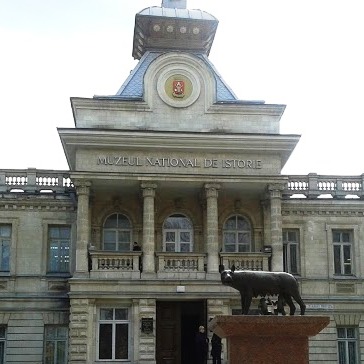
The National Museum of History of Moldova takes place among the most significant museum institutions of the Republic of Moldova, in terms of both its collection and scientific reputation.
©2006-2026 National Museum of History of Moldova
Visit museum 31 August 1989 St., 121 A, MD 2012, Chisinau, Republic of Moldova
Phones:
Secretariat: +373 (22) 24-43-25
Department of Public Relations and Museum Education: +373 (22) 24-04-26
Fax: +373 (22) 24-43-69
E-mail: office@nationalmuseum.md
Technical Support: info@nationalmuseum.md
Web site administration and maintenance: Andrei EMILCIUC


The National Museum of History of Moldova takes place among the most significant museum institutions of the Republic of Moldova, in terms of both its collection and scientific reputation.
©2006-2026 National Museum of History of Moldova
Visit museum 31 August 1989 St., 121 A, MD 2012, Chisinau, Republic of Moldova
Phones:
Secretariat: +373 (22) 24-43-25
Department of Public Relations and Museum Education: +373 (22) 24-04-26
Fax: +373 (22) 24-43-69
E-mail: office@nationalmuseum.md
Technical Support: info@nationalmuseum.md
Web site administration and maintenance: Andrei EMILCIUC

menu
The National Museum of History of Moldova takes place among the most significant museum institutions of the Republic of Moldova, in terms of both its collection and scientific reputation.
©2006-2026 National Museum of History of Moldova
Visit museum 31 August 1989 St., 121 A, MD 2012, Chisinau, Republic of Moldova
Phones:
Secretariat: +373 (22) 24-43-25
Department of Public Relations and Museum Education: +373 (22) 24-04-26
Fax: +373 (22) 24-43-69
E-mail: office@nationalmuseum.md
Technical Support: info@nationalmuseum.md
Web site administration and maintenance: Andrei EMILCIUC