EN RO


#Exhibit of the Month

>>>

To mark the 150th anniversary of the birth of the great Romanian sculptor Constantin Brâncuși, 2026 was declared by the President of Romania the Year of Constantin Brâncuși. Constantin Brâncuși, one of the greatest sculptors of the twentieth century, was born in 1876 in Hobița, Gorj County, and passed away in 1957 in Paris; he was buried in the Père-Lachaise cemetery. In 1904 he arrived in Paris, where he attended courses at the Royal Academy of Fine Arts. There he also worked in the studio of Auguste Rodin (1840-1917), the founder of modern sculpture, and met Amadeo Modigliani (1884-1920), the Italian sculptor settled in France. Inspired by the work of these artists, he perfected his artistic training in Paris. His works are held in museums both at home and abroad, in the Netherlands, the Scandinavian countries, France, and the United States of America. For his outstanding merits he was awarded the Order of the Star of Romania in 1923; in 1931 Nicolae Iorga proposed him for the Order of Cultural Merit; and only in 1990 was he posthumously elected a member of the Romanian Academy.
One of the artist's most famous creations is the sculpture Mademoiselle Pogany, considered a national symbol of modern Romanian art. Its protagonist was Margaret Pogany (1879-1964), a young Hungarian painter who came to Paris in 1909 to study painting techniques. Visiting her studio, she asked the sculptor to make her portrait, even leaving him a photograph and a self-portrait. In 1911 Brâncuși sculpted her likeness from memory in marble and in bronze, focusing on the deep, large, almond-shaped eyes, the subdued eyebrows, the narrow nose, the small mouth, the austere hairstyle and the modest gesture of the hands, rested against the face. Between 1912 and 1933 he produced nineteen versions of Mademoiselle Pogany.
The commemorative medal "Constantin Brâncuși (1876-1976). Expoziție Filatelică Omagială - București 1976" was struck in Romania at the State Mint by the engraver Ștefan Grudinschi. Executed in bronze with a diameter of 60 mm and a weight of 113.73 g, the medal is remarkable for its memorial and artistic value. Obverse: the sculptor's bust facing left, with the semicircular legend "CONSTANTIN BRÂNCUȘI - 1876-1976." Reverse: a fragment of the triptych The Gate of the Kiss. Semicircular legend: "EXPOZIȚIA FILATELICĂ OMAGIALĂ - BUCUREȘTI 1976."
The medal "Constantin Brâncuși. Mademoiselle Pogany. Craiova Art Museum. 1987" was also executed in bronze at the State Mint (Bucharest); it has a nominal diameter of 60 mm (because of the circular cutting the actual dimensions are D: 45 mm; weight: 53.55 g). The obverse shows, in the central field, an image of the Craiova Art Museum framed by the semicircular legend "MUZEUL DE ARTĂ - CRAIOVA / 1987." The reverse depicts a replica of the sculpture Mademoiselle Pogany made by Brâncuși's pupil O. Moșescu, accompanied by the inscription "CONSTANTIN BRÂNCUȘI - M-elle POGANY / 1913."

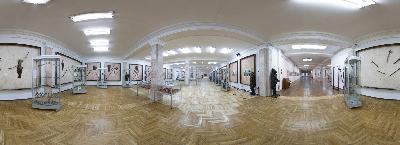
Virtual Tour


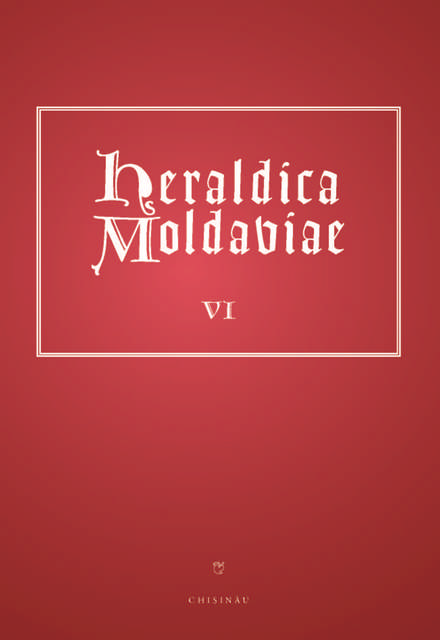
Heraldica Moldaviae, Vol. 6, 2023

Chişinău : [S. n.], 2024 (Lexon-Prim). ISBN 978-9975-87-449-6. 304 p.

STUDIES AND PAPERS


Ana BOLDUREANU

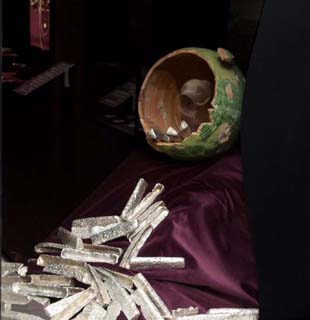
Medieval Western European Leads for Fabrics, Discovered in the Republic of Moldova (16th-17th Centuries) (II)


Silviu ANDRIEȘ-TABAC, Tudor CIOBANU

A new document from 1815 with the seal of the Divan of the Principality of Moldavia


Silviu ANDRIEȘ-TABAC

The new Bessarabian noble seals of the old Moldavian boyars after 1812


Silviu ANDRIEȘ-TABAC, Sergius CIOCANU

Deciphering the Vâlcov seal from the early 19th century


Drăgan-George BASARABĂ

The reward of loyalty. Ennoblements of the leaders of the Paşoptist revolution in Transylvania


Tudor-Radu TIRON

The heraldic ex-libris of diplomat Vasile N. Krupenski


Tudor-Radu TIRON

An unknown project that is an emblem of Bucharest


Alexandru DANEȘ

Coat of arms projects for counties and municipalities established in the Socialist Republic of Romania after 1972


Ileana CĂZAN

Carelessness, ill will and violation of the law in territorial heraldry. Case study: Brașov, Constanța and Cluj municipalities


Andrii GRECILO

The problems of the new Ukrainian local territorial heraldry, on the example of the symbols of the villages on the border with Romania


Ihor IANUŞKEVÎCI

Author's coats of arms, officialized in the Chernivtsi region


Tudor-Radu TIRON

The memory of 1848 reflected in the new administrative-territorial heraldry


Silviu ANDRIEȘ-TABAC

Commemorative cross "Participant in the combat actions for the defense of the integrity and independence of the Republic of Moldova (1991-1992)"


Silviu ANDRIEȘ-TABAC

Territorial emblems: from toponymy to heraldry


IN HONOREM


Oxana DIACONU-CATAN

Alexei Colîbneac at 80


IN MEMORIAM


Angela FURTUNĂ

Simion Odainic (* September 1, 1938 – † June 27, 2023). Portrait of a Heraldic Artist


REVIEWS, NOTES AND PRESENTATIONS


Silviu ANDRIEȘ-TABAC

Bogdan Crețu, Inorogul la Porțile Orientului. Bestiarul lui Dimitrie Cantemir, ediția a II-a, Chișinău: Editura Cartier, 2021, 661 p., („Cartier Popular”)


Silviu ANDRIEȘ-TABAC

Decorațiile României. Legi, decrete, hotărâri și alte acte normative, autori- alcătuitori Simion Câlțea, Tudor-Radu Tiron, vol. I-III, București: Editura Universității din București, 2022


Silviu ANDRIEȘ-TABAC

Daniela Dâmboiu, Catalog al siglelor meșterilor aurari din Transilvania (secolele XVI-XIX), Sibiu/ Hermannstadt: Editura Muzeului Național Brukenthal, 2023, 191 p.: il.


CHRONIC


Silviu ANDRIEȘ-TABAC

The heraldry cabinet at a decade of activity


Silviu ANDRIEȘ-TABAC, Ana BOLDUREANU, Lucia MARINESCU

Exhibition of everyday armorial objects "With coats of arms at the table - in the world and at home...", Chisinau, National Museum of History of Moldova, March 30 - April 28, 2023


Silviu ANDRIEȘ-TABAC

17th Heraldry Symposium, Chisinau, April 27, 2023


Mihai-Bogdan ATANASIU, Silviu ANDRIEȘ-TABAC

XIXth Congress of Genealogy and Heraldry, Iași, May 11-13, 2023


Independent Moldova
Moldavian Soviet Socialist Republic
Bessarabia and MASSR between the Two World Wars
Bessarabia and Moldavian Autonomous Soviet Socialist Republic in the Period between the Two World Wars
Revival of National Movement
Time of Reforms and their Consequences
Abolition of Autonomy. Bessarabia – a New Tsarist Colony
Period of Relative Autonomy of Bessarabia within the Russian Empire
Phanariot Regime
Golden Age of the Romanian Culture
Struggle for Maintaining of Independence of Moldova
Formation of Independent Medieval State of Moldova
Era of the
Great Nomad Migrations
Early Middle Ages
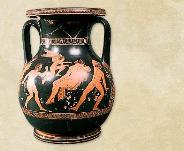
Iron Age and Antiquity
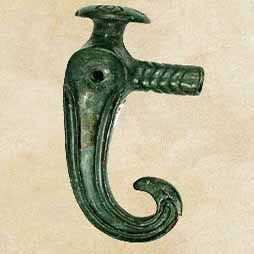
Bronze Age
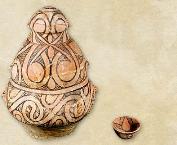
Aeneolithic Age
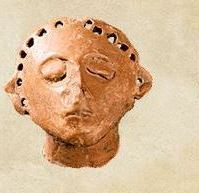
Neolithic Age
Palaeolithic Age
  
September 25, 2025 – September 1, 2026
 
August 11, 2025 – January 31, 2026
 
Over 2500 pieces made of precious metals with historic, artistic and symbolic value
  

Come to Museum! Discover the History!
  
Visit museum
Visit museum
Summer schedule: daily
10am – 6pm.

Winter schedule: daily
10am – 5pm.
Closed on Mondays.
Entrance fees:  adults - 50 MDL, Pensioners, students - 20 lei, pupils - 10 MDL. Free access: enlisted men (...)

WiFi Free Wi-Fi Zone in the museum: In the courtyard of the National History Museum of Moldova there is Wi-Fi Internet access for visitors.


#Exhibit of the Month

To mark the 150th anniversary of the birth of the great Romanian sculptor Constantin Brâncuși, 2026 was declared by the President of Romania the Year of Constantin Brâncuși. Constantin Brâncuși, one of the greatest sculptors of the twentieth century, was born in 1876 in Hobița, Gorj County, and passed away in 1957 in Paris; he was buried in the Père-Lachaise cemetery. In 1904 he arrived in Paris, where he attended courses at the Royal Academy of Fine Arts...

Read More >>


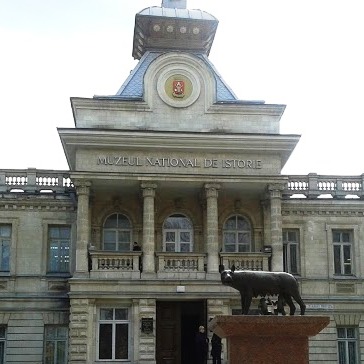
The National Museum of History of Moldova takes place among the most significant museum institutions of the Republic of Moldova, in terms of both its collection and scientific reputation.
©2006-2026 National Museum of History of Moldova
Visit museum 31 August 1989 St., 121 A, MD 2012, Chisinau, Republic of Moldova
Phones:
Secretariat: +373 (22) 24-43-25
Department of Public Relations and Museum Education: +373 (22) 24-04-26
Fax: +373 (22) 24-43-69
E-mail: office@nationalmuseum.md
Technical Support: info@nationalmuseum.md
Web site administration and maintenance: Andrei EMILCIUC


The National Museum of History of Moldova takes place among the most significant museum institutions of the Republic of Moldova, in terms of both its collection and scientific reputation.
©2006-2026 National Museum of History of Moldova
Visit museum 31 August 1989 St., 121 A, MD 2012, Chisinau, Republic of Moldova

Phones:
Secretariat: +373 (22) 24-43-25
Department of Public Relations and Museum Education: +373 (22) 24-04-26
Fax: +373 (22) 24-43-69
E-mail: office@nationalmuseum.md
Technical Support: info@nationalmuseum.md
Web site administration and maintenance: Andrei EMILCIUC

menu
The National Museum of History of Moldova takes place among the most significant museum institutions of the Republic of Moldova, in terms of both its collection and scientific reputation.
©2006-2026 National Museum of History of Moldova
Visit museum 31 August 1989 St., 121 A, MD 2012, Chisinau, Republic of Moldova
Phones:
Secretariat: +373 (22) 24-43-25
Department of Public Relations and Museum Education: +373 (22) 24-04-26
Fax: +373 (22) 24-43-69
E-mail: office@nationalmuseum.md
Technical Support: info@nationalmuseum.md
Web site administration and maintenance: Andrei EMILCIUC