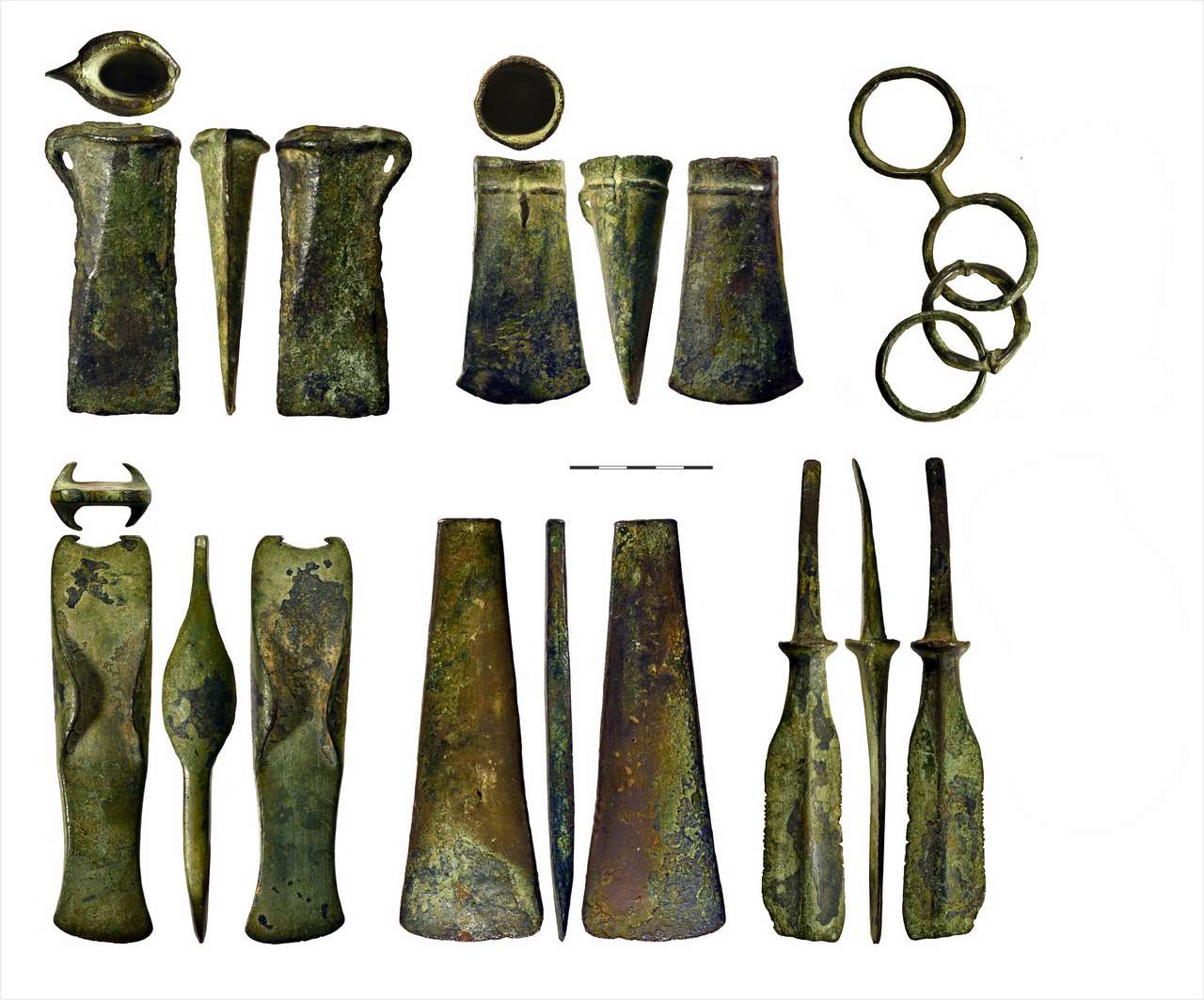
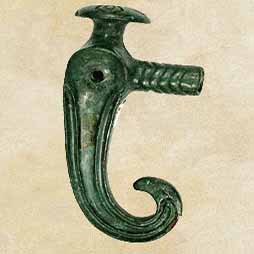
The bronze hoard was discovered on the territory of Mîndrești village, Telenești district, in 1968. It was identified accidentally by a group of students from the village school, and the materials later came to the attention of specialists at the Institute of History of the Academy of Sciences. According to documentary records, the hoard was composed of ten pieces: four socketed axes (celts), a dagger fragment, a sword fragment, a sickle, a winged axe, an adze-axe, and a chain consisting of four links. Currently, of the mentioned assemblage, six objects are preserved in the collections of the National Museum of History of Moldova: two socketed axes (celts), the winged axe, the adze-axe, the dagger fragment, and the chain made of four links.- Socketed axe (celt) with one loop. Dimensions: Length - 10.2 cm; Weight - 186 g. - Socketed axe (celt) with one frontal loop. Dimensions: Length - 8.4 cm; Width: 33-46 mm; Weight - 124 g. - Winged axe. Dimensions: Length - 14.0 cm; Width - 2.5-3.4 cm; Weight - 285 g. - Adze-axe. Dimensions: Length - 14.8 cm; Width - 2.3-5.0 cm; Weight - 286 g. - Dagger fragment. Dimensions: Length - 16.5 cm; Blade length - 9.8 cm; Blade width - 2.8 cm; Weight - 81 g. - Chain formed of four links. Dimensions: Length - 17.1 cm; Link diameter - 3.8; Weight - 32 g.The bronze hoard of Mîndrești is important due to the association of objects that find analogies in the regional repertoire with pieces that show clear analogies in Central Europe and the Carpathian Basin. The assemblage reflects a zone of contact and interaction where metallic forms of different origins and traditions circulated and were integrated into the repertoire of local communities. Chronologically, the bronze hoard of Mîndrești is attributed to the Early Hallstatt period - HaA1, being dated to 1200-1100 BC.
The role of the commercial bourgeoisie in the expansion of trade relations between the Russian Empire and the Principality of Moldova during the Russian-Turkish war of 1806-1812
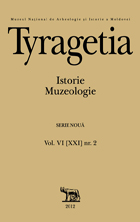
Tyragetia, serie nouă, vol. VI [XXI], nr. 2, Istorie. Muzeologie
The important role in the development and expansion of trade relations between the Principality of Moldova and the Russian Empire belonged to foreign merchants. These traders were the connecting link between the economies of the Russian Empire and the Principality of Moldova. They held key positions in international and domestic trade that was confirmed by D. Cantemir, who wrote that “foreign traders – Turkish, Jewish, Armenian, Greek ones ... seized the entire trade of Moldova, and buy at very low prices flocks of sheep and cattle and sell them in Constantinople and other cities at double or triple price ...“ (Cantemir 1986, 151). But the main cause of the dominance of foreign merchants in the trade was the privileges and protection of the tsarist government. All this contributed to the consolidation of the Greek, Armenian, Jewish, Russian, Ukrainian, Bulgarian, and other foreign merchants in the Romanian principalities.
Irina Cereș
Aspects of economic relations between the Russian Empire and the Principality of Moldova in the late 18th - early 19th centuries
Tyragetia, serie nouă, vol. VII [XXII], nr. 2, Istorie. Muzeologie
Irina Cereș
Imports from the Russian Empire into the Principality of Moldavia at the end of the 18th century - the beginning of the 19th century
Tyragetia, serie nouă, vol. X [XXV], nr. 2, Istorie. Muzeologie
Irina Cereș
The export of goods from the Principality of Moldova into the Russian Empire at end of the 18th century - the beginning of the 19th century
Tyragetia, serie nouă, vol. IX [XXIV], nr. 2, Istorie. Muzeologie Chișinău, 2015
Irina Cereș
Impact of the high taxes imposed upon the population of Romanian principalities during the Russian-Turkish war of 1806-1812
Tyragetia, serie nouă, vol. V [XX], nr. 2, Istorie. Muzeologie
Irina Cereș
Jewish merchants' role in expanding trade relations between the Russian Empire and the Principality of Moldova in the late 18th and early 19th centuries
Tyragetia, serie nouă, vol. VIII [XXIII], nr. 2, Istorie. Muzeologie
The bronze hoard was discovered on the territory of Mîndrești village, Telenești district, in 1968. It was identified accidentally by a group of students from the village school, and the materials later came to the attention of specialists at the Institute of History of the Academy of Sciences...
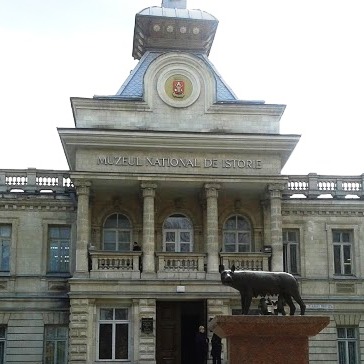
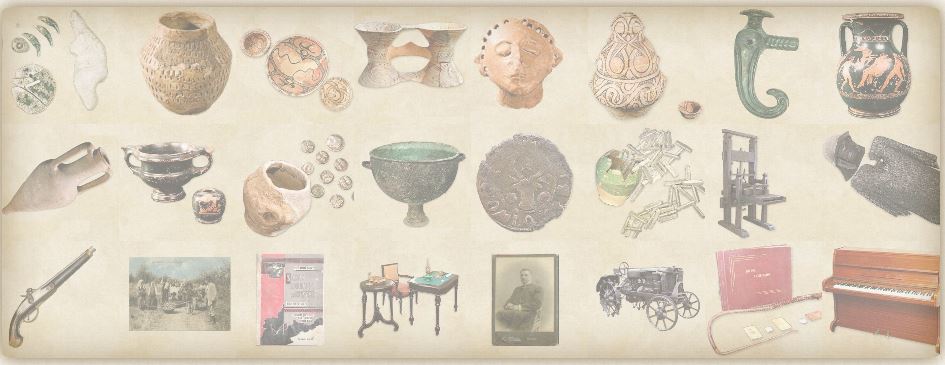
The National Museum of History of Moldova takes place among the most significant museum institutions of the Republic of Moldova, in terms of both its collection and scientific reputation.
The National Museum of History of Moldova takes place among the most significant museum institutions of the Republic of Moldova, in terms of both its collection and scientific reputation.
The National Museum of History of Moldova takes place among the most significant museum institutions of the Republic of Moldova, in terms of both its collection and scientific reputation.


















 31 August 1989 St., 121 A, MD 2012, Chisinau, Republic of Moldova