EN RO


#Exhibit of the Month

>>>

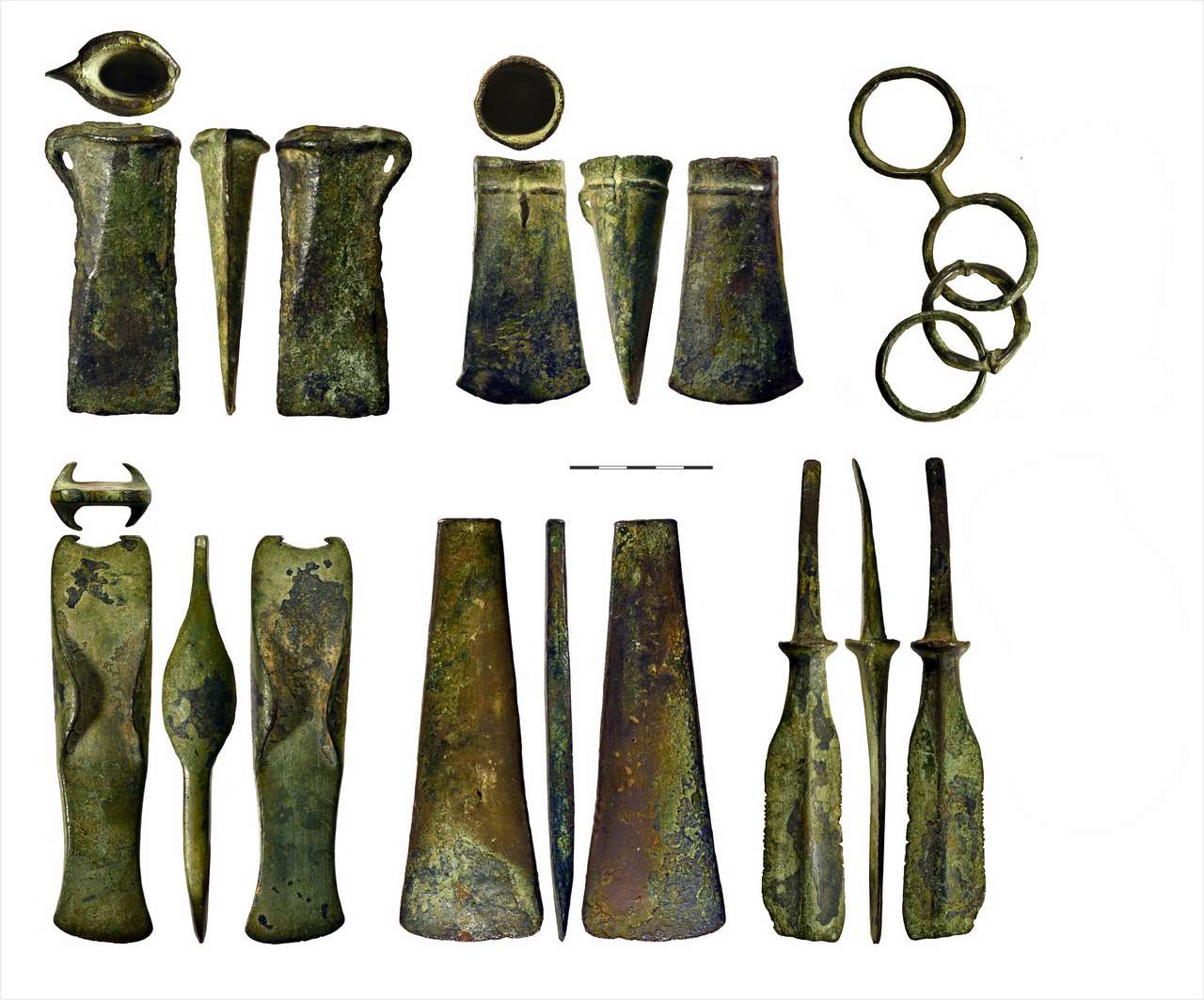
The bronze hoard was discovered on the territory of Mîndrești village, Telenești district, in 1968. It was identified accidentally by a group of students from the village school, and the materials later came to the attention of specialists at the Institute of History of the Academy of Sciences. According to documentary records, the hoard was composed of ten pieces: four socketed axes (celts), a dagger fragment, a sword fragment, a sickle, a winged axe, an adze-axe, and a chain consisting of four links.
Currently, of the mentioned assemblage, six objects are preserved in the collections of the National Museum of History of Moldova: two socketed axes (celts), the winged axe, the adze-axe, the dagger fragment, and the chain made of four links.- Socketed axe (celt) with one loop. Dimensions: Length - 10.2 cm; Weight - 186 g.
- Socketed axe (celt) with one frontal loop. Dimensions: Length - 8.4 cm; Width: 33-46 mm; Weight - 124 g.
- Winged axe. Dimensions: Length - 14.0 cm; Width - 2.5-3.4 cm; Weight - 285 g.
- Adze-axe. Dimensions: Length - 14.8 cm; Width - 2.3-5.0 cm; Weight - 286 g.
- Dagger fragment. Dimensions: Length - 16.5 cm; Blade length - 9.8 cm; Blade width - 2.8 cm; Weight - 81 g.
- Chain formed of four links. Dimensions: Length - 17.1 cm; Link diameter - 3.8; Weight - 32 g.The bronze hoard of Mîndrești is important due to the association of objects that find analogies in the regional repertoire with pieces that show clear analogies in Central Europe and the Carpathian Basin. The assemblage reflects a zone of contact and interaction where metallic forms of different origins and traditions circulated and were integrated into the repertoire of local communities.
Chronologically, the bronze hoard of Mîndrești is attributed to the Early Hallstatt period - HaA1, being dated to 1200-1100 BC.

Virtual Tour


Exhibitions

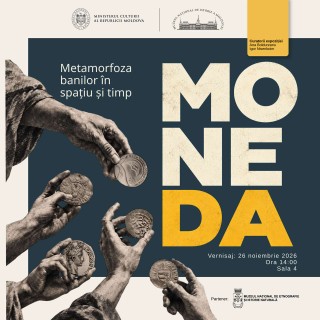
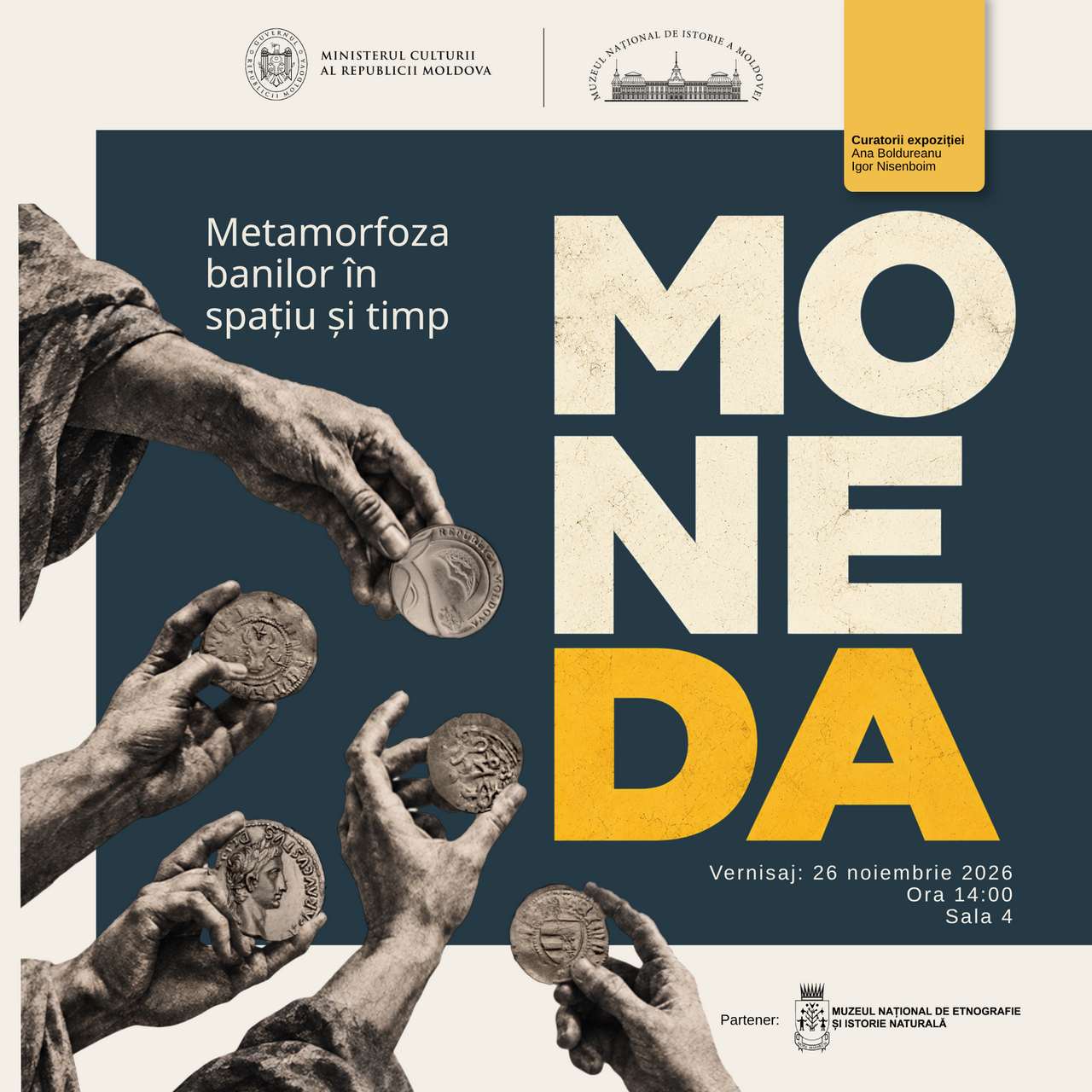
“The Metamorphosis of Money in Space and Time”

November 26, 2026 – February 28, 2027

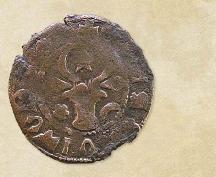
On November 26 at 3:00 PM, the National Museum of History of Moldova (NMHM), in collaboration with collector Igor Nisenboim (Chișinău) and with the participation of the National Museum of Ethnography and Natural History of Moldova (NMENH), opens the exhibition "The Metamorphosis of Money in Space and Time". Bringing together over 300 coins displayed across 69 stands, the exhibition offers the public a journey through more than two millennia of economic, political, and cultural history of the area between the Prut and Dniester rivers.

Monetary circulation in our territory has always been a historical turning point and a strategic commercial hub where the great empires and civilizations of East and West, North and South intersected. This tradition dates back to the 4th century BC, when the Greek colony of Tyras at the mouth of the Dniester minted its own coins, continuing with local imitations of Greek and Macedonian coins, the widespread circulation of Roman denarii, the issues of local authorities in Orheiul Vechi and Costești (Ialoveni District), and the silver groschen minted by Petru Mușat as a symbol of the principality's political independence and economic stability. At the same time, crossed by major trade routes, this region integrated numerous foreign issues into daily circulation across the ages-Greek, Roman, Byzantine, Tatar, Polish, Hungarian, Ottoman, Dutch, and Austrian-demonstrating a continuous connection to continental realities.

The exhibition chronologically traces the evolution of money, starting from the emergence of coinage, pre-monetary signs, and minting technologies, moving through the Hellenistic and Roman worlds, the Golden Horde period, Ottoman suzerainty, the era of the Russo-Turkish Wars and the Russian Empire, as well as the 1918-1991 period, culminating with the National Currency of the Republic of Moldova. The displays are complemented by the results of numismatic research conducted from the 1950s-1960s to the present day, as well as various related artifacts, such as piggy banks and coin pouches.

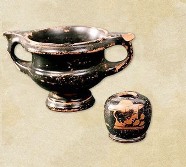
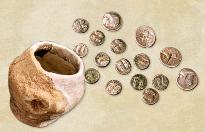
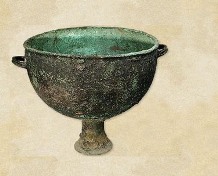
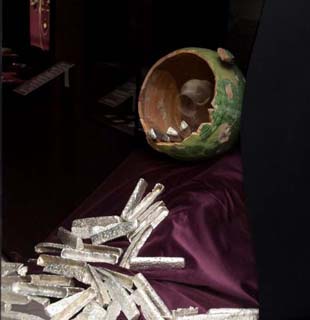
The main highlight of the exhibition is the presentation, for the first time in decades, of two of the most valuable ancient hoards discovered on the territory of the Republic of Moldova and held in the NMENH collection, previously kept in secure storage: the Lărguța hoard, consisting of a vessel and gold staters from the era of Alexander the Great, and the Doroțcaia hoard, consisting of silver drachmas minted by the ancient city of Tyras. Visitors will be guided by signs to the museum's basement hall, where they can admire these discoveries as part of the "Treasures of the Past" exhibition, alongside other hoards from the NMHM collection.

Designed for the general public and especially for families with children, the exhibition aims to introduce visitors to the art of collecting as a form of education and a way to explore national history. In the center of the hall, on a specially arranged platform, visitors can explore the reconstruction of a medieval mint workshop to see how a coin was made, and at the end of the tour, they can test their knowledge through a ten-question online numismatic quiz, with all the answers hidden in the display cases. We welcome you and your entire family to the National Museum of History of Moldova to discover how, over two thousand years, money has changed its metal, shape, and appearance, remaining a faithful mirror of each era.

The exhibition "The Metamorphosis of Money in Space and Time" can be visited between November 26, 2026 - February 28, 2027 in Hall 4 of the National Museum of History of Moldova, Chișinău, 121A 31 August 1989 Street.


Independent Moldova
Moldavian Soviet Socialist Republic
Bessarabia and MASSR between the Two World Wars
Bessarabia and Moldavian Autonomous Soviet Socialist Republic in the Period between the Two World Wars
Revival of National Movement
Time of Reforms and their Consequences
Abolition of Autonomy. Bessarabia – a New Tsarist Colony
Period of Relative Autonomy of Bessarabia within the Russian Empire
Phanariot Regime
Golden Age of the Romanian Culture
Struggle for Maintaining of Independence of Moldova
Formation of Independent Medieval State of Moldova
Era of the
Great Nomad Migrations
Early Middle Ages
Iron Age and Antiquity
Bronze Age
Aeneolithic Age
Neolithic Age
Palaeolithic Age


Come to Museum! Discover the History!
  
Visit museum
Visit museum
Summer schedule: daily
10am – 6pm.

Winter schedule: daily
10am – 5pm.
Closed on Mondays.
Entrance fees:  adults - 50 MDL, Pensioners, students - 20 lei, pupils - 10 MDL. Free access: enlisted men (...)

WiFi Free Wi-Fi Zone in the museum: In the courtyard of the National History Museum of Moldova there is Wi-Fi Internet access for visitors.


#Exhibit of the Month

The bronze hoard was discovered on the territory of Mîndrești village, Telenești district, in 1968. It was identified accidentally by a group of students from the village school, and the materials later came to the attention of specialists at the Institute of History of the Academy of Sciences...

Read More >>


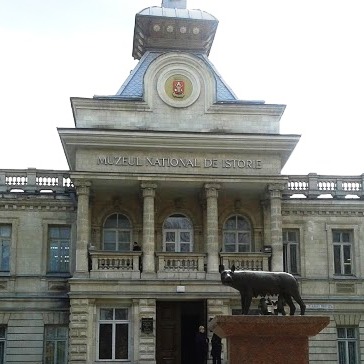
The National Museum of History of Moldova takes place among the most significant museum institutions of the Republic of Moldova, in terms of both its collection and scientific reputation.
©2006-2026 National Museum of History of Moldova
Visit museum 31 August 1989 St., 121 A, MD 2012, Chisinau, Republic of Moldova
Phones:
Secretariat: +373 (22) 24-43-25
Department of Public Relations and Museum Education: +373 (22) 24-04-26
Fax: +373 (22) 24-43-69
E-mail: office@nationalmuseum.md
Technical Support: info@nationalmuseum.md
Web site administration and maintenance: Andrei EMILCIUC


The National Museum of History of Moldova takes place among the most significant museum institutions of the Republic of Moldova, in terms of both its collection and scientific reputation.
©2006-2026 National Museum of History of Moldova
Visit museum 31 August 1989 St., 121 A, MD 2012, Chisinau, Republic of Moldova
Phones:
Secretariat: +373 (22) 24-43-25
Department of Public Relations and Museum Education: +373 (22) 24-04-26
Fax: +373 (22) 24-43-69
E-mail: office@nationalmuseum.md
Technical Support: info@nationalmuseum.md
Web site administration and maintenance: Andrei EMILCIUC

menu
The National Museum of History of Moldova takes place among the most significant museum institutions of the Republic of Moldova, in terms of both its collection and scientific reputation.
©2006-2026 National Museum of History of Moldova
Visit museum 31 August 1989 St., 121 A, MD 2012, Chisinau, Republic of Moldova
Phones:
Secretariat: +373 (22) 24-43-25
Department of Public Relations and Museum Education: +373 (22) 24-04-26
Fax: +373 (22) 24-43-69
E-mail: office@nationalmuseum.md
Technical Support: info@nationalmuseum.md
Web site administration and maintenance: Andrei EMILCIUC