Events Archive
Round Table “Longing for a Better Past”
October 8, 2026
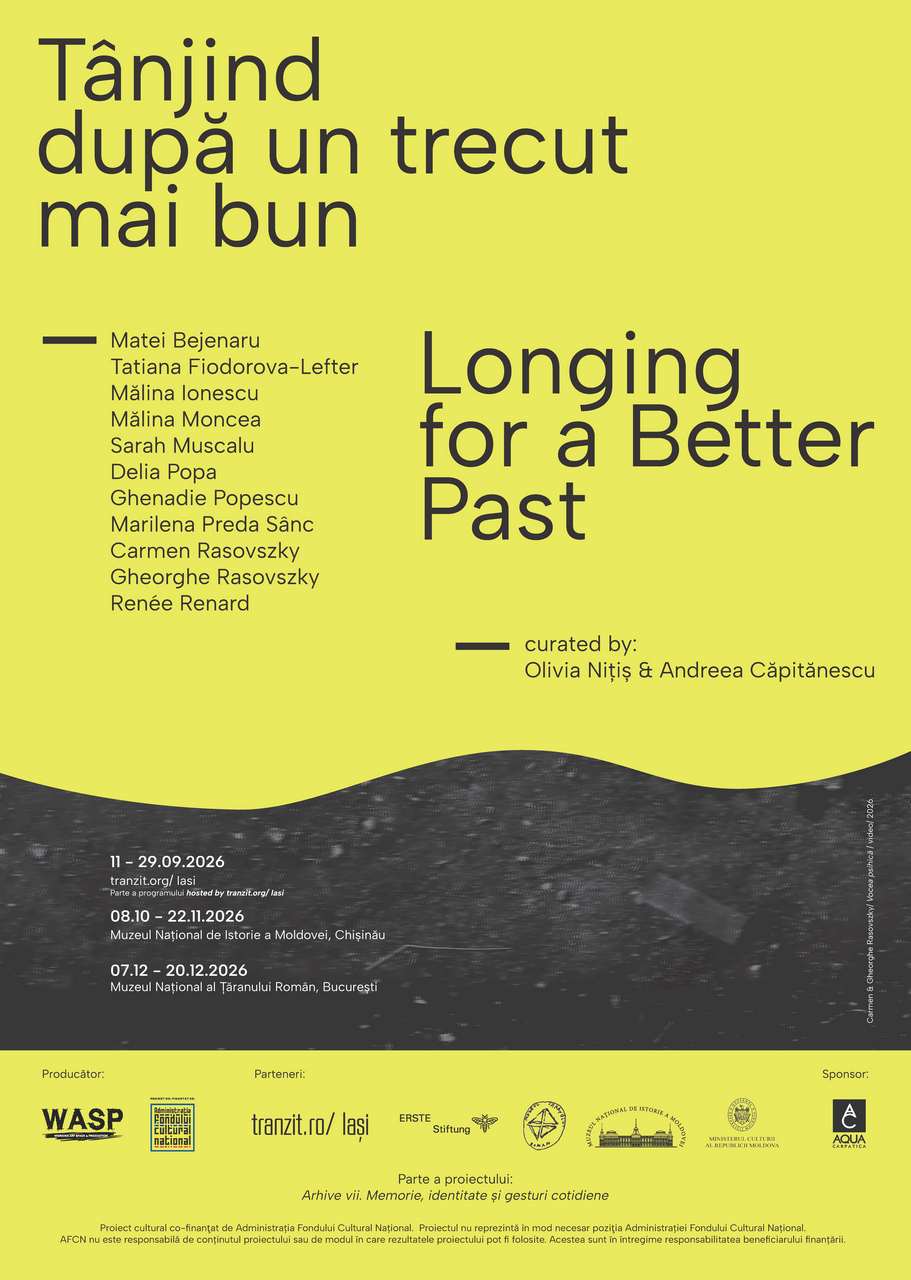
As part of the exhibition "Longing for a Better Past", a round table was held in the Blue Hall of the National Museum of History of Moldova, dedicated to deepening the curatorial themes. The event brought together historians, researchers, and artists in an interdisciplinary dialogue about the memory of communism, the paradox of nostalgia, and the role of art in reinterpreting the past.
The discussions began with Svetlana Boym's distinction between restorative and reflective nostalgia. Participants analyzed how the socialist past is remembered and re-signified, emphasizing that political nostalgia is not a longing for the system itself, but for the coherence and stability it promised, yet never fulfilled.
Dr. Olivia Nițiș, senior researcher at the "G. Oprescu" Institute of Art History of the Romanian Academy, presented the theoretical dimension of the project and the way art becomes an instrument for researching memory. Dr. Andreea Căpitănescu, curator and cultural manager, artistic director of WASP Studios, spoke about the role of contemporary art in re-signifying the past and the importance of transgenerational dialogue.
Dr. Liliana Rotaru, historian and lecturer at the State University of Moldova, analyzed the policies of sovietization and their impact on collective memory. Dr. Octavian Țîcu, historian and coordinating researcher at the Institute of History of USM, addressed the impact of nostalgic discourses instrumentalized politically and culturally, highlighting the susceptibility of younger generations to manipulation through nostalgia. He emphasized the importance of critical education and cultural engagement to prevent nostalgia from becoming a tool of propaganda.
Dr. Ruslan Șevcenco, coordinating researcher at MNIM, highlighted the contradictions of political nostalgia and the ways in which they influence the present. Ghenadie Popescu, visual artist from the Republic of Moldova, spoke about how art can transform personal memories and archives into critical instruments of reflection on the past.
The round table emphasized the importance of reflective memory, nostalgic dissent, and incomplete mourning as forms of relating to the past, but also as ways of imagining a possible future.
|






























 31 August 1989 St., 121 A, MD 2012, Chisinau, Republic of Moldova