Events Archive Events Archive
Scientific-practical conference "Results of archaeological research carried out at the site of mass repressions during the Great Terror (1937-1938) in Tiraspol"
December 18, 2024
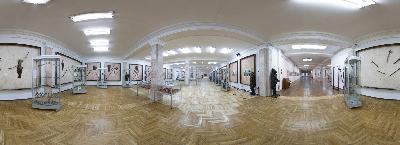
On December 18, 2024, in the Blue Hall of the National Museum of History of Moldova, the scientific-practical conference "Results of archaeological research carried out at the site of mass repressions during the Great Terror (1937-1938) in Tiraspol" took place, an event organized in partnership with the Association of Former Deportees and Political Detainees from the Republic of Moldova, the Institute of History of the State University of Moldova, the Museum of History of the Avdarma Village of the ATU Gagauzia, and the Public Association Center of Excellence Institute Pro Memoria, with the support of the Program EU4Dialogue Project, Component 1 of the European Commission. The conference brought together about 50 participants, including historians, archaeologists, museographers, university professors, history teachers, students, representatives of civil society and the mass media. The conference proceedings were preceded by a meeting of univ. prof., dr. hab. Eugen Sava, General Director of the National Museum of History of Moldova with the team of archaeologists who carried out the research work at the site of mass repressions, dated to the period of the Great Terror of 1937-1938 in the Moldavian ASSR. During the discussion, the mutual openness regarding the scientific and museum valorization of the recorded results was mentioned. The scientific-practical conference was inaugurated by speeches from the organizers and partners of the project. The Head of the Museum of Victims of Deportations and Political Repressions - NMHM branch, Associate Professor, dr. Ludmila Cojocaru noted the international value of the archaeological results from the site of mass executions in Tiraspol for elucidating the totalitarian phenomenon. The President of the Association of Former Deportees and Political Detainees, Alexandru Postica referred to the importance of disseminating these results, especially in the framework of teaching the optional course "The Totalitarian-Communist Regime: Repressions and the Resistance Movement" approved by the Ministry of Culture of the Republic of Moldova this year. The Coordinator of the Program EU4Dialogue Project in the Republic of Moldova, Ana Moghilda, reiterated the opening of European funds to build a culture of memory in the society of the Republic of Moldova. The founder of the History Museum of the village of Avdarma in the ATU Gagauzia, Ignat Cazmalî, mentioned the importance of studying the history and memory of the victims of the totalitarian-communist regime and the need to transmit this knowledge to the next generations. The team of archaeologists coordinated by Igor Cetvericov, together with Rodion Romanov and Alexandr Antropov presented the results of archaeological research carried out at the site of mass executions during the Great Terror (1937-1938) in the Moldavian ASSR, in the mass graves on the territory of the "Vladimir" Bastion in Tiraspol. Of the 60 graves discovered by archaeologists, 47 were chronologically dated, and the corroboration of archival documents from the Great Terror period with the results of the archaeological research carried out allowed the identification of the names of 4,185 victims out of the total number of 4,515 (or 4,561) victims, whose remains were discovered and unburied during the period 1991-2023. The discussions held on the results presented by the team of researchers revealed the importance to know the crimes of the totalitarian-communist regime during the Moldavian ASSR and to assume responsibility for not allowing the repetition of these crimes in the future.
|






.jpg)












 31 August 1989 St., 121 A, MD 2012, Chisinau, Republic of Moldova