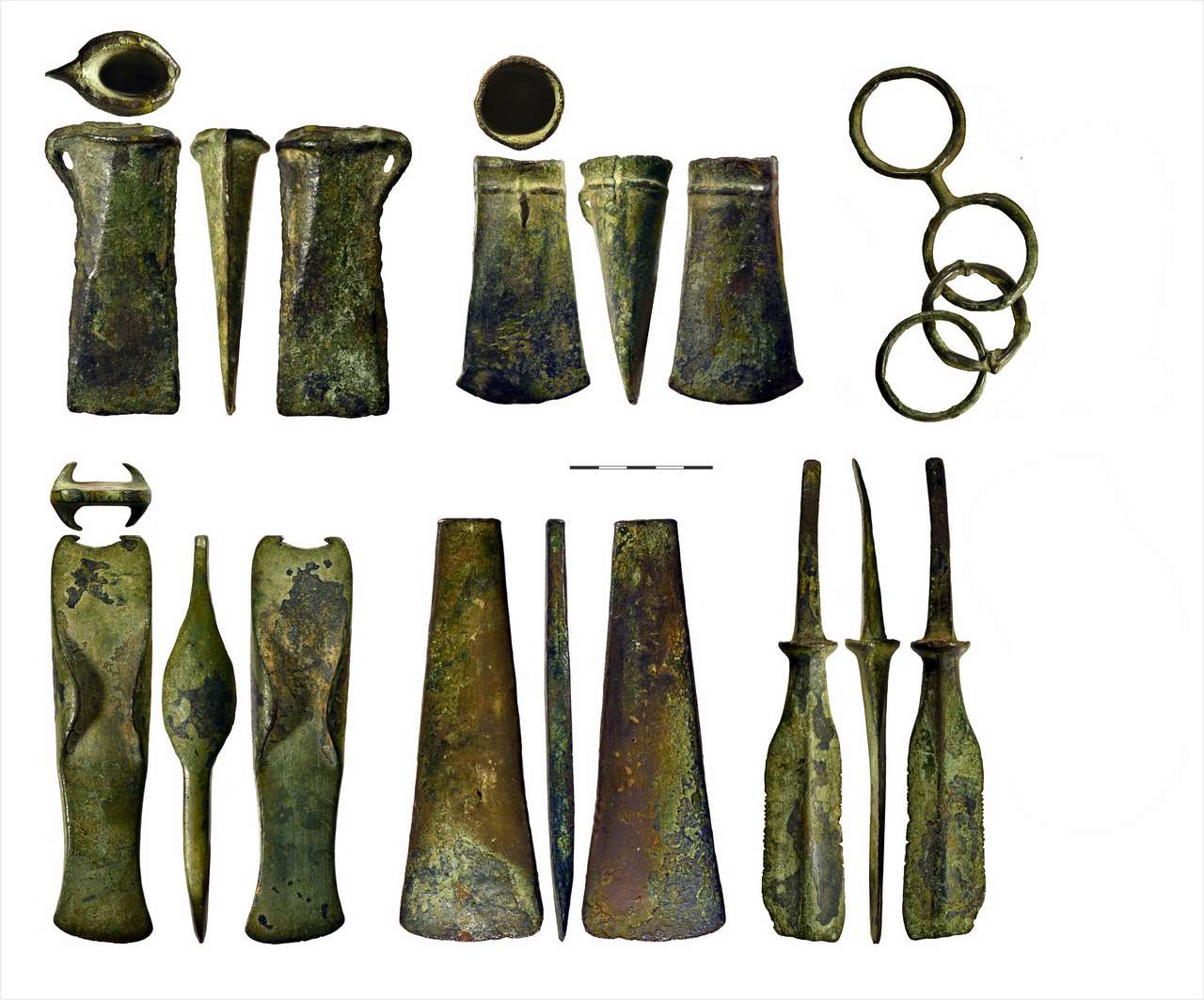
The bronze hoard was discovered on the territory of Mîndrești village, Telenești district, in 1968. It was identified accidentally by a group of students from the village school, and the materials later came to the attention of specialists at the Institute of History of the Academy of Sciences. According to documentary records, the hoard was composed of ten pieces: four socketed axes (celts), a dagger fragment, a sword fragment, a sickle, a winged axe, an adze-axe, and a chain consisting of four links. Currently, of the mentioned assemblage, six objects are preserved in the collections of the National Museum of History of Moldova: two socketed axes (celts), the winged axe, the adze-axe, the dagger fragment, and the chain made of four links.- Socketed axe (celt) with one loop. Dimensions: Length - 10.2 cm; Weight - 186 g. - Socketed axe (celt) with one frontal loop. Dimensions: Length - 8.4 cm; Width: 33-46 mm; Weight - 124 g. - Winged axe. Dimensions: Length - 14.0 cm; Width - 2.5-3.4 cm; Weight - 285 g. - Adze-axe. Dimensions: Length - 14.8 cm; Width - 2.3-5.0 cm; Weight - 286 g. - Dagger fragment. Dimensions: Length - 16.5 cm; Blade length - 9.8 cm; Blade width - 2.8 cm; Weight - 81 g. - Chain formed of four links. Dimensions: Length - 17.1 cm; Link diameter - 3.8; Weight - 32 g.The bronze hoard of Mîndrești is important due to the association of objects that find analogies in the regional repertoire with pieces that show clear analogies in Central Europe and the Carpathian Basin. The assemblage reflects a zone of contact and interaction where metallic forms of different origins and traditions circulated and were integrated into the repertoire of local communities. Chronologically, the bronze hoard of Mîndrești is attributed to the Early Hallstatt period - HaA1, being dated to 1200-1100 BC.
One possible magic kit from first iron age discovered in Braila’s plain
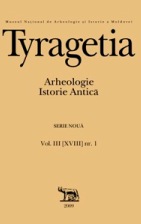
Tyragetia, serie nouă, vol. III [XVIII], nr. 1, Arheologie. Istorie Antică
During 2007-2008 archaeological research campaigns at Sutesti-Popina, Braila county, Romania were discovered eleven artifacts which can be part of a so called magic kit or which can be used in prehistoric times to cult practices. The most important discoveries are miniature bread, a lamp, a spherical piece, three miniature clay vessels and three clay decoration tools. We can find analogies for these artifacts just in others archaeological cultures from contemporary digs such as Alcedar III, Glinjeni II (Republic of Moldova), Sboryanovo, Konyovo (Bulgaria) and Babadag, Niculitel-Cornet (Romania). All these analogies are dated in X-VIII BC and Cozia-Saharna, Babadag-Pšeničevo cultures. The discoveries from Sutesti-Popina are dated in Basarabi culture, from VIII-VII BC and are unique for this cultural area.
Viorel Stoian
Babadag inventory pieces from Siliștea, Brăila county
Tyragetia, serie nouă, vol. I [XVI], nr. 1, Arheologie. Istorie Antică Chișinău, 2007
Viorel Stoian
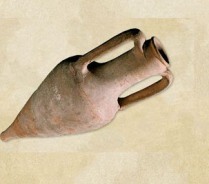
Roman imports discovered at the Brăilița archaeological site
Tyragetia, serie nouă, vol. IV [XIX], nr. 1, Arheologie. Istorie Antică
The bronze hoard was discovered on the territory of Mîndrești village, Telenești district, in 1968. It was identified accidentally by a group of students from the village school, and the materials later came to the attention of specialists at the Institute of History of the Academy of Sciences...
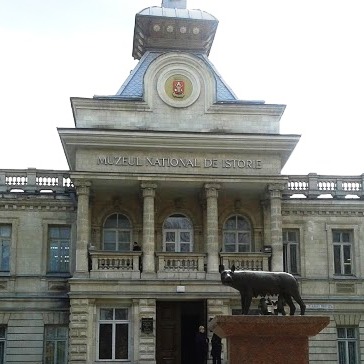
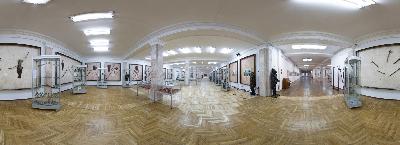
The National Museum of History of Moldova takes place among the most significant museum institutions of the Republic of Moldova, in terms of both its collection and scientific reputation.
The National Museum of History of Moldova takes place among the most significant museum institutions of the Republic of Moldova, in terms of both its collection and scientific reputation.
The National Museum of History of Moldova takes place among the most significant museum institutions of the Republic of Moldova, in terms of both its collection and scientific reputation.

















 31 August 1989 St., 121 A, MD 2012, Chisinau, Republic of Moldova