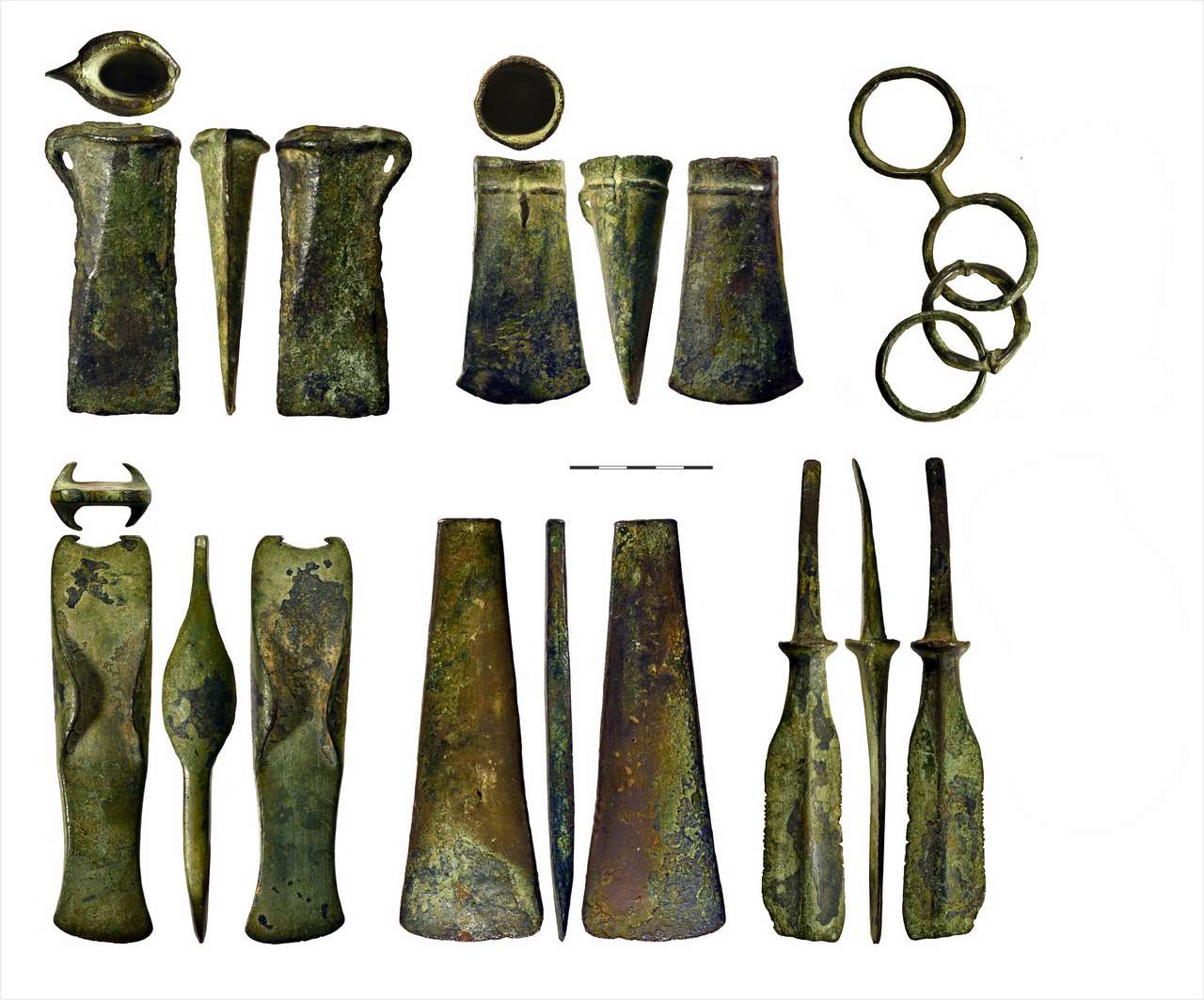
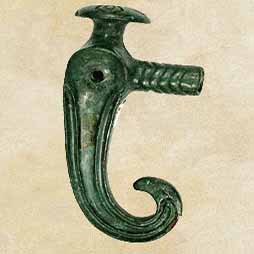
The bronze hoard was discovered on the territory of Mîndrești village, Telenești district, in 1968. It was identified accidentally by a group of students from the village school, and the materials later came to the attention of specialists at the Institute of History of the Academy of Sciences. According to documentary records, the hoard was composed of ten pieces: four socketed axes (celts), a dagger fragment, a sword fragment, a sickle, a winged axe, an adze-axe, and a chain consisting of four links. Currently, of the mentioned assemblage, six objects are preserved in the collections of the National Museum of History of Moldova: two socketed axes (celts), the winged axe, the adze-axe, the dagger fragment, and the chain made of four links.- Socketed axe (celt) with one loop. Dimensions: Length - 10.2 cm; Weight - 186 g. - Socketed axe (celt) with one frontal loop. Dimensions: Length - 8.4 cm; Width: 33-46 mm; Weight - 124 g. - Winged axe. Dimensions: Length - 14.0 cm; Width - 2.5-3.4 cm; Weight - 285 g. - Adze-axe. Dimensions: Length - 14.8 cm; Width - 2.3-5.0 cm; Weight - 286 g. - Dagger fragment. Dimensions: Length - 16.5 cm; Blade length - 9.8 cm; Blade width - 2.8 cm; Weight - 81 g. - Chain formed of four links. Dimensions: Length - 17.1 cm; Link diameter - 3.8; Weight - 32 g.The bronze hoard of Mîndrești is important due to the association of objects that find analogies in the regional repertoire with pieces that show clear analogies in Central Europe and the Carpathian Basin. The assemblage reflects a zone of contact and interaction where metallic forms of different origins and traditions circulated and were integrated into the repertoire of local communities. Chronologically, the bronze hoard of Mîndrești is attributed to the Early Hallstatt period - HaA1, being dated to 1200-1100 BC.
Political and Legal Status of Tara Moldovei in a New Historical Source – Moldovan Chronicle of Cracovia
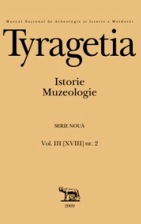
Tyragetia, serie nouă, vol. III [XVIII], nr. 2, Istorie. Muzeologie
The new historical source, Moldovan Chronicle of Cracovia (Cronica Moldovei de la Cracovia), written by an anonymous author and introduced in the scientific circulation by the notorious historian Constantin Rezachevici, brings to light new details concerning Moldovan history of the XIVth - beginning of XVIIth centuries. Those, coordinated with other sources, could contribute to the clarifying of some controversial problems. The maximum attention should be paid to some unknown information from the Chronicle that can not be found in other sources. At the same time, we can expect different interpretations from the historians of the information Chronicle offers, as well as of the work in its integrity, and that should be treated as an ordinary thing.
Ion Eremia
Ioan Horga, Sorin Şipoș, De la „Mica" la „Marea Europă". Mărturii franceze de la sfârșitul secolului al XIX-lea despre frontiera răsăriteană a Europei. Studii și documente. Traducerea textelor Delia-Maria Radu. Oradea, Editura Universității din Oradea, 2006
Tyragetia, serie nouă, vol. I [XVI], nr. 2, Istorie. Muzeologie
Ion Eremia
Mihai Maxim, O istorie a relațiilor româno-otomane, cu documente noi din arhivele turcești. Vol. I. Perioada clasică (1400-1600), Brăila: Editura Istros a Muzeului Brăilei, 2012, 606 p. ISBN 978-606-654-026-1
Tyragetia, serie nouă, vol. VIII [XXIII], nr. 2, Istorie. Muzeologie
Ion Eremia
Antoine François Le Clerc, Memoriu Topografi c și Statistic asupra Basarabiei, Valahiei și Moldovei, Provincii ale Turciei în Europa. Ediție îngrijită, studiu introductiv, note și comentarii de Ioan-Aurel Pop și Sorin Şipoș. Traducere din limba franceză de Delia-Maria Radu; însoțită de reproducerea manuscrisului original. Institutul Cultural Român. Cluj-Napoca, 2004. LII +90 p.
Tyragetia, serie nouă, vol. II [XVII], nr. 2, Istorie. Muzeologie
Ion Eremia
The ancient nation – origins, essence and its importance
Tyragetia, serie nouă, vol. II [XVII], nr. 1, Arheologie. Istorie Antică
Ion Eremia
Valentina Eșanu, Andrei Eșanu, Bogdan al II-lea și Maria Oltea – părinții lui Ştefan cel Mare și Sfânt. Chișinău, Prut Internațional, 2007, 160 p. +Anexă: Voievozii Ţării Moldovei de la Bogdan I până la Ştefan cel Mare și Sfânt și urmașii lui
Tyragetia, serie nouă, vol. II [XVII], nr. 2, Istorie. Muzeologie
The bronze hoard was discovered on the territory of Mîndrești village, Telenești district, in 1968. It was identified accidentally by a group of students from the village school, and the materials later came to the attention of specialists at the Institute of History of the Academy of Sciences...
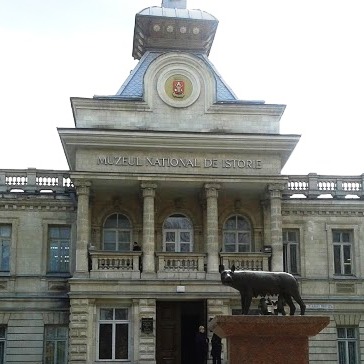
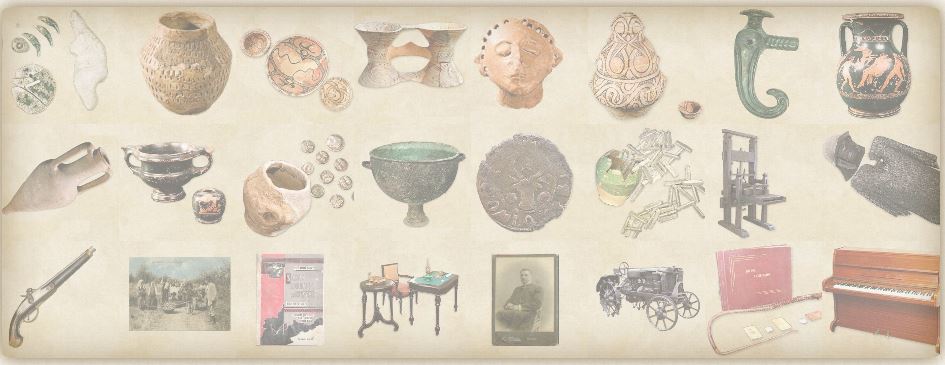
The National Museum of History of Moldova takes place among the most significant museum institutions of the Republic of Moldova, in terms of both its collection and scientific reputation.
The National Museum of History of Moldova takes place among the most significant museum institutions of the Republic of Moldova, in terms of both its collection and scientific reputation.
The National Museum of History of Moldova takes place among the most significant museum institutions of the Republic of Moldova, in terms of both its collection and scientific reputation.


















 31 August 1989 St., 121 A, MD 2012, Chisinau, Republic of Moldova