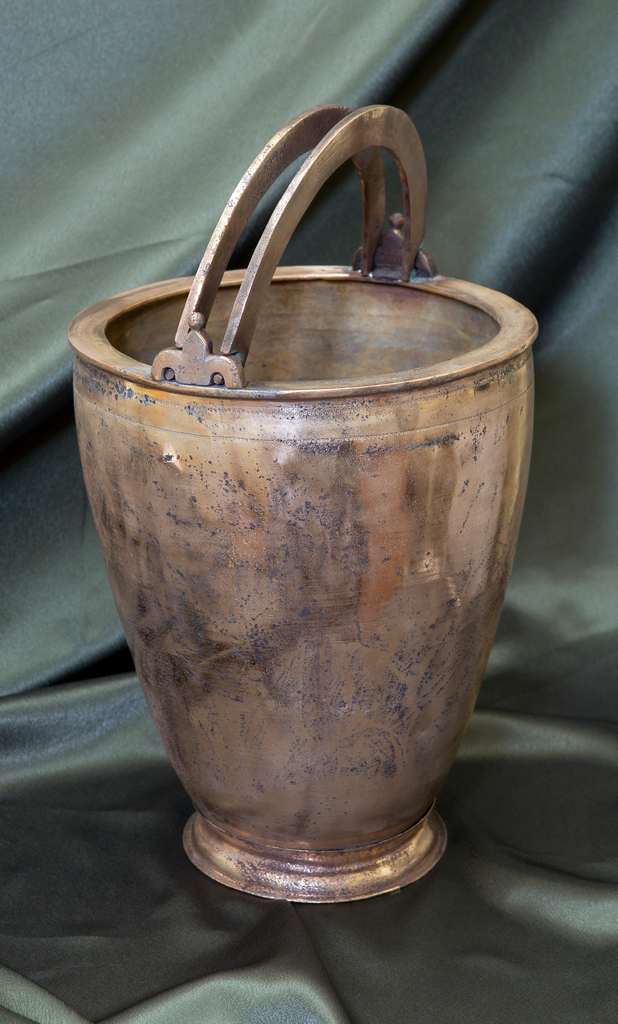
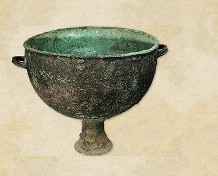
The Roman bronze situla comes from a collection of archaeological artifacts confiscated at customs and transferred to the holdings of the National Museum of History of Moldova in 2009. Its place of discovery remains unknown.
A situla (Latin for "bucket") is a metal vessel-usually made of bronze-shaped like a pail and equipped with two movable handles at the top, traditionally used for mixing wine with water. The handles are attached to the vessel via two decorated ears that are welded to the rim.
The body of the situla is truncated-conical in shape and features two decorative bands with small circular patterns formed by hammering, located just below the rim.
Its base is double-layered: the inner bottom is hemispherical and hammered, while the outer bottom is flat and lathe-made. The outer base is welded to the inner bottom, serving as the vessel's foot-support.
This object was crafted using a combination of casting, hammering, and partial lathe-finishing. Dimensions: Maximum height - 31.7 cm; Maximum diameter - 22.8 cm; Base diameter - 13.5 cm
Situlae of this type originated in the Roman Empire and were later adopted by various ancient peoples, including those from the northwestern Pontic region.
The population and estate of Veprova-Puțintei, the Orhei County (the 15th - 18th centuries)
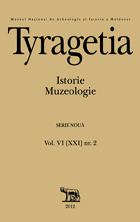
Tyragetia, serie nouă, vol. VI [XXI], nr. 2, Istorie. Muzeologie
The author describes aspects of the history of population and estate of the Veprova-Puțintei village (the Orhei County) since its foundation in the early 15th century to the late 18th century.
As a result of documentary research it was revealed that the founder of the village was a boyar Hedco Crețovici, a member of the Divan from 1419 to 1436. On July 17, 1436, Princes Ilie and Ştefan bestowed him for his faithful service “two uninhabited places on the river of Kula...”, where he founded the village. His work was continued by his sons, grandchildren and great grandchildren. Later the village was inherited by kinship by high dignitaries of Moldova: the părcălabs of Orhei George Catargiul (the former Great Clucer) and Andrei Mihuleț; postelnic Apostol Catargiul, vătav of the Orhei County – Nistor, serdars of Orhei – Cârstea, Ion Cuza (the former Great Spatar) and Iordache Milo (the former Great Clucer). Despite the existence of this large boyars’ kin in the region throughout the history, it remained the village of răzeși (freeholders), which was reflected in various documents of the time. The well established estate had traditionally been divided into three patrimonies: upper, middle and bottom. The first mention of the village priest refers to 1548, and the first mention of the church founded by Cârstea, the serdar of Orhei, – to the end of the 18th century.
Valeriu Bubulici, Mihai Onilă
Curchi monastery. Its history and results of the archaeological salvage operations conducted in 2006
Tyragetia, serie nouă, vol. I [XVI], nr. 2, Istorie. Muzeologie Chișinău, 2007
Mihai Onilă
The population of Morozeni village, Orhei county (end of 15th - beginning of 19th century)
Tyragetia, serie nouă, vol. IV [XIX], nr. 2, Istorie. Muzeologie
Mihai Onilă
From the history of Săseni village of the Orhei County in 15th-18th centuries
Tyragetia, serie nouă, vol. VIII [XXIII], nr. 2, Istorie. Muzeologie
Mihai Onilă
Veprova-Puțintei village, Orhei county – chronology and borders
Tyragetia, serie nouă, vol. V [XX], nr. 2, Istorie. Muzeologie
Mihai Onilă
Morozeni village from Orhei district, chronologyand borders
Tyragetia, serie nouă, vol. III [XVIII], nr. 2, Istorie. Muzeologie
The Roman bronze situla comes from a collection of archaeological artifacts confiscated at customs and transferred to the holdings of the National Museum of History of Moldova in 2009. Its place of discovery remains unknown....
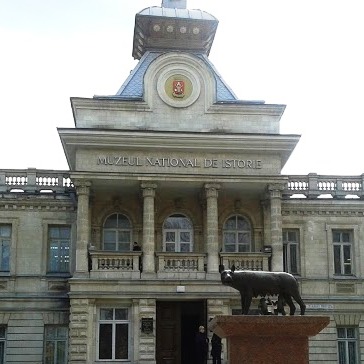
The National Museum of History of Moldova takes place among the most significant museum institutions of the Republic of Moldova, in terms of both its collection and scientific reputation.
The National Museum of History of Moldova takes place among the most significant museum institutions of the Republic of Moldova, in terms of both its collection and scientific reputation.
The National Museum of History of Moldova takes place among the most significant museum institutions of the Republic of Moldova, in terms of both its collection and scientific reputation.
















 31 August 1989 St., 121 A, MD 2012, Chisinau, Republic of Moldova