EN RO


#Exhibit of the Month

>>>

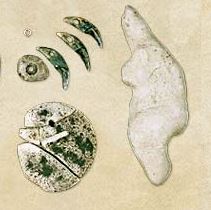
The exhibited necklace of beads originates from Funerary Complex No. 6 of Kurgan No. 4, excavated in 1982 by Dr. Habil. Eugen SAVA near the town of Taraclia. The beads were found in the chest area of the deceased, indicating that they had been worn as a necklace and had remained in their original position within the funerary assemblage.
The necklace consists of 11 elements made entirely of Egyptian faience. Eight of the beads are spherical and decorated with vertical incisions forming between 14 and 21 raised ribs. Their diameters range from 13 to 20 mm. Two additional elements are scarab representations measuring 23.5 × 19.5 mm, while the final component is a flattened cylindrical pendant bead featuring a central vertical groove and measuring 22 × 9 mm. The objects range in color from light blue to dark blue and violet hues, reflecting the natural deterioration and glaze variations characteristic of Egyptian faience.
Egyptian faience is an artificial quartz-based material coated with an alkaline glaze, typically blue or blue-green in color. It was widely used in Ancient Egypt and later spread throughout the Mediterranean and Pontic regions through trade networks. During the first centuries AD, such objects served as important indicators of cultural and economic contacts between the Mediterranean world and the communities of the North Pontic region.
Owing to its typological, technological, and symbolic characteristics, the Taraclia necklace is an exceptionally valuable artifact for the study of intercultural relations, the circulation of prestige goods, and the funerary practices of the Sarmatian communities during the first centuries AD (1st-2nd centuries AD).

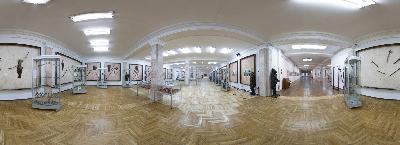
Virtual Tour


Exhibitions

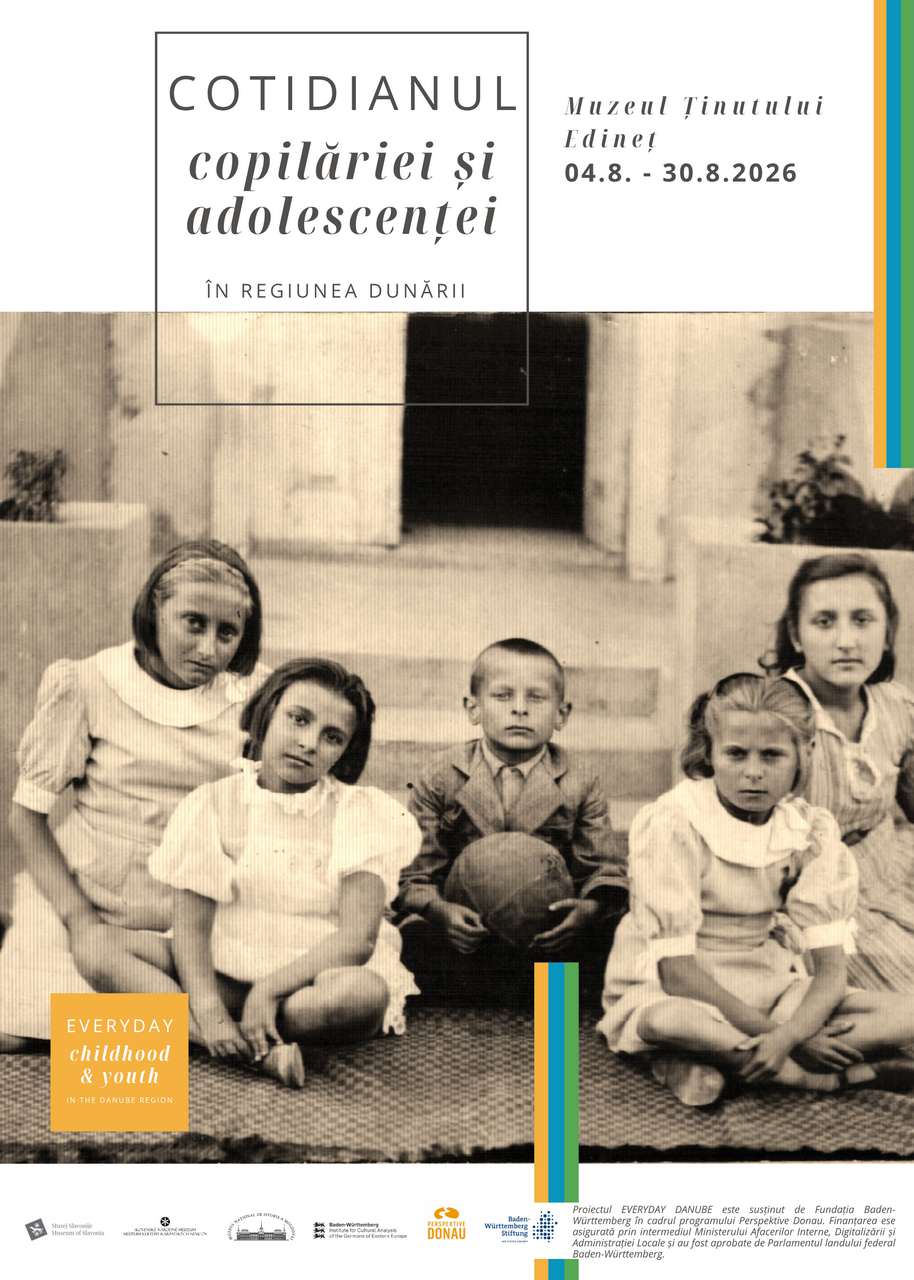
“Everyday Danube. Childhood & Youth in the Danube Region”

Edineț District Museum

August 4 – 30, 2026

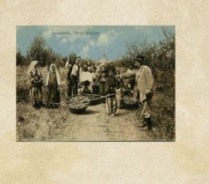
The exhibition "Everyday Danube. Childhood & Youth in the Danube Region" continues its itinerary, inviting visitors from northern Moldova on a journey through six Danube countries - Croatia, Hungary, Slovakia, Germany, Romania, and the Republic of Moldova - to explore the diversity of childhood and adolescent experiences in the 20th century. Through photographs and personal stories, the exhibition presents a layered image of growing up, revealing a mosaic of experiences: from carefree games and childhood friendships to encounters with work, migration, and loss.

We often associate Europe with imposing buildings, major historical events, or intellectual movements such as the Enlightenment. Yet Europe is found above all in everyday life - in gestures, habits, and actions to which we initially attach no significance, precisely because they seem so natural. Childhood and youth experiences have been and remain formative in this regard.

The exhibition is based on the idea that European heritage is not built solely through major historical events, but primarily through small, personal stories - memories, relationships, objects, and spaces that shape childhood. It creates a space for reflection and dialogue between past and present, between individual experience and collective memory.

By looking at childhoods in the Danube region, we learn not only about the past but also about our shared present. Childhood experiences shape our identity as adults, and they are as diverse as the Danube region itself. Depending on the period and social or cultural context, childhoods may be carefree, marked by trauma, flight, or endurance.

The exhibition features around forty photographs and artifacts, most from the first half of the 20th century, inviting visitors to reflect on identity, freedom, social expectations, and values passed between generations - to discover what we share and what makes us unique.

The exhibition is a project that connects Moldova with Slovakia, Croatia, Romania, and Germany through the Danube, and reflects the collaboration between:

- National Museum of History of Moldova, Chișinău, Republic of Moldova
- Museum of Slavonia, Osijek, Republic of Croatia
- Slovak National Museum - Museum of the Culture of the Carpathian Germans, Bratislava, Republic of Slovakia
- Institute for Cultural Analysis of the Germans of Eastern Europe (IKDE), Freiburg, Federal Republic of Germany.

The exhibition was presented in March-April in Osijek (Croatia), Bratislava (Slovakia) and Chișinău (Republic of Moldova) and now will be open to the public in Edineț (Republic of Moldova) until August 30, 2026.

The exhibition is part of the international project "Everyday Danube. Open Educational Resource on Everyday Culture in the Danube Region", funded by the Baden-Württemberg Foundation within the Perspektive Donau program, with support from the Ministry of the Interior, Digitalization, and Local Government of the state of Baden-Württemberg.


Independent Moldova
Moldavian Soviet Socialist Republic
Bessarabia and MASSR between the Two World Wars
Bessarabia and Moldavian Autonomous Soviet Socialist Republic in the Period between the Two World Wars
Revival of National Movement
Time of Reforms and their Consequences
Abolition of Autonomy. Bessarabia – a New Tsarist Colony
Period of Relative Autonomy of Bessarabia within the Russian Empire
Phanariot Regime
Golden Age of the Romanian Culture
Struggle for Maintaining of Independence of Moldova
Formation of Independent Medieval State of Moldova
Era of the
Great Nomad Migrations
Early Middle Ages
Iron Age and Antiquity
Bronze Age
Aeneolithic Age
Neolithic Age
Palaeolithic Age


Come to Museum! Discover the History!
  
Visit museum
Visit museum
Summer schedule: daily
10am – 6pm.

Winter schedule: daily
10am – 5pm.
Closed on Mondays.
Entrance fees:  adults - 50 MDL, Pensioners, students - 20 lei, pupils - 10 MDL. Free access: enlisted men (...)

WiFi Free Wi-Fi Zone in the museum: In the courtyard of the National History Museum of Moldova there is Wi-Fi Internet access for visitors.


#Exhibit of the Month

The exhibited necklace of beads originates from Funerary Complex No. 6 of Kurgan No. 4, excavated in 1982 by Dr. Habil. Eugen SAVA near the town of Taraclia. The beads were found in the chest area of the deceased, indicating that they had been worn as a necklace and had remained in their original position within the funerary assemblage...

Read More >>


The National Museum of History of Moldova takes place among the most significant museum institutions of the Republic of Moldova, in terms of both its collection and scientific reputation.
©2006-2026 National Museum of History of Moldova
Visit museum 31 August 1989 St., 121 A, MD 2012, Chisinau, Republic of Moldova
Phones:
Secretariat: +373 (22) 24-43-25
Department of Public Relations and Museum Education: +373 (22) 24-04-26
Fax: +373 (22) 24-43-69
E-mail: office@nationalmuseum.md
Technical Support: info@nationalmuseum.md
Web site administration and maintenance: Andrei EMILCIUC


The National Museum of History of Moldova takes place among the most significant museum institutions of the Republic of Moldova, in terms of both its collection and scientific reputation.
©2006-2026 National Museum of History of Moldova
Visit museum 31 August 1989 St., 121 A, MD 2012, Chisinau, Republic of Moldova
Phones:
Secretariat: +373 (22) 24-43-25
Department of Public Relations and Museum Education: +373 (22) 24-04-26
Fax: +373 (22) 24-43-69
E-mail: office@nationalmuseum.md
Technical Support: info@nationalmuseum.md
Web site administration and maintenance: Andrei EMILCIUC

menu
The National Museum of History of Moldova takes place among the most significant museum institutions of the Republic of Moldova, in terms of both its collection and scientific reputation.
©2006-2026 National Museum of History of Moldova
Visit museum 31 August 1989 St., 121 A, MD 2012, Chisinau, Republic of Moldova
Phones:
Secretariat: +373 (22) 24-43-25
Department of Public Relations and Museum Education: +373 (22) 24-04-26
Fax: +373 (22) 24-43-69
E-mail: office@nationalmuseum.md
Technical Support: info@nationalmuseum.md
Web site administration and maintenance: Andrei EMILCIUC