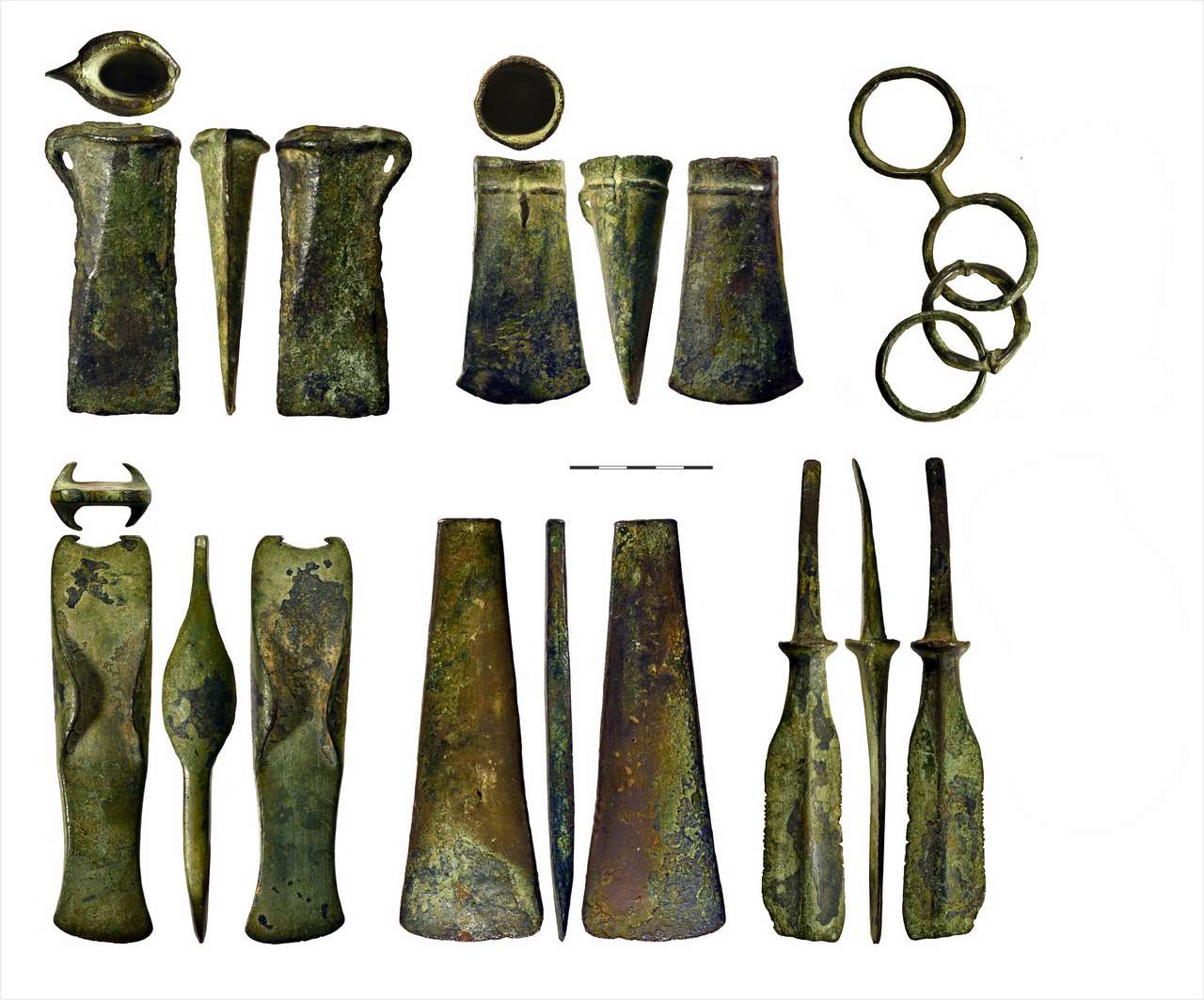
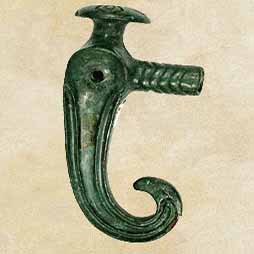
The bronze hoard was discovered on the territory of Mîndrești village, Telenești district, in 1968. It was identified accidentally by a group of students from the village school, and the materials later came to the attention of specialists at the Institute of History of the Academy of Sciences. According to documentary records, the hoard was composed of ten pieces: four socketed axes (celts), a dagger fragment, a sword fragment, a sickle, a winged axe, an adze-axe, and a chain consisting of four links. Currently, of the mentioned assemblage, six objects are preserved in the collections of the National Museum of History of Moldova: two socketed axes (celts), the winged axe, the adze-axe, the dagger fragment, and the chain made of four links.- Socketed axe (celt) with one loop. Dimensions: Length - 10.2 cm; Weight - 186 g. - Socketed axe (celt) with one frontal loop. Dimensions: Length - 8.4 cm; Width: 33-46 mm; Weight - 124 g. - Winged axe. Dimensions: Length - 14.0 cm; Width - 2.5-3.4 cm; Weight - 285 g. - Adze-axe. Dimensions: Length - 14.8 cm; Width - 2.3-5.0 cm; Weight - 286 g. - Dagger fragment. Dimensions: Length - 16.5 cm; Blade length - 9.8 cm; Blade width - 2.8 cm; Weight - 81 g. - Chain formed of four links. Dimensions: Length - 17.1 cm; Link diameter - 3.8; Weight - 32 g.The bronze hoard of Mîndrești is important due to the association of objects that find analogies in the regional repertoire with pieces that show clear analogies in Central Europe and the Carpathian Basin. The assemblage reflects a zone of contact and interaction where metallic forms of different origins and traditions circulated and were integrated into the repertoire of local communities. Chronologically, the bronze hoard of Mîndrești is attributed to the Early Hallstatt period - HaA1, being dated to 1200-1100 BC.
Three Political and Journalistic Events in Romania (1925-1927)
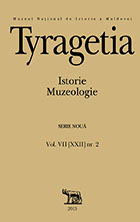
Tyragetia, serie nouă, vol. VII [XXII], nr. 2, Istorie. Muzeologie
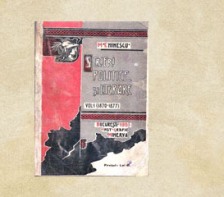
After World War I, Romania signed a series of political agreements with some neighboring countries, which were associated with important arrangements in the field of economics, journalism, science, culture, etc. In this context there were carried out some negotiations, which have lead to the concluding of journalistic agreements between the countries of the Little Entente (Sinaia, 1925), Poland and Romania (Galați, 1926), and also contributed to the VI Congress of the Latin Press (Bucharest, 1927).
These were important (and expensive) events with the participation of the journalist community, the effects of which are difficult to assess. Their generally acknowledged results are the maintenance of a certain regional stability, a more intense exchange of information between partner countries, and the improvement of the image of the country.
The paper contains historical sketches on the three above-mentioned events.
Marian Petcu
Bribery, cheating and blackmail: Romanian media
Tyragetia, serie nouă, vol. I [XVI], nr. 2, Istorie. Muzeologie Chișinău, 2007
Marian Petcu
Advertising of slave trade in the Romanian principalities
Tyragetia, serie nouă, vol. VIII [XXIII], nr. 2, Istorie. Muzeologie
The bronze hoard was discovered on the territory of Mîndrești village, Telenești district, in 1968. It was identified accidentally by a group of students from the village school, and the materials later came to the attention of specialists at the Institute of History of the Academy of Sciences...
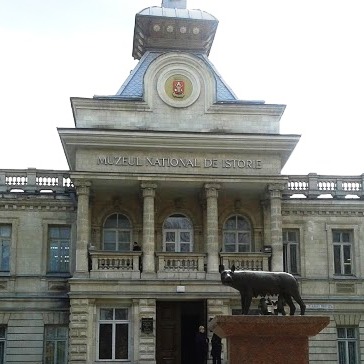
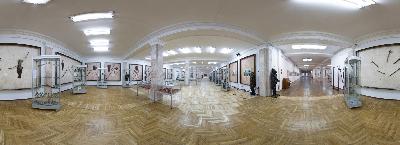
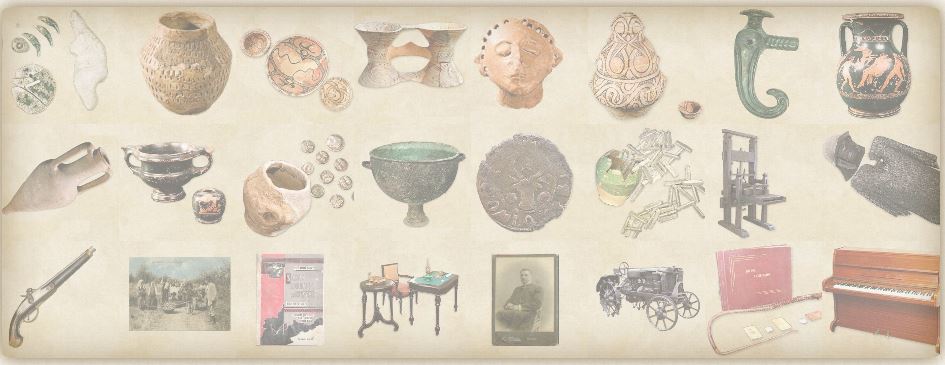
The National Museum of History of Moldova takes place among the most significant museum institutions of the Republic of Moldova, in terms of both its collection and scientific reputation.
The National Museum of History of Moldova takes place among the most significant museum institutions of the Republic of Moldova, in terms of both its collection and scientific reputation.
The National Museum of History of Moldova takes place among the most significant museum institutions of the Republic of Moldova, in terms of both its collection and scientific reputation.















 31 August 1989 St., 121 A, MD 2012, Chisinau, Republic of Moldova