EN RO


#Exhibit of the Month

>>>

We find ourselves in the month of April, as we prepare to celebrate Easter-a moveable religious holiday rich in festive rituals and ceremonial activities that place this event at the very heart of Christian spiritual life. The spirit of the Resurrection is beautifully complemented by ten Easter-themed postcards from the heritage of the National Museum of History of Moldova, printed a century ago. These pieces were added to the museum's postcard collection over a decade ago following a successful acquisition; as the fund for Easter-themed illustrations is modest, we are in a constant search for new additions.

These postcards are "extraordinary" in terms of their postal, typographical, and chromatic effects-the primary reason for revisiting this genre of greetings. Unlike "classic" postcards, these are smaller in size (6.5 cm x 11 cm), made of cardboard (with the exception of one piece made of photographic paper in black and white), and feature "vivid" colors. Printed in Romania and Germany, they bear the marks of having been sent and circulated through the post.

The name of the holiday originates from the verb persach, meaning "to pass," a term adopted by the Jews from the Egyptians. It entered the Romanian language through the Byzantine-Latin form Paschae, signifying the "passage through death to life, the victory of life, and liberation from the bondage of sin." Easter is a holiday of tolerance and forgiveness, representing a bridge between the present and the past. The significance of this celebration is conveyed through its symbols, which are also featured on these postcards: Hand-painted eggs, the Easter Bunny and the Lamb, traditional sweet breads (cozonac and pască), biblical scenes related to the crucifixion and resurrection of Jesus Christ.

The Easter table also features pască-a ritual food reminiscent of ancient, bloodless "reconciliation" sacrifices. Its preparation is the exclusive task of women, the givers of life, as the leavened dough is considered "alive."

The most significant component of the Easter holiday, however, is the Light. The Ceremony of the Holy Light is associated with the miracle of the light appearing on Easter Sunday at Christ's Tomb in Jerusalem. The candle, often depicted in these images, carries a powerful message; it is with the Resurrection candle that we return home after the midnight religious service. Furthermore, the Easter Bunny represents the rebirth of nature, so eagerly awaited after a harsh winter.

Unlike Christmas, when the announcement and ritual integration of the community into sacred time was the duty of caroling groups, at Easter, "one does not go from house to house." Instead, the ritual meal is organized within each family, symbolizing a direct communion with God.


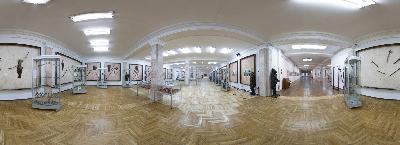
Virtual Tour


Events Archive

Exhibition Opening: "Friends Through Photography"

December 6, 2024

On December 6, 2024, the National Museum of History of Moldova hosted the opening of the exhibition "Friends Through Photography," a project created in collaboration with 20 young people from Moldova and Ukraine. After six months of creative work, these talented participants presented a series of photographic works that reflect the essence of friendship and human connections.

The exhibition features 12 captivating photographic works that capture essential moments of friendship, unity, and solidarity, delivering a powerful message about the strength of human relationships, especially in the current context of relations between Moldova and Ukraine.

This project was made possible through a program supported by Terre des Hommes - Moldova and the Youth Media Center, as part of the initiative "Strengthening Support for Refugee Children and Youth."

Among the notable works are: "Our Friendship," a photograph taken in front of the monument of Ștefan cel Mare, symbolizing the strong bond between two friends who supported each other during challenging times and "Help and Connection," which captures the interactions of the participants during shared activities, highlighting the desire for integration and the building of lasting relationships.


Each photograph is accompanied by personal stories from the authors, emphasizing the vital role of friendship in overcoming challenges and fostering genuine human connections.

The event brought together photography enthusiasts and offered an opportunity to reflect on how photography can influence understanding and connection between people. The atmosphere was filled with emotion and joy, marking the success of a creative collaboration that united young people from two neighboring countries.

The exhibition "Friends Through Photography" is open to the public until December 20, 2024, in the ground-floor hall of the National Museum of History of Moldova, located at 31 August 1989 Street, No. 121A, Chișinău.


Independent Moldova
Moldavian Soviet Socialist Republic
Bessarabia and MASSR between the Two World Wars
Bessarabia and Moldavian Autonomous Soviet Socialist Republic in the Period between the Two World Wars
Revival of National Movement
Time of Reforms and their Consequences
Abolition of Autonomy. Bessarabia – a New Tsarist Colony
Period of Relative Autonomy of Bessarabia within the Russian Empire
Phanariot Regime
Golden Age of the Romanian Culture
Struggle for Maintaining of Independence of Moldova
Formation of Independent Medieval State of Moldova
Era of the
Great Nomad Migrations
Early Middle Ages
Iron Age and Antiquity
Bronze Age
Aeneolithic Age
Neolithic Age
Palaeolithic Age


Come to Museum! Discover the History!
  
Visit museum
Visit museum
Summer schedule: daily
10am – 6pm.

Winter schedule: daily
10am – 5pm.
Closed on Mondays.
Entrance fees:  adults - 50 MDL, Pensioners, students - 20 lei, pupils - 10 MDL. Free access: enlisted men (...)

WiFi Free Wi-Fi Zone in the museum: In the courtyard of the National History Museum of Moldova there is Wi-Fi Internet access for visitors.


#Exhibit of the Month

We find ourselves in the month of April, as we prepare to celebrate Easter-a moveable religious holiday rich in festive rituals and ceremonial activities that place this event at the very heart of Christian spiritual life...

Read More >>


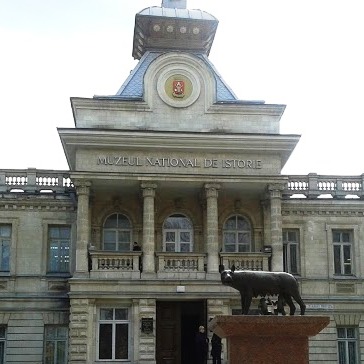
The National Museum of History of Moldova takes place among the most significant museum institutions of the Republic of Moldova, in terms of both its collection and scientific reputation.
©2006-2026 National Museum of History of Moldova
Visit museum 31 August 1989 St., 121 A, MD 2012, Chisinau, Republic of Moldova
Phones:
Secretariat: +373 (22) 24-43-25
Department of Public Relations and Museum Education: +373 (22) 24-04-26
Fax: +373 (22) 24-43-69
E-mail: office@nationalmuseum.md
Technical Support: info@nationalmuseum.md
Web site administration and maintenance: Andrei EMILCIUC


The National Museum of History of Moldova takes place among the most significant museum institutions of the Republic of Moldova, in terms of both its collection and scientific reputation.
©2006-2026 National Museum of History of Moldova
Visit museum 31 August 1989 St., 121 A, MD 2012, Chisinau, Republic of Moldova
Phones:
Secretariat: +373 (22) 24-43-25
Department of Public Relations and Museum Education: +373 (22) 24-04-26
Fax: +373 (22) 24-43-69
E-mail: office@nationalmuseum.md
Technical Support: info@nationalmuseum.md
Web site administration and maintenance: Andrei EMILCIUC

menu
The National Museum of History of Moldova takes place among the most significant museum institutions of the Republic of Moldova, in terms of both its collection and scientific reputation.
©2006-2026 National Museum of History of Moldova
Visit museum 31 August 1989 St., 121 A, MD 2012, Chisinau, Republic of Moldova
Phones:
Secretariat: +373 (22) 24-43-25
Department of Public Relations and Museum Education: +373 (22) 24-04-26
Fax: +373 (22) 24-43-69
E-mail: office@nationalmuseum.md
Technical Support: info@nationalmuseum.md
Web site administration and maintenance: Andrei EMILCIUC