EN RO


#Exhibit of the Month

>>>

Buckles (paftale) are an almost indispensable element of traditional women's dress in the Southeastern European area, particularly in the Balkans, and have been in use over a long period, from the 14th to the 20th century.
The word pafta is of Turkic origin-possibly entering the language via Iranian influence-derived from the Persian word bafta, meaning "woven," which evolved in Turkish to signify "plate." Today, the term is used in nearly identical forms in Romanian (pafta), Bulgarian (пафта), Serbian (пафте), and some Aromanian dialects (pafta), designating functional and ornamental clothing accessories used to fasten belts, girdles, or sashes, crafted from various materials and decorated using different techniques.
The three buckles decorated in the polychrome enamel technique, preserved in the collection of the National Museum of History of Moldova, belong to the South-Danubian tradition and are dated to the late 19th - early 20th century.

Each buckle consists of two identical trapezoidal parts, their surfaces divided into three roughly equal registers, adorned with stylized vegetal motifs forming a metal lattice into which enamel is poured. The two parts extend into sharp angles at the ends, forming a triangle with the edge of the last decorative register, similarly ornamented. The enamel used to fill the floral motifs is black, turquoise, white, orange, green, yellow, and burgundy. The entire decorative field is framed by a beaded border.

On the reverse, both components retain a copper band riveted along the edge, used to fasten the ends of the belt. The fastening system, made by interlocking the hinges of the two parts and secured with a movable pin attached by a chain to a clasp fixed on one of the buckle pieces, is concealed by a rectangular plate (riveted with three pins to the body of the piece), with narrow edges ending in sharp angles, decorated in the same style and technique. Additionally, it features three circular settings with notched edges bent inward to hold centrally placed red and green glass paste. These settings are framed by a radiant, notched band.

The symbolism of the color palette encodes meanings and symbols, chosen for their believed magical powers. Red has always represented love, affection, and protection against curses and the evil eye; white symbolizes purity and spiritual and physical cleanliness; blue is symbolically associated with infinity, morning, new beginnings, and transformation; green represents destiny, hope, prosperity, balance, and rebirth, being linked to nature's revival each spring and to life itself.

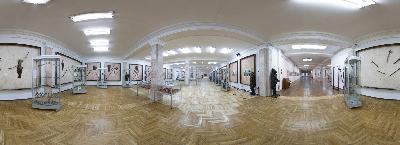
Virtual Tour


Publications Journal „Tyragetia"   vol. I [XVI], nr. 1


Octavian Liviu Şovan, Necropola de tip Sântana de Mureș-Černjachov de la Mihălășeni (județul Botoșani), Editura „Cetatea de Scaun
ISSN 1857-0240
E-ISSN 2537-6330

Octavian Liviu Şovan, Necropola de tip Sântana de Mureș-Černjachov de la Mihălășeni (județul Botoșani), Editura „Cetatea de Scaun", Târgoviște, 2005, 354 p.+390 pl., ISBN 973-7925-51-3

Tyragetia, serie nouă, vol. I [XVI], nr. 1, Arheologie. Istorie Antică


Vlad Vornic
Adrian Ioniță, Așezarea din secolele XII-XIII de la Bratei, Sibiu - Alba-Iulia, 2009, 199 pag. + 274 pl., ISBN 978-973-117-210-1
Tyragetia, serie nouă, vol. VI [XXI], nr. 1, Arheologie. Istorie Antică
Vlad Vornic
Vasile Ursachi, Săbăoani. Monografie arheologică, vol. II, Iași, 2010, 211 pag.+252 ilustr., ISBN 978-973-152-189-3
Tyragetia, serie nouă, vol. V [XX], nr. 1, Arheologie. Istorie Antică
Vlad Vornic
Chronology of Sântana de Mureș-Černjachov type necropolis from Brăviceni, Orhei district
Tyragetia, serie nouă, vol. X [XXV], nr. 1, Arheologie. Istorie Antică
Mariana Sîrbu, Sergiu Popovici, Vlad Vornic
The hoard of bronze artifacts discovered near village Haragîş (Cantemir district)
Tyragetia, serie nouă, vol. XIII [XXVIII], nr. 1, Arheologie. Istorie Antică
Vlad Vornic, Larisa Ciobanu
Mircea Mamalaucă, Descoperiri din perioada antichităţii târzii în Podişul Central Moldovenesc. Necropolele de la Bogdăneşti-Fălciu, Pogoneşti şi Polocin. Iaşi: Casa Editorială Demiurg, 2018, 666 p., inclusiv 259 planşe alb-negru şi color, ISBN: 973-152-367-5
Tyragetia, serie nouă, vol. XIV [XXIX], nr. 1, Arheologie. Istorie Antică, Chişinău, 2020


Independent Moldova
Moldavian Soviet Socialist Republic
Bessarabia and MASSR between the Two World Wars
Bessarabia and Moldavian Autonomous Soviet Socialist Republic in the Period between the Two World Wars
Revival of National Movement
Time of Reforms and their Consequences
Abolition of Autonomy. Bessarabia – a New Tsarist Colony
Period of Relative Autonomy of Bessarabia within the Russian Empire
Phanariot Regime
Golden Age of the Romanian Culture
Struggle for Maintaining of Independence of Moldova
Formation of Independent Medieval State of Moldova
Era of the
Great Nomad Migrations
Early Middle Ages
Iron Age and Antiquity
Bronze Age
Aeneolithic Age
Neolithic Age
Palaeolithic Age


Come to Museum! Discover the History!
  
Visit museum
Visit museum
Summer schedule: daily
10am – 6pm.

Winter schedule: daily
10am – 5pm.
Closed on Mondays.
Entrance fees:  adults - 50 MDL, Pensioners, students - 20 lei, pupils - 10 MDL. Free access: enlisted men (...)

WiFi Free Wi-Fi Zone in the museum: In the courtyard of the National History Museum of Moldova there is Wi-Fi Internet access for visitors.


#Exhibit of the Month

Buckles (paftale) are an almost indispensable element of traditional women's dress in the Southeastern European area, particularly in the Balkans, and have been in use over a long period, from the 14th to the 20th century....

Read More >>


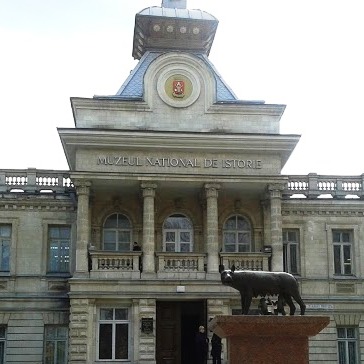
The National Museum of History of Moldova takes place among the most significant museum institutions of the Republic of Moldova, in terms of both its collection and scientific reputation.
©2006-2025 National Museum of History of Moldova
Visit museum 31 August 1989 St., 121 A, MD 2012, Chisinau, Republic of Moldova
Phones:
Secretariat: +373 (22) 24-43-25
Department of Public Relations and Museum Education: +373 (22) 24-04-26
Fax: +373 (22) 24-43-69
E-mail: office@nationalmuseum.md
Technical Support: info@nationalmuseum.md
Web site administration and maintenance: Andrei EMILCIUC


The National Museum of History of Moldova takes place among the most significant museum institutions of the Republic of Moldova, in terms of both its collection and scientific reputation.
©2006-2025 National Museum of History of Moldova
Visit museum 31 August 1989 St., 121 A, MD 2012, Chisinau, Republic of Moldova
Phones:
Secretariat: +373 (22) 24-43-25
Department of Public Relations and Museum Education: +373 (22) 24-04-26
Fax: +373 (22) 24-43-69
E-mail: office@nationalmuseum.md
Technical Support: info@nationalmuseum.md
Web site administration and maintenance: Andrei EMILCIUC

menu
The National Museum of History of Moldova takes place among the most significant museum institutions of the Republic of Moldova, in terms of both its collection and scientific reputation.
©2006-2025 National Museum of History of Moldova
Visit museum 31 August 1989 St., 121 A, MD 2012, Chisinau, Republic of Moldova
Phones:
Secretariat: +373 (22) 24-43-25
Department of Public Relations and Museum Education: +373 (22) 24-04-26
Fax: +373 (22) 24-43-69
E-mail: office@nationalmuseum.md
Technical Support: info@nationalmuseum.md
Web site administration and maintenance: Andrei EMILCIUC