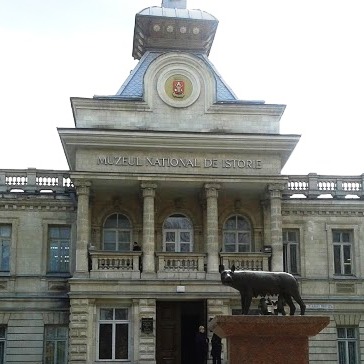
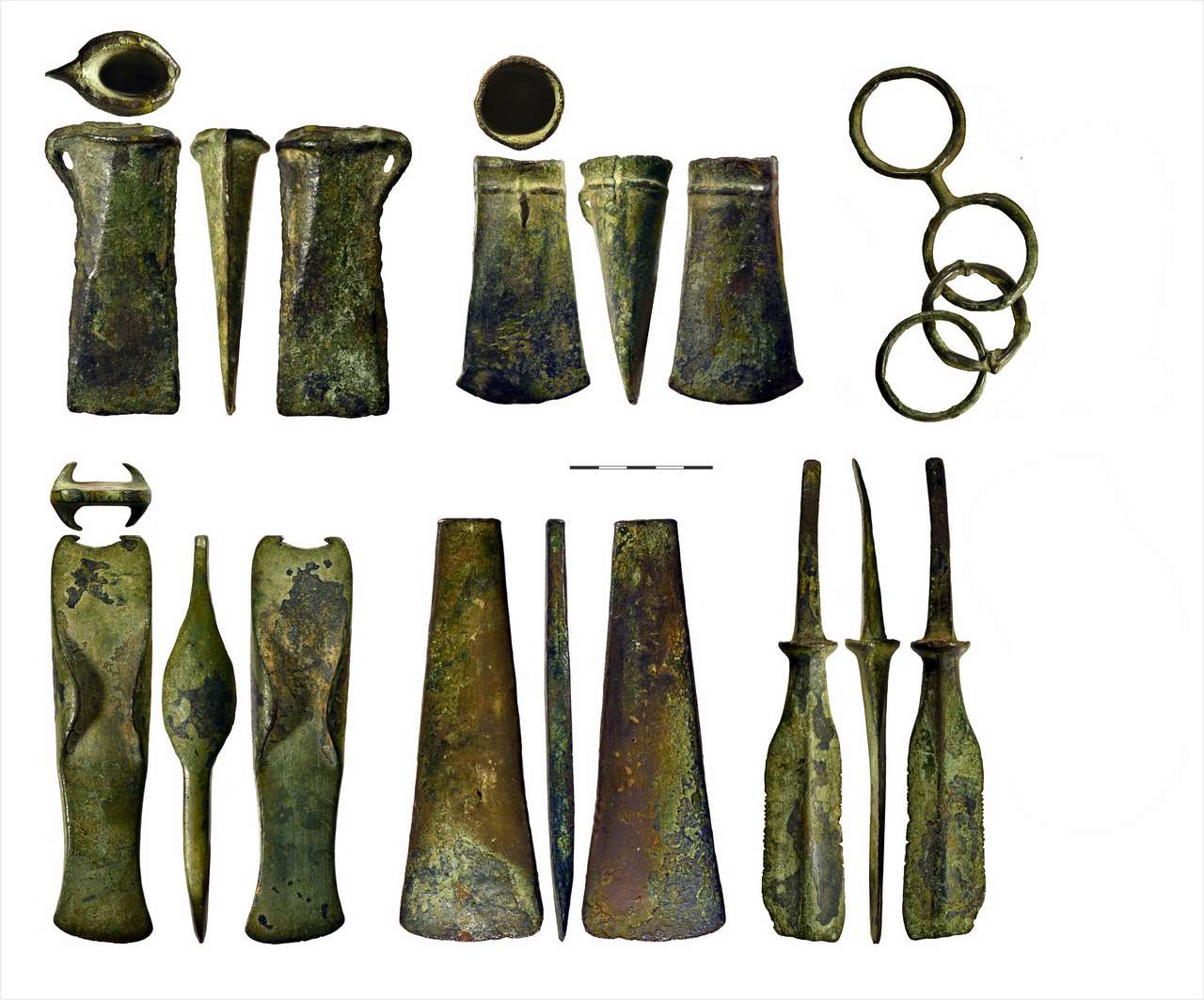
The bronze hoard was discovered on the territory of Mîndrești village, Telenești district, in 1968. It was identified accidentally by a group of students from the village school, and the materials later came to the attention of specialists at the Institute of History of the Academy of Sciences. According to documentary records, the hoard was composed of ten pieces: four socketed axes (celts), a dagger fragment, a sword fragment, a sickle, a winged axe, an adze-axe, and a chain consisting of four links. Currently, of the mentioned assemblage, six objects are preserved in the collections of the National Museum of History of Moldova: two socketed axes (celts), the winged axe, the adze-axe, the dagger fragment, and the chain made of four links.- Socketed axe (celt) with one loop. Dimensions: Length - 10.2 cm; Weight - 186 g. - Socketed axe (celt) with one frontal loop. Dimensions: Length - 8.4 cm; Width: 33-46 mm; Weight - 124 g. - Winged axe. Dimensions: Length - 14.0 cm; Width - 2.5-3.4 cm; Weight - 285 g. - Adze-axe. Dimensions: Length - 14.8 cm; Width - 2.3-5.0 cm; Weight - 286 g. - Dagger fragment. Dimensions: Length - 16.5 cm; Blade length - 9.8 cm; Blade width - 2.8 cm; Weight - 81 g. - Chain formed of four links. Dimensions: Length - 17.1 cm; Link diameter - 3.8; Weight - 32 g.The bronze hoard of Mîndrești is important due to the association of objects that find analogies in the regional repertoire with pieces that show clear analogies in Central Europe and the Carpathian Basin. The assemblage reflects a zone of contact and interaction where metallic forms of different origins and traditions circulated and were integrated into the repertoire of local communities. Chronologically, the bronze hoard of Mîndrești is attributed to the Early Hallstatt period - HaA1, being dated to 1200-1100 BC.
Tyragetia, serie nouă, vol. IX [XXIV], nr. 1, Arheologie. Istorie Antică
Lilia Zabolotnaia
Ştefan Lemny, Dimitrie Cantemir, un principe român în zorile Luminilor europene. A Romanian prince at the dawn of the European enlightenment. Un prince roumain à l’aube des Lumières européennes. Bucureşti: Editura Institutului Cultural Român, 2019, 186 p. + 59 ilustraţii. ISBN 978-973-577-737-1
Tyragetia, serie nouă, vol. XIII [XXVIII], nr. 2, Istorie. Muzeologie
Lilia Zabolotnaia
The destiny of woman in the history of Moldavia. Myths and realities about Catherine the Circassian – the second wife of the hospodar Vasile Lupu
Tyragetia, serie nouă, vol. VII [XXII], nr. 2, Istorie. Muzeologie
Lilia Zabolotnaia
The strength and weakness of Alexandra Osipovna Smirnova-Rosset (on the history of the origins of one of the women of the Pushkin era)
Tyragetia, serie nouă, vol. XII [XXVII], nr. 2, Istorie. Muzeologie
Lilia Zabolotnaia
Epistolary heritage of women’s texts. Private correspondence of the Cantemir sisters
Tyragetia, serie nouă, vol. XVII [XXXII], nr. 2, Istorie. Muzeologie
Lilia Zabolotnaia
Marriage institution during middle ages: obstacles and prohibitions. Exploration of historical anthropology and comparative studies
Tyragetia, serie nouă, vol. V [XX], nr. 2, Istorie. Muzeologie
The bronze hoard was discovered on the territory of Mîndrești village, Telenești district, in 1968. It was identified accidentally by a group of students from the village school, and the materials later came to the attention of specialists at the Institute of History of the Academy of Sciences...
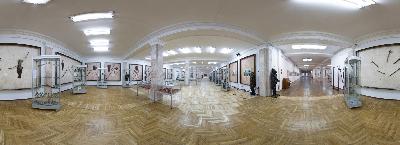
The National Museum of History of Moldova takes place among the most significant museum institutions of the Republic of Moldova, in terms of both its collection and scientific reputation.
The National Museum of History of Moldova takes place among the most significant museum institutions of the Republic of Moldova, in terms of both its collection and scientific reputation.
The National Museum of History of Moldova takes place among the most significant museum institutions of the Republic of Moldova, in terms of both its collection and scientific reputation.















 31 August 1989 St., 121 A, MD 2012, Chisinau, Republic of Moldova