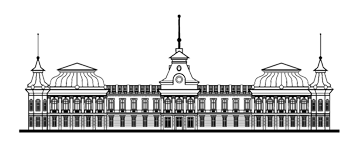
The Chișinău Diocesan Girls' School opened its doors on May 3, 1864, addressing a pressing need: in Bessarabia there were no institutions dedicated to the education of clergy's daughters. According to the 1864 circular, teaching was conducted in the Romanian language, a provision applied throughout the diocese. The school's first headmistress was Anastasia Rizo, of noble origin, invited by Archbishop Antonie.
The curriculum, approved by the Ministry of Public Education and the Chișinău Diocese, combined theoretical subjects with practical training. Students studied religion, reading and writing in Romanian, Slavonic, and Russian, arithmetic and exercises in calculation, world history and geography. The program was complemented by church singing and practical skills such as sewing, embroidery, knitting, as well as household management - baking bread and prosphora, preparing meals and preserves, caring for livestock, and cultivating gardens.
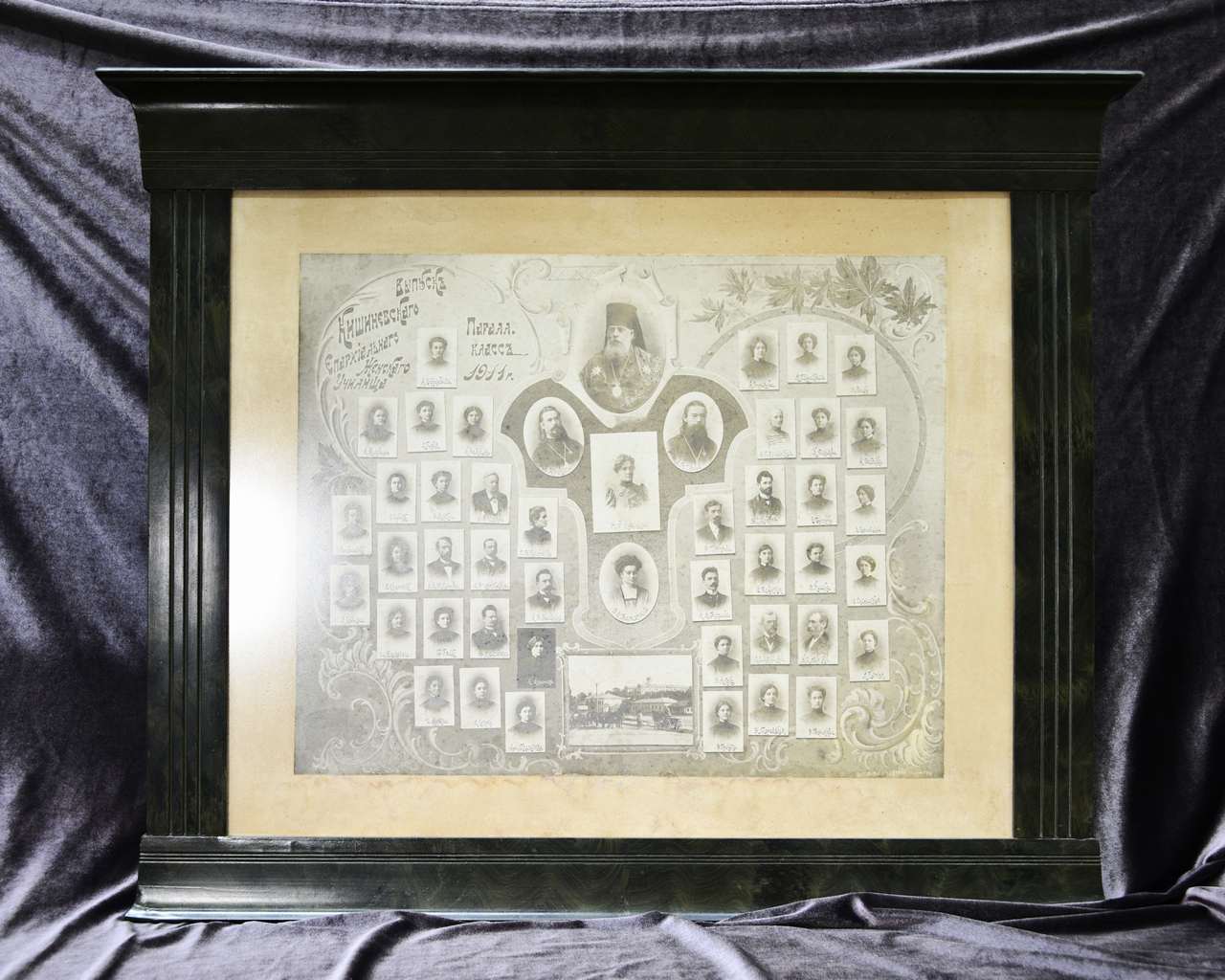
The composite, taken in 1911 at the studio of Z. N. Sumovski in Chișinău, depicts 29 graduates and 13 teachers. At the center are portraits of Bishop Serafim (Ciciagov), headmistress N. R. Mihelson, teacher V. E. Bejerian, and priests F. Ghiliarov and P. Jurikas. Among the teaching staff was Paraskovia Vasilievna Cuciurenko, a calligraphy teacher for 37 years, who in 1911 became senior educator and assistant headmistress. For her dedication, she was awarded the gold medal "For Long Service."
On the reverse of the vignette is a label from the store and workshop of frames, paintings, mirrors, and window glass owned by A. D. Kon'gova, Chișinău, Gogol Street no. 37, near the State Bank.
This graduation composite was donated at the end of 2025 to the National Museum of History of Moldova by the Dadiștian family from Drochia.
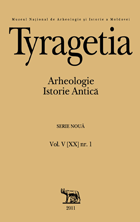
Tyragetia, serie nouă, vol. V [XX], nr. 1, Arheologie. Istorie Antică
Among the Hallstattian monuments of the Upper Tisza there are hill-forts. They were discovered in the late 19th century, but received a reliable classification and chronological identification only 50 years later. Most hill-forts served as refuge and are characterized by a scanty cultural layer.
The hill-fort of Ardanovo (Boguslav) in the Irshava district of Zakarpattia region was investigated in 1958 and 1962 by G.I. Smirnova. The archaeological researches were resumed by the team of archaeologists from the Uzhgorod University in 2011. As a result there were discovered many archaeological evidences which confirmed that the Ardanovo hill-fort can be attributed to the period of the 10th - 8th centuries B.C.
List of illustrations: Fig. 1. The map of hill-forts of the Upper Tisza in the 12th - 8th centuries B.C.: 1 - Ardanovo; 2 - Belaja Tserkov; 3 - Bilki; 4 - Velki Sharish; 5 - Konnjush; 6 - Kuzin; 7 - Levocha; 8 - Letanovtse; 9 - Nevitskoe; 10 - Nizhnij Travozech; 11 - Obishovtse; 12 - Poprad; 13 - Sighetul-Мarmației; 14 - Sredneje Vodjanoe; 15 - Stremtura; 16 - Terna-Liza; 17 - Sharishske Sokolovitse; 18 - Shelestovo; 19 - Yarovnitse Fig. 2. Plan of Ardanovo surrounding area. Fig. 3. Ardanovo (Boguslav). Plan of the hill-fort. Fig. 4. Ardanovo (Boguslav). 1 - cut of the mound 1; 2 - piece of black-ware amphora (after G.I. Smirnova). Fig. 5. Ardanovo (Boguslav). Cut of the mound 2 (after A.V. Dzembas). Fig. 6. Ardanovo (Boguslav). Ceramics from embankment of the mound. Cut 2 (after А.V. Dzembas). Fig. 7. Ardanovo (Boguslav). Cut of the mound 3. Fig. 8. Ardanovo (Boguslav). Ceramics from embankment of the mound. Cut 3. Fig. 9. Ardanovo (Boguslav). 1-26 - ceramics from the excavations of 2011; 27-28 - materials from surface.
The Chișinău Diocesan Girls' School opened its doors on May 3, 1864, addressing a pressing need: in Bessarabia there were no institutions dedicated to the education of clergy's daughters...
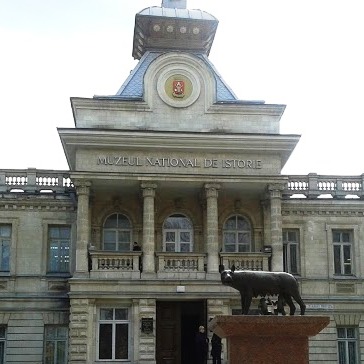
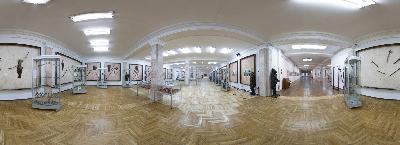
The National Museum of History of Moldova takes place among the most significant museum institutions of the Republic of Moldova, in terms of both its collection and scientific reputation.
The National Museum of History of Moldova takes place among the most significant museum institutions of the Republic of Moldova, in terms of both its collection and scientific reputation.
The National Museum of History of Moldova takes place among the most significant museum institutions of the Republic of Moldova, in terms of both its collection and scientific reputation.





















 31 August 1989 St., 121 A, MD 2012, Chisinau, Republic of Moldova