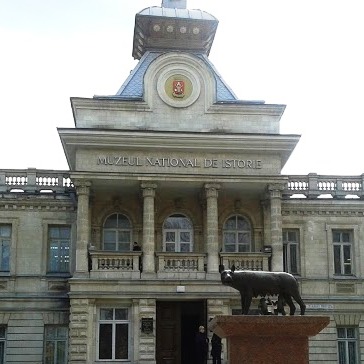
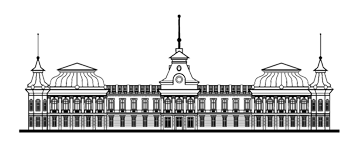
The Chișinău Diocesan Girls' School opened its doors on May 3, 1864, addressing a pressing need: in Bessarabia there were no institutions dedicated to the education of clergy's daughters. According to the 1864 circular, teaching was conducted in the Romanian language, a provision applied throughout the diocese. The school's first headmistress was Anastasia Rizo, of noble origin, invited by Archbishop Antonie.
The curriculum, approved by the Ministry of Public Education and the Chișinău Diocese, combined theoretical subjects with practical training. Students studied religion, reading and writing in Romanian, Slavonic, and Russian, arithmetic and exercises in calculation, world history and geography. The program was complemented by church singing and practical skills such as sewing, embroidery, knitting, as well as household management - baking bread and prosphora, preparing meals and preserves, caring for livestock, and cultivating gardens.
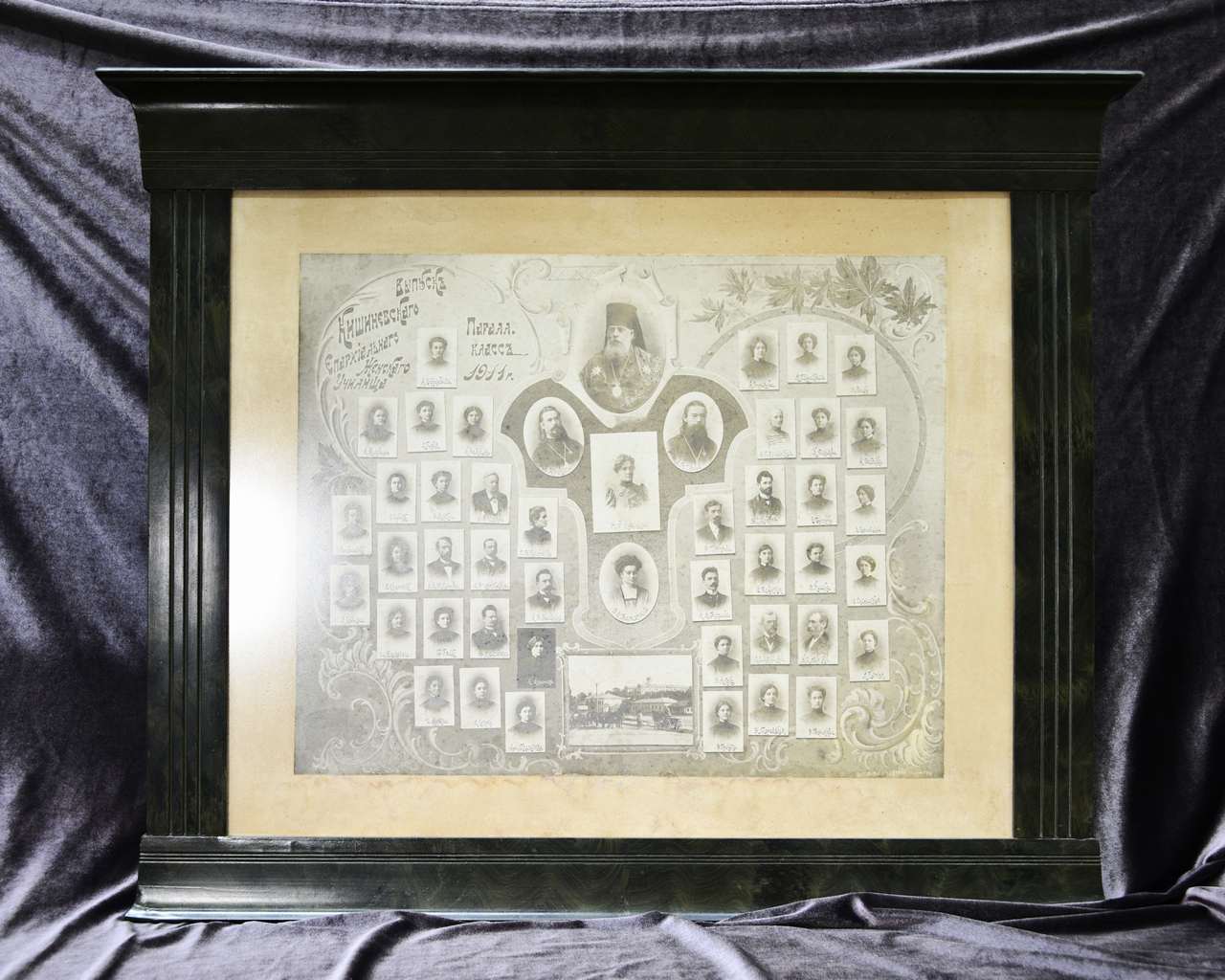
The composite, taken in 1911 at the studio of Z. N. Sumovski in Chișinău, depicts 29 graduates and 13 teachers. At the center are portraits of Bishop Serafim (Ciciagov), headmistress N. R. Mihelson, teacher V. E. Bejerian, and priests F. Ghiliarov and P. Jurikas. Among the teaching staff was Paraskovia Vasilievna Cuciurenko, a calligraphy teacher for 37 years, who in 1911 became senior educator and assistant headmistress. For her dedication, she was awarded the gold medal "For Long Service."
On the reverse of the vignette is a label from the store and workshop of frames, paintings, mirrors, and window glass owned by A. D. Kon'gova, Chișinău, Gogol Street no. 37, near the State Bank.
This graduation composite was donated at the end of 2025 to the National Museum of History of Moldova by the Dadiștian family from Drochia.
Cantemir’ s wills. Case Study (XVIII - beginning XIX centuries)
Tyragetia, serie nouă, vol. V [XX], nr. 2, Istorie. Muzeologie
Wills are legal and historical documents, of particular importance in the research of family relations, everyday life and mentality of the era. They are an irreplaceable source in studying the evolution forms of inheritance, of the structure of such an act.
About representatives of Cantemir Dynasty have been published numerous essays, articles, monographs, taking into debate various aspects of their work or private life. But so far nobody has stopped detail on wills representatives Cantemir Dynasty, although some moments and passages of wills have been cited and discussed. The purpose of this study is to investigate and analyze the wills of Cantemir Dynasty representatives: Dmitry Cantemir (1673-1723), Antioch Cantemir (1708-1744), son of Dmitry Cantemir, Cantemir Maria (1700-1757), daughter of Dmitry Cantemir and Casandra, Ecaterina (Smaragda) Cantemir (1720-1761), daughter of Dmitry Cantemir and Anastasia Trubetskaia and Dmitry Cantemir (1749-1820), son of Gen. Constantin Cantemir, the nephew of Antioch Cantemir, the hospodar.
The Cantemir’s wills clearly reflect primarily the family relations. Deprivation of the right to inherit of one child (Dmitry Cantemir’s will the hospodar), the division of wealth between the few brothers (Antioch Cantemir’s will), naming her husband as the main heir (the will of Catherine-Smaragda Cantemir), changing his will in favor of his granddaughter (The will of Dmitry Cantemir, nephew) shows attitude of will maker to the most closest people. Also everyone is very careful in eternal sleep on site, although it shows the simplicity of the funeral.
In terms of the structure will, we can mention the standard form for making testament to Antioch Cantemir. From the fragments we have in our possession ca be affirmed that according tradition were prepared the wills of Mary Catherine and Dmitry Cantemir, the grandson. The testament’s form is different at Dmitry Cantemir, The prince, who established clearly step by step (on points) and addressing to the Russian Queen.
Alina Felea
Some categories of epitaphs in Moldova and neighboring countries in the 17th - early 19th centuries
Tyragetia, serie nouă, vol. VII [XXII], nr. 2, Istorie. Muzeologie
Alina Felea
Voivode/prince between Ideal and Real. Chroniclers’ representations about Tara Moldova (the middle of 17th - the middle of 18th Centuries
Tyragetia, serie nouă, vol. III [XVIII], nr. 2, Istorie. Muzeologie
Alina Felea
From the history of a family in Bessarabia of the early 19th century: the husband's inability to perform the conjugal duty
Tyragetia, serie nouă, vol. X [XXV], nr. 2, Istorie. Muzeologie
Alina Felea
The institution of witnesses in wills in the Principality of Moldavia (the 17th century - beginning of the 19th century
Tyragetia, serie nouă, vol. XIX [XXXIV], nr. 2, Istorie. Muzeologie, Chişinău, 2025
Alina Felea
Some dates of family Imbault
Tyragetia, serie nouă, vol. II [XVII], nr. 2, Istorie. Muzeologie
The Chișinău Diocesan Girls' School opened its doors on May 3, 1864, addressing a pressing need: in Bessarabia there were no institutions dedicated to the education of clergy's daughters...
The National Museum of History of Moldova takes place among the most significant museum institutions of the Republic of Moldova, in terms of both its collection and scientific reputation.
The National Museum of History of Moldova takes place among the most significant museum institutions of the Republic of Moldova, in terms of both its collection and scientific reputation.
The National Museum of History of Moldova takes place among the most significant museum institutions of the Republic of Moldova, in terms of both its collection and scientific reputation.



















 31 August 1989 St., 121 A, MD 2012, Chisinau, Republic of Moldova