EN RO


#Exhibit of the Month

>>>

Around thirty icons from the collection of the National Museum of History of Moldova feature Saint Nicholas the Hierarch and Miracle Worker. While most represent the later iconographic tradition, a few early images stand out as rare examples due to their composition.
In the icon "Saint Nicholas with Scenes from His Life", the hierarch is depicted bust-length, blessing the Gospel. He is framed by two round medallions showing Christ and the Mother of God, who hand him the Gospel and the omophorion. Saint Nicholas, earlier than other saints, was portrayed with scenes from his hagiographic cycle. The first images of his life date back to the 11th century, represented on a folding icon from the Monastery of Saint Catherine at Sinai. 

The museum icon dates from the early 19th century, preserving the traditional chest format typical of classical icons. Twelve panels illustrate episodes from the saint's life, arranged from left to right: four on the upper register, four on the lower, and two on each side, as follows: Birth of Saint Nicholas (1), Baptism of Saint Nicholas (2), Miracle of Healing the Crippled Woman (3), Apprenticeship of Young Nicholas (4), Ordination as Deacon (5), Ordination as Bishop (6) Vision of Constantine (7), Saint Nicholas Saves Three Voivodes from Execution (8), Miracle of Rescue from Drowning (9), Miracle of Saving Basil from the Arabs (10), Dormition of Saint Nicholas (11), Translation of the Relics of Saint Nicholas to Bari (12).

Saint Nicholas the Hierarch is commemorated by the Orthodox Church twice a year: on December 6/19, the day of his birth, and on May 9/22, the day his relics were transferred from Myra to Bari (1087). Among all saints of the Christian world, the image of Saint Nicholas is one of the most popular, easily recognizable even to those unfamiliar with iconography.

He was born in the Roman Empire, at Patara in the province of Lycia, between 260-280, though early sources omit the exact date. Coming from a wealthy family, he rejected fame and luxury. From an early age he devoted himself to prayer and the study of Holy Scripture, while also mastering other disciplines. He avoided noisy gatherings and idle talk, attended church regularly, and pursued a life of chastity. Later he dedicated himself to pastoral ministry, defending the Christian faith with perseverance and firmly opposing heresies.
Through his care for people and the benefactions he performed everywhere, he became highly venerated not only in Myra but also in the surrounding regions. The grace of the Holy Spirit dwelling in his heart was revealed through miracles performed both during his life and after his death, earning him the enduring title of "Miracle Worker." Saint Nicholas passed away in the 330s (circa 334-337), and his remains were placed in a sumptuous marble tomb in the episcopal cathedral where he had served for many years. This soon became an important center of pilgrimage.
Holy Tradition has preserved with accuracy the features of his portrait, and his appearance in icons is marked by a distinct individuality. Ecclesiastical art has produced numerous iconographic representations, ranging from bust images to full-length depictions. The diversity of these representations suggests that the final iconography of Saint Nicholas was not yet established, taking shape only in the 10th-11th centuries. It is said that an authentic icon from the basilica in Myra, executed during the saint's lifetime and mentioned in written sources as early as the 11th century, played a significant role in his veneration.
Icons depicting the hagiographic cycle of Saint Nicholas spread widely in both Byzantine and post-Byzantine art, confirming the importance and popularity of his cult.

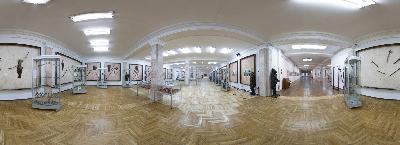
Virtual Tour


Events Archive


Scientific conference "93 years after the unification of Bessarabia with Romania"

26 March 2011

National Museum of Archaeology and History of Moldova hosted on 26 March 2011 in the Blue Room, the scientific conference "93 years after the unification of Bessarabia with Romania" The conference was attended by renowned historians from Republic of Moldova and Romania. In the framework of this scientific manifestation there was presented the Collection of documents : Gheorghe Cojocaru, Operation "South" Chisinau. Операция "Юг» Кишинев, Chisinau, 2010, 484 p.

The conference program can be found here.


Details>>

Book Presentation "Historical center of Chisinau at the beginning of 21st century: Directory of architectural monuments"

10 March 2011

The SITe Center (Architecture, Cultural Heritage, and Design) and the ARC Publishing House, in the framework of a public event held at the National Museum of Archaeology and History of Moldova, had presented the album "Historical center of Chisinau at the beginning of 21st century: Directory of architectural monuments" considered by experts "an album of national importance".

Details>>

Round Table “Entry into force of the Law on the protection of archaeological heritage”

9 March 2011

On March 9, from 11:00, at the Blue Room of the museum there took place the press conference and the round table on "Entry into force of the Law on the protection of archaeological heritage" organized by the Ministry of Culture of the Republic of Moldova, the National Museum of Archaeology and History of Moldova, and the National Association of Young Historians of Moldova

Details>>

Presentation of the Institute of Social History „Pro Memoria"

15 February 2011

The Blue Room of the National Museum of Archaeology and History of Moldova hosted the presentation of the Institute of Social History “Pro Memoria”. The objectives of the new institution are the following: application of new research and teaching methodologies in the field of historical sciences; elaboration, implementation / execution, evaluation and monitoring of various projects at local / national level in order to develop scientific and didactic potential in the field; organizing and participation in seminars, symposia, conferences; dissemination of historical knowledge through local and foreign mass media.

The event was attended by researchers from academic, university, and museum institutions, representatives of diplomatic corps accredited in Moldova.

Details>>

Municipal Seminar on History „Development of Museum Heritage to Improve the Learning Process for the Subject of History"

25 January 2011

The National Museum of Archaeology and History of Moldova has held a methodical seminar on “Development of Museum Heritage to Improve the Learning Process for the Subject of History” attended by teachers of history from schools of the municipality of Chisinau. The event was organized in collaboration with the General Directorate for Education, Youth, and Sports of the Municipality of Chisinau

Details>>

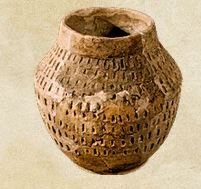
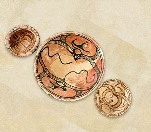
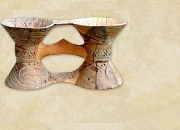
Presentation of a series of postage stamps „Exhibits from the Treasury of the National Museum of Archaeology and History of Moldova. The Cucuteni-Tripolye Culture”

25 January 2011

 
Tuesday, January 25, in one of the rooms of the permanent exhibition “History and Civilization” the presentation of a new issue of postage stamps „Exhibits from the Treasury of the National Museum of Archaeology and History of Moldova. The Cucuteni-Tripolye Culture” had place. The postage stamps were produced by the „Posta Moldovei” State Enterprise on the basis of a cooperation agreement signed with the National Museum of Archaeology and History of Moldova on January 12, 2011 for familiarization of philatelists around the world with unique items from the museum’s collections

Details>>

Symposium “Bessarabian Nobility in the Russian Empire during the Reform Period”

1 December 2010

On November 30 – December 1, 2010 the Modern History Department of the National Museum of Archaeology and History of Moldova held the National Symposium Bessarabian Nobility in the Russian Empire during the Reform Perioddedicated to the 105th anniversary of the Alexandru Matei Cotruta’s death (1827-1905).

Details>>

Round Table “Human Rights, Democracy, and Constitutional State”

13 November 2010

Within the framework of the 12th International Symposium “Romanians from Abroad” on November 13, 2010 at 11:30 in the Blue Room of the National Museum of Archaeology and History of Moldova there was hosted the Round Table “Human Rights, Democracy, and Constitutional State” held by ASTRA.  Greetings to the participants were addressed by Elena Postica, Ph.D., Deputy Director of the National Museum of Archaeology and History of Moldova; Ion Negrei, Deputy Prime Minister of the Republic of Moldova; Areta Mosu, President of the Iasi ASTRA Department “Mihail Kogalniceanu”; Victor Grecu, Vice  President of ASTRA, Sibiu. In the discussion there were also participated Teodor Carnat, the President of the Helsinki Committee for Human Rights in the Republic of Moldova; Victor Axenti; Claudia Partole, Maria Danilov, PhD; Viorel Hodis, PhD (Cluj-Napoca), Gheorghe Iutis, PhD (Iasi); Gheorghe Marzenco, Press Office of the President of the Republic of Moldova; and others

Details>>

The Closing Ceremony of the Project “Provision of the National Museum of Archaeology and History of Moldova with Modern Equipment for Restoration of Exhibits, Exhibition and Educational Activities” Financed by the Government of Japan

27 October 2010

The Government of Japan has provided financial assistance amounting to U.S. $ 81,562 for the project to provide the National Museum of Archaeology and History of Moldova with modern equipment for restoration of exhibits, exhibition and educational activities. The project was implemented within one year (October 2009 – October 2010). This is the first project performed in the Republic of Moldova within the framework of the Small Grants Program in the Field of Culture

Details>>

Annual Scientific Session 2010

15 October 2010

On October 14 – 15, 2010 the National Museum of Archaeology and History of Moldova organizes the 20th Annual Scientific Session.

PROGRAM

Thursday, October 14, 2010

10.00 – 10.30:
Opening of the Scientific Session (ground floor, 1st room) Brief speeches Eugen Sava, General Director of the National Museum of Archaeology and History of Moldova Mariana Slapac, Vice President of the Academy of Sciences of Moldova Gheorghe Postica, Deputy Minister of Culture of the Republic of Moldova Gheorghe Cojocaru, Director of the Institute of History, State and Law of the Academy of Sciences of Moldova Mihai Ursu, General Director of the National Museum of Ethnography and Natural History

Details>>

International Festival of Choral Music

14 October 2010

The National Museum of Archaeology and History of Moldova hosted the National Music Part of the 3rd International Festival of Choral Music held by the Music and Choral Association of the Republic of Moldova. In the Blue Room of the museum there sang choral groups from Georgia, Latvia, Romania, Russia, and the Republic of Moldova.

Details>>

Discussion on the topic: “Migration and Multi-ethnicity in the Past and at Present”

12 October 2010

The event was organized by the Moldova-Institut Leipzig, Friedrich-Ebert Foundation, Moldavian-German Forum, National Museum of Archaeology and History of Moldova, and the Institute for Development and Social Initiatives “Viitorul”. It was attended by cultural workers and scientists from the Republic of Moldova and Germany, among which there are Dr. Klaus Bochmann, the Chairman of the Moldova-Institut Leipzig; Igor Corman, the Chairman of the Moldavian-German Forum and the Commission for Foreign Policy and European Integration of the Parliament of the Republic of Moldova; Dr. Vasile Dumbrava, Moldova-Institut Leipzig; Dr. Igor Sharov, State University of Moldova; Dr. Ute Schmidt, Freie Universitat (Berlin); and others.

Details>>

Archaeological research at the Mazarache church from Chisinau

12 October 2010

During July – October, 2010 the archaeological expedition of the National Museum of Archaeology and History of Moldova carried out investigations near the Mazarache Church from Chisinau and in the cemetery adjacent to the site. In about 40 investigated graves together with other material able to shed light on the time periods when the cemetery was used (pottery, buttons, earrings, rings, etc.) there were found many coins attributed to the medieval and pre-modern times. At the same time, there were discovered a defensive ditch of the Early Iron Age, a cellar of the 17th – 18th centuries, and remnants of an aqueduct of the 19th century

Details>>

Round table “Chisinau: from the Atmosphere of the Past, at the Door of the Present”.

6 October 2010

The National Museum of Archaeology and History of Moldova, in connection with the World Habitat Day, has organized a round table on the topic: “Chisinau: from the Atmosphere of the Past, at the Door of the Present”. The event was attended by Dr. Tamara Nesterov, a researcher from the Architecture Department of the Institute of Cultural Heritage of the ASM; Ion Stefanita, the General Director of the Agency for Inspection and Restoration of Monuments of the Ministry of Culture; Sergiu Brinza, the Head of the Public Relations Department of the National Museum of Archaeology and History of Moldova; lecturers and students of the Department of Urbanism and Architecture of the Technical University of Moldova.

Details>>

Round table on the topic: “Archaeological Investigations of Human Settlements in the Republic of Moldova in 2010”.

4 October 2010

The National Museum of Archaeology and History of Moldova in collaboration with the Institute of Cultural Heritage of the Academy of Sciences of Moldova, within the framework of the World Habitat Day, held a round table on the topic: “Archaeological Investigations of Human Settlements in the Republic of Moldova in 2010”.  There were presented 5 scientific reports with discussions:

Details>>

Book Presentation ”LET’S KNOW EACH OTHER”

23 September 2010

The National Museum of Archaeology and History of Moldova hosted a presentation of the publication LET’S KNOW EACH OTHER by Constantin Pawljuk, the Chairman of the Association “Kulturverein Moldova e.V” from Germany. The book published in 2009 in Berlin summarizes the 10-year activity of the cultural association, reflecting its contribution to the cultural exchange between the Republic of Moldova and Germany

Details>>

European Heritage Days 2010

20 September 2010

Within the framework of the European Heritage Days the National Museum of Archaeology and History of Moldova in collaboration with the Ministry of Culture of the Republic of Moldova, the Institute of Cultural Heritage of the Academy of Sciences of Moldova, the State Pedagogical University named after Ion Creanga, and the Centre of Archaeological Research in the Republic of Moldova has hold on September 20 a round table on the topic: ARCHAEOLOGICAL SITES IN CHISINAU – THE FIRST SYSTEMATIC INVESTIGATION OF THE CITY

Details>>

11th Numismatic Symposium

4 September 2010

On the 3rd and 4th of September, 2010 at the National Museum of Archaeology and History of Moldova there was carried out the 11th Numismatic Symposium held by the Museum, the Institute of Archaeology “Vasile Parvan” of the Romanian Academy (Bucharest), and the Numismatic Society of the Republic of Moldova. The event was attended by specialists in numismatics and other related sciences (faleristics, heraldry, toreutics) from France, Romania, Ukraine, Germany, and the Republic of Moldova

Details>>

Celebration of the International Museum Day

18 May 2010


The International Museum Day was celebrated by a series of events conducted in both the Museum edifice and the courtyard.

From 10.00 before the Museum's closing in different places there were conducted three workshops: "Archaeological Object - an Enigma", "Origami", and "Ikebana", where children and adults could practice their creativity and skills.

In the period of time between 12.00 and 18.00 there were showed the best movies of the International Documentary Film Festival CRONOGRAF-2010, a retrospective of the Museum film library Clio.

Music lovers were invited to an outdoor concert of the Ministry of Defence Orchestra, which included traditional brass band pieces.

At 13.00 there was opened an exhibition "History of Military Headgear". The opening was followed by the demonstration of military exercises with the arms and hand-to-hand fighting showed by the military men from the Guard Battalion and the Special Purpose Battalion of the Ministry of Defence.

During the day in the Museum courtyard there was held the Handicraft Fair „Centuries-Old Crafts in Contemporary Vision", the 2nd Edition, where the visitors could admire (and buy) a variety of authentic items.


Details>>

Museum Night – a night adventure in the Temple of Memory

15 May 2010

The National Museum of Archaeology and History of Moldova participated for the fifth time in the “Museum Night” – an exceptional European cultural event

Details>>

<< 1 2 3 4 5 6 7 8 9 10 11 12 13 14 15 16 17 18 19 20 21 22 23 24 25 26 27 28 29 30 >>


Independent Moldova
Moldavian Soviet Socialist Republic
Bessarabia and MASSR between the Two World Wars
Bessarabia and Moldavian Autonomous Soviet Socialist Republic in the Period between the Two World Wars
Revival of National Movement
Time of Reforms and their Consequences
Abolition of Autonomy. Bessarabia – a New Tsarist Colony
Period of Relative Autonomy of Bessarabia within the Russian Empire
Phanariot Regime
Golden Age of the Romanian Culture
Struggle for Maintaining of Independence of Moldova
Formation of Independent Medieval State of Moldova
Era of the
Great Nomad Migrations
Early Middle Ages
Iron Age and Antiquity
Bronze Age
Aeneolithic Age
Neolithic Age
Palaeolithic Age
  
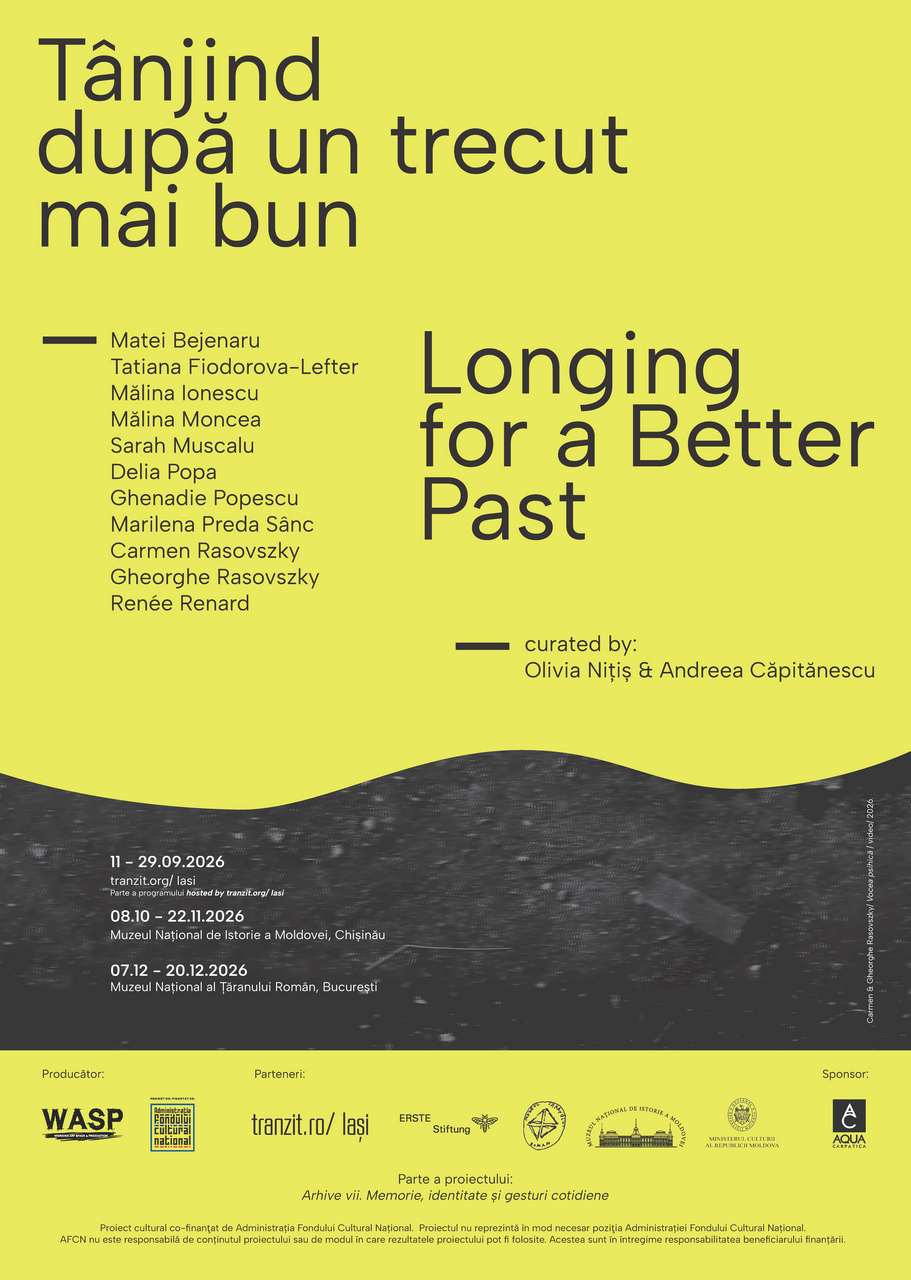
April 6 – May 30, 2026
 
September 25, 2025 – September 1, 2026
 
Over 2500 pieces made of precious metals with historic, artistic and symbolic value
  

Come to Museum! Discover the History!
  
Visit museum
Visit museum
Summer schedule: daily
10am – 6pm.

Winter schedule: daily
10am – 5pm.
Closed on Mondays.
Entrance fees:  adults - 50 MDL, Pensioners, students - 20 lei, pupils - 10 MDL. Free access: enlisted men (...)

WiFi Free Wi-Fi Zone in the museum: In the courtyard of the National History Museum of Moldova there is Wi-Fi Internet access for visitors.


#Exhibit of the Month

Around thirty icons from the collection of the National Museum of History of Moldova feature Saint Nicholas the Hierarch and Miracle Worker. While most represent the later iconographic tradition, a few early images stand out as rare examples due to their composition...

Read More >>


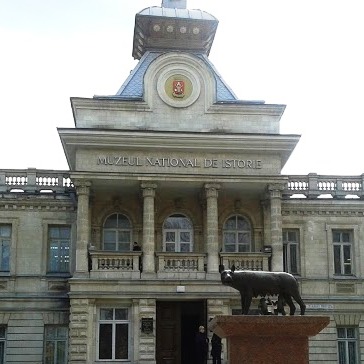
The National Museum of History of Moldova takes place among the most significant museum institutions of the Republic of Moldova, in terms of both its collection and scientific reputation.
©2006-2026 National Museum of History of Moldova
Visit museum 31 August 1989 St., 121 A, MD 2012, Chisinau, Republic of Moldova
Phones:
Secretariat: +373 (22) 24-43-25
Department of Public Relations and Museum Education: +373 (22) 24-04-26
Fax: +373 (22) 24-43-69
E-mail: office@nationalmuseum.md
Technical Support: info@nationalmuseum.md
Web site administration and maintenance: Andrei EMILCIUC


The National Museum of History of Moldova takes place among the most significant museum institutions of the Republic of Moldova, in terms of both its collection and scientific reputation.
©2006-2026 National Museum of History of Moldova
Visit museum 31 August 1989 St., 121 A, MD 2012, Chisinau, Republic of Moldova
Phones:
Secretariat: +373 (22) 24-43-25
Department of Public Relations and Museum Education: +373 (22) 24-04-26
Fax: +373 (22) 24-43-69
E-mail: office@nationalmuseum.md
Technical Support: info@nationalmuseum.md
Web site administration and maintenance: Andrei EMILCIUC

menu
The National Museum of History of Moldova takes place among the most significant museum institutions of the Republic of Moldova, in terms of both its collection and scientific reputation.
©2006-2026 National Museum of History of Moldova
Visit museum 31 August 1989 St., 121 A, MD 2012, Chisinau, Republic of Moldova
Phones:
Secretariat: +373 (22) 24-43-25
Department of Public Relations and Museum Education: +373 (22) 24-04-26
Fax: +373 (22) 24-43-69
E-mail: office@nationalmuseum.md
Technical Support: info@nationalmuseum.md
Web site administration and maintenance: Andrei EMILCIUC