EN RO


#Exhibit of the Month

>>>

Around thirty icons from the collection of the National Museum of History of Moldova feature Saint Nicholas the Hierarch and Miracle Worker. While most represent the later iconographic tradition, a few early images stand out as rare examples due to their composition.
In the icon "Saint Nicholas with Scenes from His Life", the hierarch is depicted bust-length, blessing the Gospel. He is framed by two round medallions showing Christ and the Mother of God, who hand him the Gospel and the omophorion. Saint Nicholas, earlier than other saints, was portrayed with scenes from his hagiographic cycle. The first images of his life date back to the 11th century, represented on a folding icon from the Monastery of Saint Catherine at Sinai. 

The museum icon dates from the early 19th century, preserving the traditional chest format typical of classical icons. Twelve panels illustrate episodes from the saint's life, arranged from left to right: four on the upper register, four on the lower, and two on each side, as follows: Birth of Saint Nicholas (1), Baptism of Saint Nicholas (2), Miracle of Healing the Crippled Woman (3), Apprenticeship of Young Nicholas (4), Ordination as Deacon (5), Ordination as Bishop (6) Vision of Constantine (7), Saint Nicholas Saves Three Voivodes from Execution (8), Miracle of Rescue from Drowning (9), Miracle of Saving Basil from the Arabs (10), Dormition of Saint Nicholas (11), Translation of the Relics of Saint Nicholas to Bari (12).

Saint Nicholas the Hierarch is commemorated by the Orthodox Church twice a year: on December 6/19, the day of his birth, and on May 9/22, the day his relics were transferred from Myra to Bari (1087). Among all saints of the Christian world, the image of Saint Nicholas is one of the most popular, easily recognizable even to those unfamiliar with iconography.

He was born in the Roman Empire, at Patara in the province of Lycia, between 260-280, though early sources omit the exact date. Coming from a wealthy family, he rejected fame and luxury. From an early age he devoted himself to prayer and the study of Holy Scripture, while also mastering other disciplines. He avoided noisy gatherings and idle talk, attended church regularly, and pursued a life of chastity. Later he dedicated himself to pastoral ministry, defending the Christian faith with perseverance and firmly opposing heresies.
Through his care for people and the benefactions he performed everywhere, he became highly venerated not only in Myra but also in the surrounding regions. The grace of the Holy Spirit dwelling in his heart was revealed through miracles performed both during his life and after his death, earning him the enduring title of "Miracle Worker." Saint Nicholas passed away in the 330s (circa 334-337), and his remains were placed in a sumptuous marble tomb in the episcopal cathedral where he had served for many years. This soon became an important center of pilgrimage.
Holy Tradition has preserved with accuracy the features of his portrait, and his appearance in icons is marked by a distinct individuality. Ecclesiastical art has produced numerous iconographic representations, ranging from bust images to full-length depictions. The diversity of these representations suggests that the final iconography of Saint Nicholas was not yet established, taking shape only in the 10th-11th centuries. It is said that an authentic icon from the basilica in Myra, executed during the saint's lifetime and mentioned in written sources as early as the 11th century, played a significant role in his veneration.
Icons depicting the hagiographic cycle of Saint Nicholas spread widely in both Byzantine and post-Byzantine art, confirming the importance and popularity of his cult.

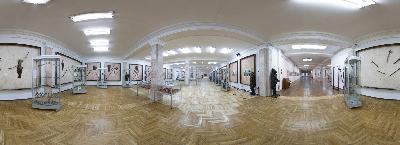
Virtual Tour


Events Archive


Conference „30 years since the fall of the Berlin Wall”

7 November 2019

 
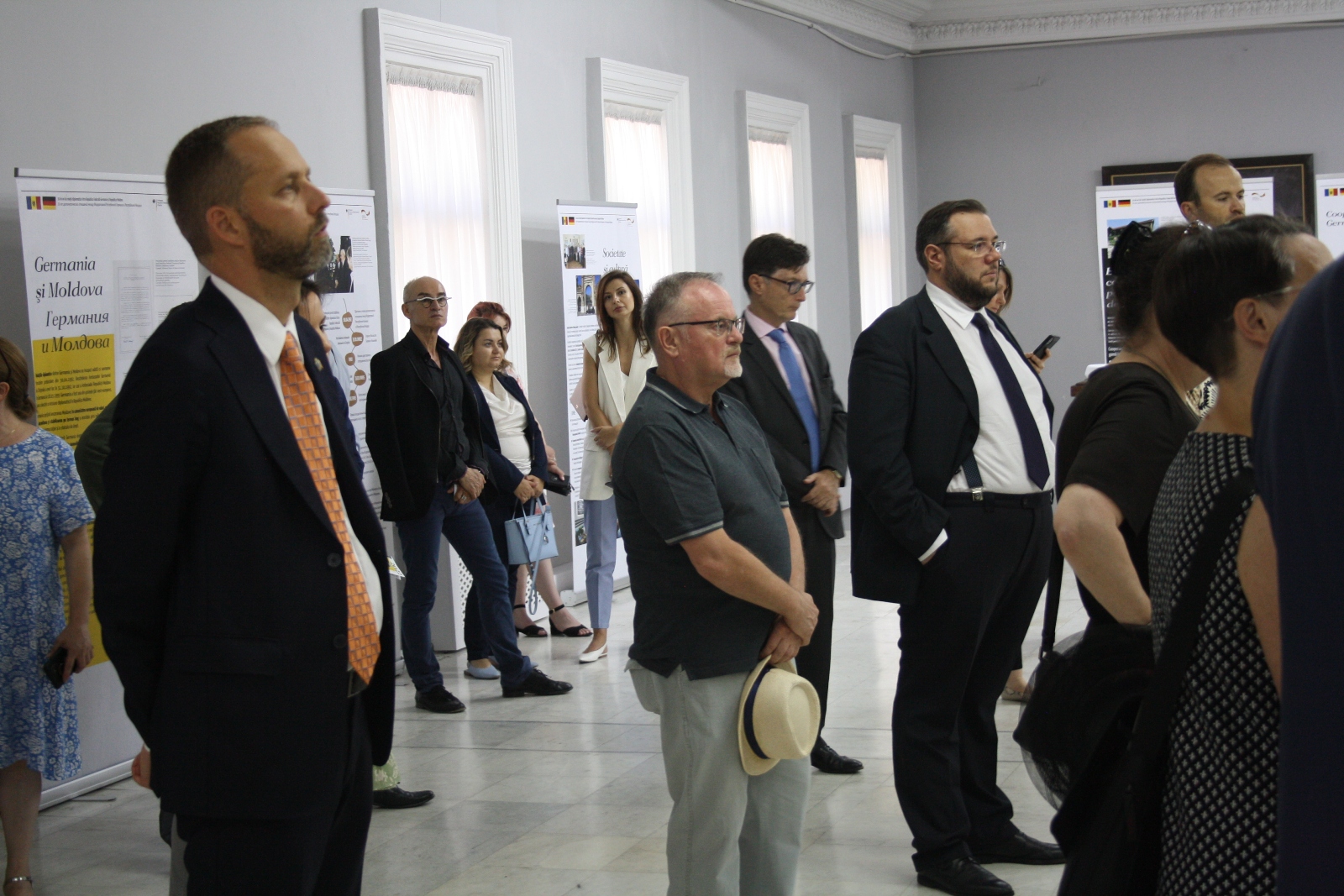
On November 9, 2019 was celebrated the 30th anniversary of the fall of the Berlin Wall. On this occasion the National Museum of History in in partnership with the German Cultural Center AKZENTE organized the Conference "30 years since the fall of the Berlin Wall" with the participation of historians from Germany and the Republic of Moldova

Details>>

18th Symposium on Numismatics

25 October 2019

Between October 24 and 25, 2019, the National Museum of History of Moldova hosted the 18th Numismatic Symposium organized in collaboration with the "Vasile Pârvan" Institute of Archeology of the Romanian Academy in Bucharest and the Numismatic Society of the Republic of Moldova

Details>>

Academic conference HISTORY. ARCHAEOLOGY. MUSEOLOGY, 29th edition

18 October 2019

History is tradition and the National Museum of History of Moldova respects his own traditions. Already at the 29th edition, the yearly Academic Conference of the Museum has gathered again at the table of discussions archaeologists, historians, researchers, museographers, but also all those interested in history on both sides of the Prut River and beyond

Details>>

Meeting (in) visible heroines and movie screening

26 September 2019

The stories of the 34 women who had the courage to change the world continues!

On the evening of September 26, the National Museum of History of Moldova hosted a meeting organized by the Polish Institute in Bucharest, dedicated to women


Details>>

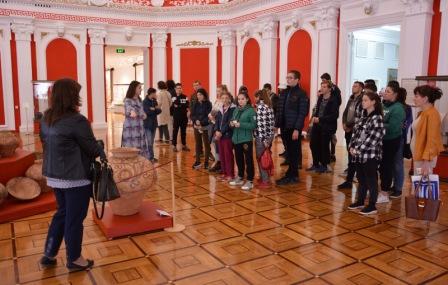
Interactive visit for children with hearing disabilities

25 September 2019

Each year, the museum dedicates the last week of September to supporting the social inclusion of young people with hearing disabilities. On September 25, 30 children from the Professional School no. 11 for children with hearing disabilities, from Chișinău, spent together unforgettable moments at the museum.

Even if deafness is a disability that is not visible, young people who have such deficiencies are exposed daily to the risk of not being accepted by society. Most of them had attended special institutions, starting with kindergarten, where they were assisted by professionals of the gestural language. In order to be able to work, most of these persons would need the support of an interpreter of mimicry and gestures. In the Republic of Moldova, only nine specialists in mimicry are authorized for about 5000 people with hearing problems. One of them was invited at the activity organized by the museum to facilitate the children's access to the information displayed in the museum.


Details>>

The conference "Căpriana Monastery - 590 years from the first written mention"

12 September 2019

 
On September 12, the Institute of History, the National Museum of History of Moldova and the Cartdidact Publishing House organized the Academic Conference "Căpriana Monastery - 590 years from the first written mention".

During the conference was presented the monograph signed by several authors: Căpriana Monastery with the Condrița Chapel (15th century - beginning of the 21st century).

The event gathered a whole room of historians, researchers, clergy and university students, who came to learn more about the history of one of the oldest monasteries in the Republic of Moldova.

Details>>

Activities dedicated to International Children's Day

1 June 2019

On the occasion of the International Children's Day, the National Museum of History of Moldova organized on Saturday, June 1, the activity for children "We assemble history through puzzle"

Details>>

Book presentation „Refugiul regelui suedez Carol al XII-lea (1709-1714) în Imperiul Otoman. Calabalâcul de la Varniţa”, Chișinău, 2019. Editura Lexon-Prim. 516 p. Author: Robert R. Denndorf.

23 May 2019

 
The National Museum of History of Moldova hosted on Thursday, 23 May 2019, the book presentation Refugiul regelui suedez Carol al XII-lea (1709-1714) în Imperiul Otoman. Calabalâcul de la Varniţa, Chișinău, 2019. Editura Lexon-Prim. 516 p. Author: Robert R. Denndorf. The event took place in the Blue Room and gathered researchers, museographs, pupils and students

Details>>

The International Museum Day and European Night of Museums

18 May 2019

 
National Museum of History of Moldova, under the patronage of the Ministry of Education, Culture and Research, organized on May 18, 2019, between 10.00 – 24.00, the International Museum Day and European Night of Museums. This year the events was held under the theme “Museums as Cultural Hubs: The future of tradition”

Details>>

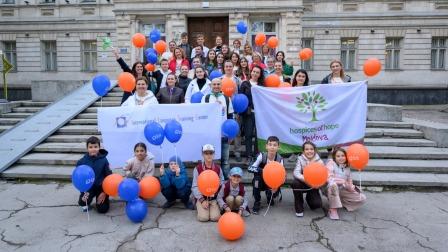
Activities dedicated to the International Day of Families

12 May 2019

The International Day of Families is marked each year on May 15th. The role of this day is to emphasize the importance of all family members, whether parents, grandparents or brothers, and the importance of paternal education for the future of children

Details>>

National Session of Reports “Archaeological research in the Republic of Moldova. Campaign of 2018”

18 April 2019

 
On April 18, 2019, on the occasion of the International Day of Monuments and Sites, the National Museum of History of Moldova, in partnership with the National Archaeological Agency, the National Archaeological Commission and under the auspices of the Ministry of Education, Culture and Research organized the 3rd edition of the National Session of archaeological reports

Details>>

Japanese-style ancestral tradition

2 March 2019

The Mărțișor, celebrated each year in the early days of March, symbolizes the renaissance and the arrival of the spring and makes us feel the energy of a new beginning

Details>>

Museum heritage in stamp collections

13 February 2019

"Poşta Moldovei" will present the series of postage stamps „Antique radio receivers" on the occasion of World Radio Day on February 13, 2019

Details>>

Remembrance of the Holocaust

29 January 2019

On January 22-29, 2019, the National Museum of History of Moldova marked the week of commemoration of the victims of the Holocaust

Details>>

From heart to heart on Christmas

23 December 2018

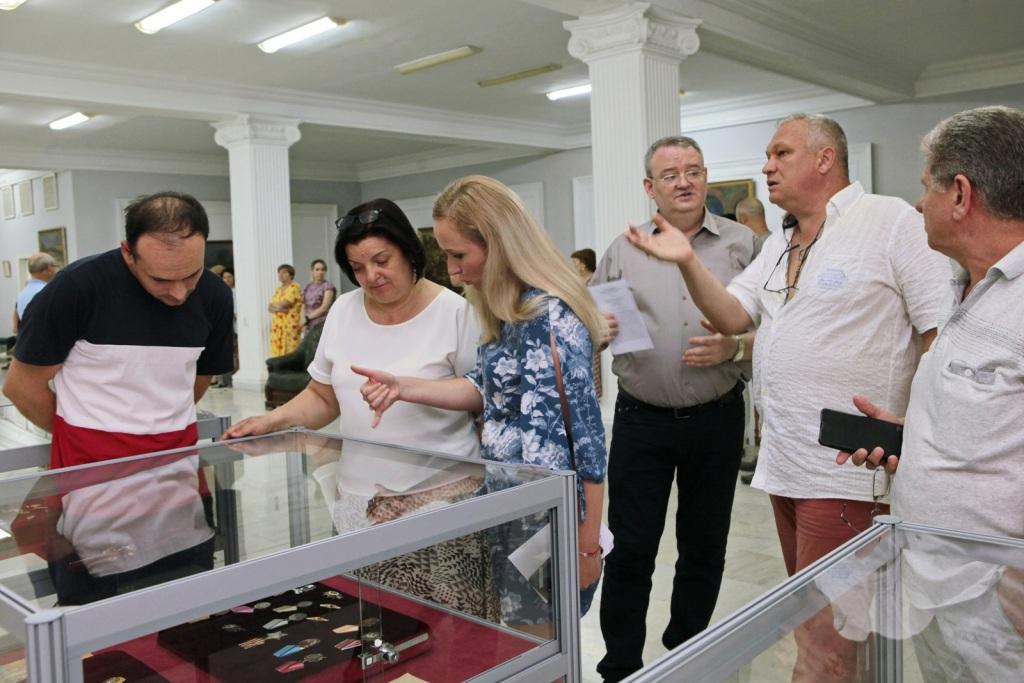
On December 23, around the winter holidays, the National Museum of History of Moldova hosted an event dedicated to children, including children with disabilities and Down syndrome. The event “From heart to heart on Christmas” organized in collaboration with NGOs „Sunshine” and „Childhood” was a surprise for the guests. 

The winter holidays are filled with magic and always are a joy for all, especially for children. In a warm atmosphere with a brilliant themed decoration, alongside the actors of the Studio Theater „Planet”, they prepared theatrical plays, poems, songs and, of course, a wish for Santa who came to visit the children with many gifts.  

It was a beautiful celebration, fact confirmed by a hall filled with smiling children.

Details>>

The National Fair of the Carpet „COVORUL DORULUI” 5th edition

16 December 2018

The National Fair of the Carpet was organised for the 5th consecutive year by the Ministry of Education, Culture and Research in the contextxt of the promotion of the ellement "Traditional techniques of weaving carpets in Romania and the Republicof Moldova" which was inscribed on the UNESCO's Representaative List of the intangible cultural heritage of humanity of December 1, 2016

Details>>

Education and raising awareness of school community about the prevention of alcohol, tobacco and drugs

12 December 2018

On December 12, Public Relations and Museum Education Section (coordinator: Natalia Popovici) organized for the students of the group 01 of the Professional School no. 9 from Chișinău an activity with the theme "Be aware, not addicted!"

Details>>

Reopening the Lazo Family Mansion

2 December 2018

On December 2, 2018, at 12.00, was opened the permanent exhibition „Bessarabian environment - the mansion from Piatra - interconnection of historical personalities" at the Lazo Family Mansion in Piatra, a branch of the National Museum of History of Moldova. The exhibition is opened on the occasion of the completion of the interior rehabilitation works of the Lazo Family Mansion.

The mansion from Piatra, built between 1862-1865 by Ioan and Matilda Lazo, is a typical house of the mid-19th century with an architectural style close to that of the peasant houses, with the location of the chambers around the central hall. The mansion is a large building with several rooms (the original house had six rooms), an annex and a front terrace supported by eight massive round plaster pillars, with an attic located along the façade axis, also supported by two pillars of the same size. The mansion is set in the middle of a garden, facing the valley of the River Răut.


Details>>

International Scientific Conference „The Chronology of the Pre-Roman Iron Age and early Roman Age in Central and South-East Europe: Problems and Perspectives”

9 November 2018

The National Museum of History of Moldova in collaboration with the Moldova State University and the Ion Creangă State Pedagogical University with the support of the Alexander von Humboldt Foundation organized the international scientific conference

Details>>

<< 1 2 3 4 5 6 7 8 9 10 11 12 13 14 15 16 17 18 19 20 21 22 23 24 25 26 27 28 29 >>


Independent Moldova
Moldavian Soviet Socialist Republic
Bessarabia and MASSR between the Two World Wars
Bessarabia and Moldavian Autonomous Soviet Socialist Republic in the Period between the Two World Wars
Revival of National Movement
Time of Reforms and their Consequences
Abolition of Autonomy. Bessarabia – a New Tsarist Colony
Period of Relative Autonomy of Bessarabia within the Russian Empire
Phanariot Regime
Golden Age of the Romanian Culture
Struggle for Maintaining of Independence of Moldova
Formation of Independent Medieval State of Moldova
Era of the
Great Nomad Migrations
Early Middle Ages
Iron Age and Antiquity
Bronze Age
Aeneolithic Age
Neolithic Age
Palaeolithic Age


Come to Museum! Discover the History!
  
Visit museum
Visit museum
Summer schedule: daily
10am – 6pm.

Winter schedule: daily
10am – 5pm.
Closed on Mondays.
Entrance fees:  adults - 50 MDL, Pensioners, students - 20 lei, pupils - 10 MDL. Free access: enlisted men (...)

WiFi Free Wi-Fi Zone in the museum: In the courtyard of the National History Museum of Moldova there is Wi-Fi Internet access for visitors.


#Exhibit of the Month

Around thirty icons from the collection of the National Museum of History of Moldova feature Saint Nicholas the Hierarch and Miracle Worker. While most represent the later iconographic tradition, a few early images stand out as rare examples due to their composition...

Read More >>


The National Museum of History of Moldova takes place among the most significant museum institutions of the Republic of Moldova, in terms of both its collection and scientific reputation.
©2006-2026 National Museum of History of Moldova
Visit museum 31 August 1989 St., 121 A, MD 2012, Chisinau, Republic of Moldova
Phones:
Secretariat: +373 (22) 24-43-25
Department of Public Relations and Museum Education: +373 (22) 24-04-26
Fax: +373 (22) 24-43-69
E-mail: office@nationalmuseum.md
Technical Support: info@nationalmuseum.md
Web site administration and maintenance: Andrei EMILCIUC


The National Museum of History of Moldova takes place among the most significant museum institutions of the Republic of Moldova, in terms of both its collection and scientific reputation.
©2006-2026 National Museum of History of Moldova
Visit museum 31 August 1989 St., 121 A, MD 2012, Chisinau, Republic of Moldova
Phones:
Secretariat: +373 (22) 24-43-25
Department of Public Relations and Museum Education: +373 (22) 24-04-26
Fax: +373 (22) 24-43-69
E-mail: office@nationalmuseum.md
Technical Support: info@nationalmuseum.md
Web site administration and maintenance: Andrei EMILCIUC

menu
The National Museum of History of Moldova takes place among the most significant museum institutions of the Republic of Moldova, in terms of both its collection and scientific reputation.
©2006-2026 National Museum of History of Moldova
Visit museum 31 August 1989 St., 121 A, MD 2012, Chisinau, Republic of Moldova
Phones:
Secretariat: +373 (22) 24-43-25
Department of Public Relations and Museum Education: +373 (22) 24-04-26
Fax: +373 (22) 24-43-69
E-mail: office@nationalmuseum.md
Technical Support: info@nationalmuseum.md
Web site administration and maintenance: Andrei EMILCIUC