EN RO


#Exhibit of the Month

>>>

The grapevine plant, now widespread across the globe, traces its origins back to the Upper Cretaceous geological period, when species of Vitis Linn appeared on Earth (Mesozoic era), followed later by Vitis vinifera L., the latter already classified among cultivated agricultural plants. Most researchers link the origin of the cultivated grapevine (Vitis vinifera L.) to the wild forest species Vitis sylvestris Gmel. Thickets of Vitis sylvestris Gmel. can still sporadically be found in the groves along the Prut and Dniester floodplains.

During the Precucuteni III - Trypillia A period (ca. 4750-4600 BC), the presence of cultivated grape seeds was clearly documented on pottery from the settlement of Ruseştii Noi I, layer I, kiln A, consisting of a seed impression on a ceramic fragment, with the elongated beak characteristic of the domesticated species Vitis vinifera L. Another seed impression of Vitis vinifera L. was recorded at the settlement of Vărvăreuca VIII, identified on the wall of a painted vessel from the Cucuteni B - Trypillia CI stage (3800-3500/3300 BC). 
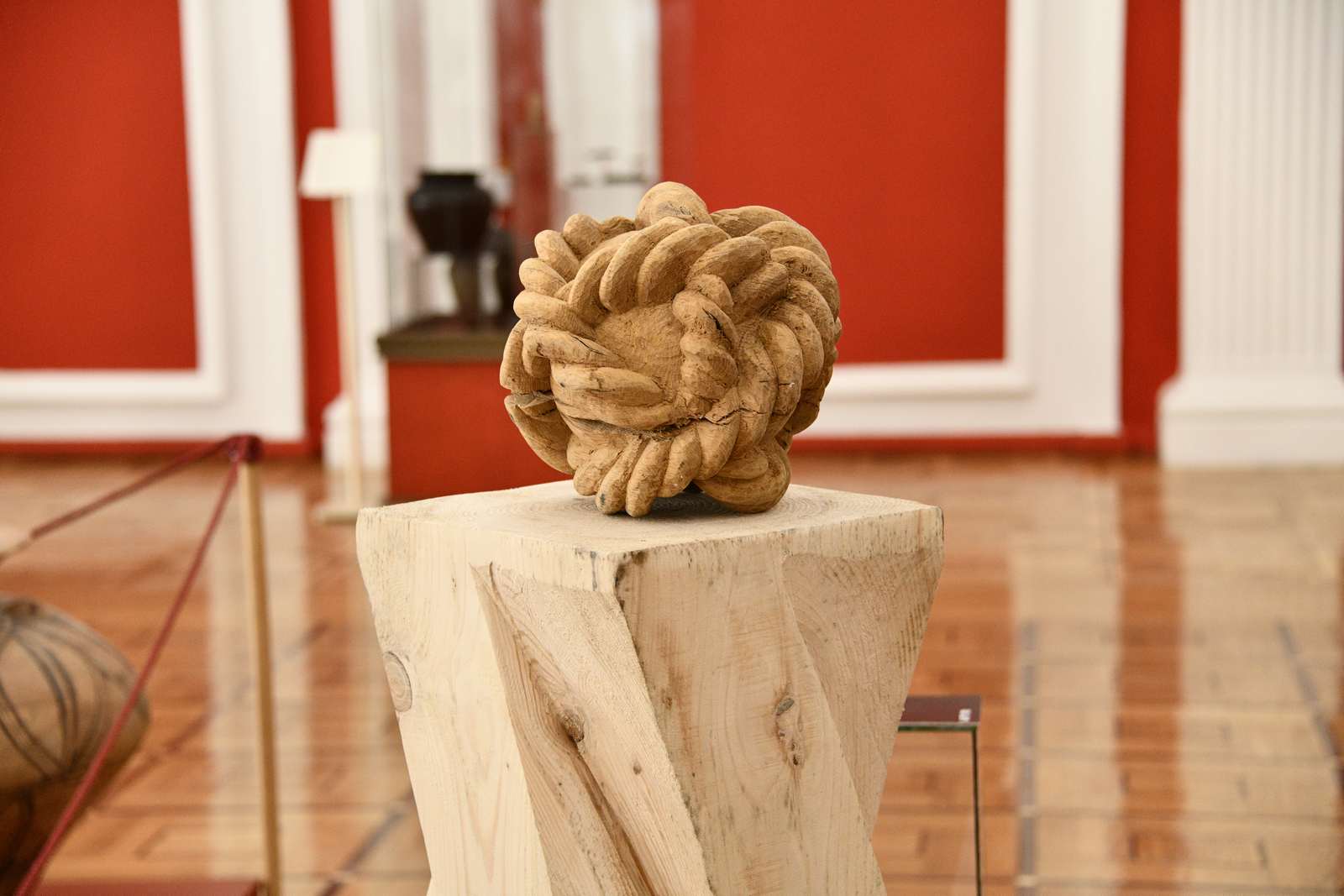
In October, on the occasion of the National Wine Day, the National Museum of History of Moldova presents to your attention a unique relic in Southeastern Europe. The exhibit originates from the settlement Brînzeni VIII "Sâiece," belonging to the Cucuteni-Trypillia culture and dated to the Cucuteni AB2 - Trypillia B2 phase (ca. 4050-3800 BC), located in Brînzeni village, Edineț district. The site lies 2 km southwest of the locality, in a triangle formed by the confluence of the Racovăț and Drobiște streams and the local road L36 Bădragii Vechi-Brînzeni. Positioned on land 25-30 meters above the valley, it was discovered in 1966 by archaeologist Nicolaie Chetraru and investigated through excavations between 1978-1980 by Vsevolod Marchevici. 
The October exhibit is a grapevine leaf impression discovered in 1980. It comes from pit no. 5, partially investigated, with a maximum depth of 155 cm. From the same archaeological complex near dwelling no. 1, several grape seeds were also recovered, as noted in the excavation report. The grapevine leaf impression appears on a coarse clay lump, fired and vitrified due to secondary burning, reddish in color, with an irregular rectangular, flattened shape. The outer surface is uneven and rough. The impression surface is smoothed, with the leaf veins clearly highlighted. Measuring 99 mm in length, 110 mm in width, and 28-31 mm in thickness, the exhibit presents in full splendor an authentic grapevine leaf impression. Some researchers attribute it to the domesticated grapevine Vitis vinifera L., while others, more skeptical, consider it a wild species. Nevertheless, being discovered in a well-documented archaeological context, together with grape seeds near a dwelling, it provides evidence that grapevine was part of Cucuteni community life 6,000 years ago. These findings allow us to affirm that the process of domestication and the creation of table grapes was already underway. The diversity of Cucuteni ceramic forms, as well as the painting on some vessels, undoubtedly suggests their use as containers for various liquids. Accordingly, the emergence of wine among Cucuteni communities can be taken into consideration.

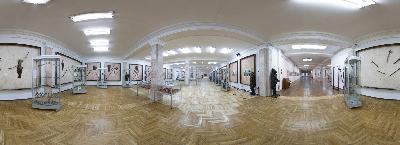
Virtual Tour


Events Archive


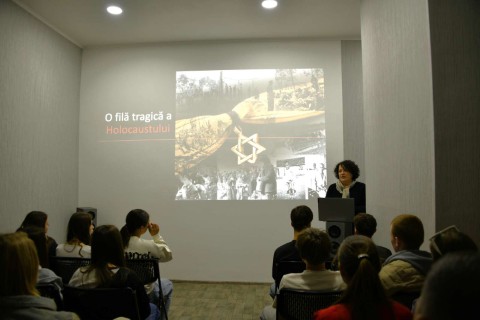
Cultural session titled "A Tragic Page of the Holocaust"

3 May 2026

On May 3, 2026, we marked 82 years since the intensification of the ghettoization of Jews in Northern Transylvania, a territory that was under Hungarian administration at the time following the 1940 Vienna Dictate.

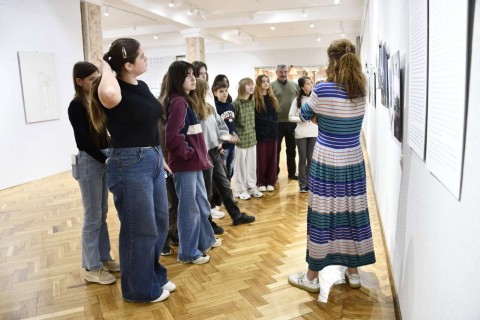
To commemorate this somber anniversary, students from the "Gheorghe Râșcanu" Gymnasium in Râșcani participated in an educational and cultural session titled "A Tragic Page of the Holocaust." The activity was led by Natalia Popovici, Head of the Public Relations and Museum Education Department.


Details>>

Concept Project: “7000 Years Under Wine”

30 April 2026

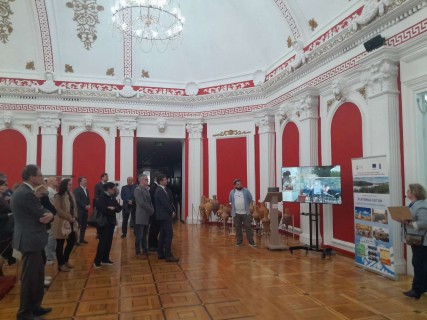
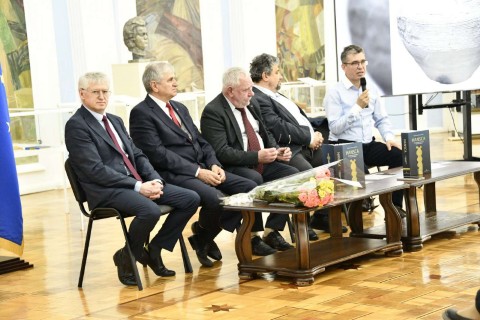
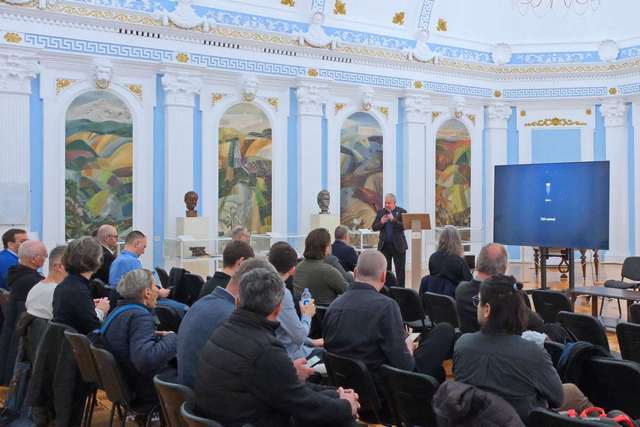
On April 30, 2026, the National Museum of History of Moldova hosted the presentation of the project concept "7000 Years Under Wine." This initiative aims to highlight the deep connection between archaeological heritage and Moldova's winemaking tradition, integrating them into the contemporary discourse on identity, country branding, and European belonging.


Details>>

The 20th Heraldry Symposium

27 April 2026

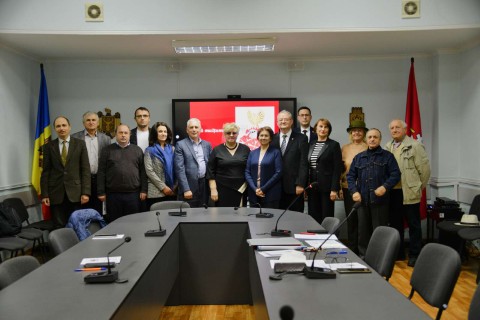
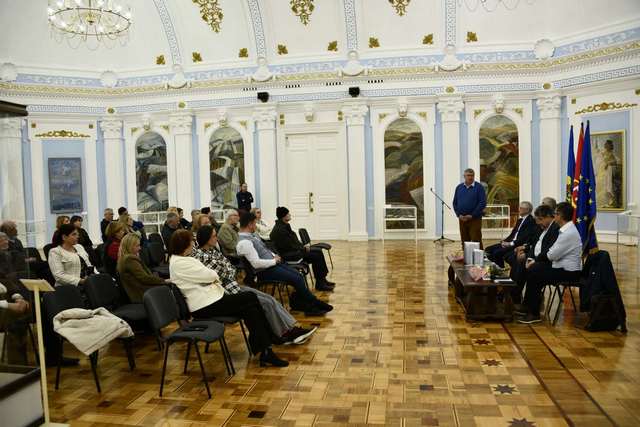
On April 27, 2026, coinciding with the State Flag Day of the Republic of Moldova, the National Museum of History of Moldova hosted, in partnership with the Society of Genealogy, Heraldry and Archival Studies "Paul Gore" and the National Heraldry Commission under the President of the Republic of Moldova, the proceedings of the 20th Heraldry Symposium.

The event was held in a hybrid format - with both in-person and online participation - and brought together researchers from Moldova, Romania, Ukraine, Lithuania, and other European countries

Details>>

Good Deeds Day 2026

26 April 2026

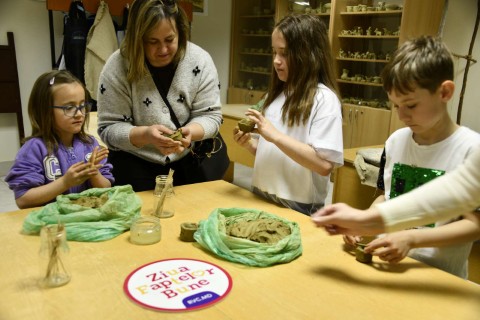
On Sunday, April 26, 2026, the National Museum of History of Moldova joined the international initiative Good Deeds Day, offering visitors four educational activities designed to bring museum heritage closer to the public and to encourage community involvement. The event was organized by the Museum's Public Relations Department and brought together pupils, teenagers, and adults in a welcoming and engaging atmosphere.


Details>>

Book Launch: „Hansca: the medieval settlement in the Lăpușna Woods”, authors: Gheorghe POSTICĂ, Ion HÎNCU, / "Ion Creangă" State Pedagogical University of Chișinău; National Museum of Bukovina, Suceava. - Suceava: Ed. Karl A. Romstorfer

23 April 2026

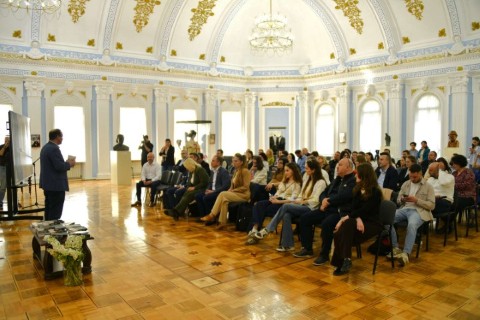
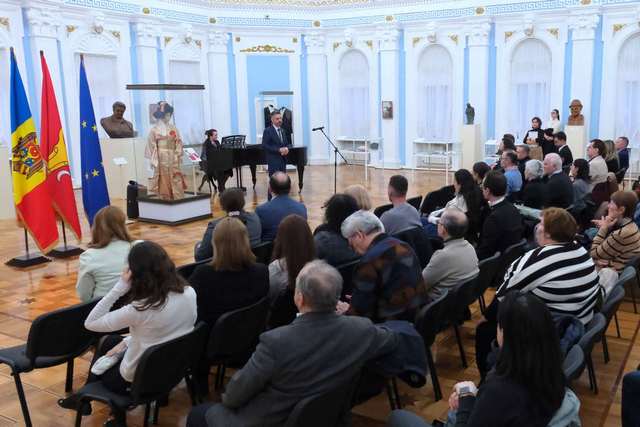
On April 23, 2026, in the Blue Hall, the National Museum of History of Moldova hosted the book launch: „Hansca: the medieval settlement in the Lăpușna Woods", authors: Gheorghe POSTICĂ, Ion HÎNCU, / "Ion Creangă" State Pedagogical University of Chișinău; National Museum of Bukovina, Suceava. - Suceava: Ed. Karl A. Romstorfer, 2025, 857 p.: ill. tab., Coord.: Sergiu Musteață, Constantin-Emil Ursu, - ISBN 978-630-6701-02-5.


Details>>

Special Guided Tour of the UNSEEN and UNSPOKEN Exhibition

21 April 2026

On April 21, starting at 5:00 PM, the National Museum of History of Moldova hosted a special guided tour of the UNSEEN and UNSPOKEN exhibition, led by the artist herself. It was a unique opportunity to discover the stories behind the photographs and engage in a direct dialogue with the author.

The exhibition showcases two powerful projects by the artist

Details>>

International Day of Monuments and Sites 2026

18 April 2026

Under the theme "Emergency Response for Living Heritage in Contexts of Conflict and Disaster," the National Museum of History of Moldova marked International Day of Monuments and Sites (18 April) through a series of events designed to educate, promote, and protect our collective memory.

The series began on 8 April with a thematic lesson dedicated to students from the "Litterarum" Lyceum. Adriana Mocan, senior specialist, delivered a public lesson in which the young participants studied four historic manor houses: Manuc Bey, Pommer, Balioz, and Vila-Mândâc.

Details>>

National flashmob "A light and a loaf of bread" dedicated to the memory of the victims of the famine of 1946-1947 in the Moldavian SSR

18 April 2026

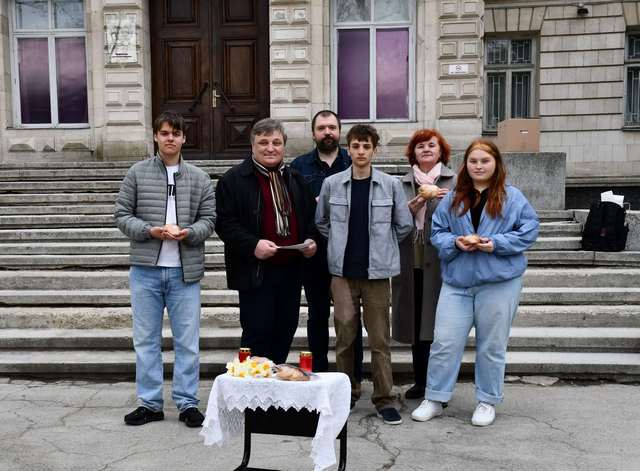
On April 18, 2026, a national flashmob with the title "A light and a loaf of bread" took place in the courtyard of the National Museum of History of Moldova, a commemorative action dedicated to the victims of the famine of 1946-1947 in the Moldavian SSR. The event was organized by the Association of Former Deportees and Political Prisoners of Moldova in cooperation with the National Museum of History of Moldova, the Metropolitanate of Bessarabia and the Exarchate of the Plains, the Diocese of Southern Bessarabia, the Diocese of Balti, the City Hall of Cahul, the Mieroszewski Center (Poland) and the Hanns Seidel Foundation (Republic of Moldova).


Details>>

Artistic Activity: "The Bridge of Friendship Between Music and Color"

8 April 2026

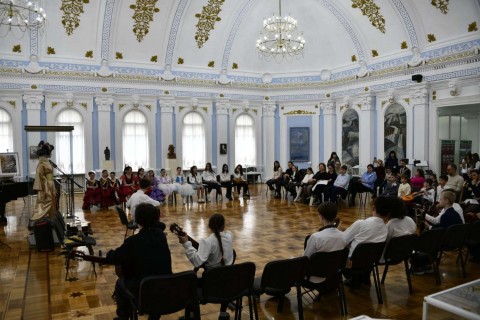
On April 8, 2026, the National Museum of History of Moldova hosted the artistic event titled "The Bridge of Friendship Between Music and Color," organized by coordinators Svetlana Sergheeva and Lucia Bobeică.

The concert featured performances by students from the "Eugen Doga" Music School in Chișinău. Additionally, students from the "A. Șciusev" Children's Fine Arts School in Chișinău contributed to the event with an exhibition of paintings and sculptures.

Details>>

Opening of the exhibition "The Famine of 1946–1947. History and Memory in Gagauzia"

7 April 2026

On April 7, 2026, the National Museum of History of Moldova hosted the opening of the photo-documentary exhibition "The Famine of 1946-1947. History and Memory in Gagauzia", dedicated to one of the most tragic pages in the history of the totalitarian-communist regime. The exhibition approach brought to the attention of the larger public documents, photographs, testimonies regarding the causes and consequences of the famine of 1946-1947 in the south of the Moldavian Soviet Socialist Republic, contributing to a better understanding of this scourge in Gagauz communities.


Details>>

Opening of the Painting and Graphics Exhibition "Queen Marie and Chisinau"

27 March 2026

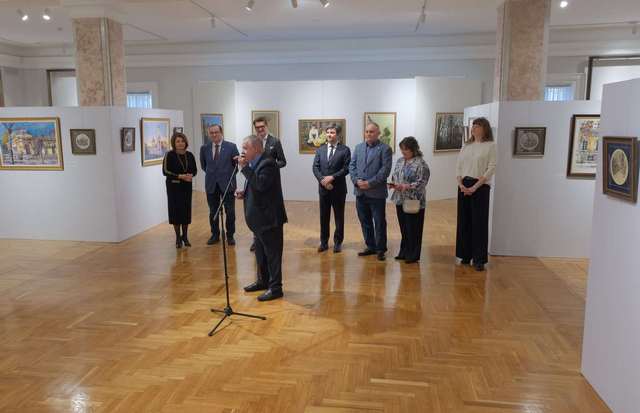
On March 27, 2026, the National Museum of History of Moldova, in partnership with the "Mihai Eminescu" Romanian Cultural Institute in Chisinau, hosted the opening of the painting and graphics exhibition "Queen Marie and Chisinau," featuring the works of artists Antonina and Vitalie Grișciuc.

The event was opened with a welcoming address by Dr. Hab. Eugen Sava, Director General of the National Museum of History of Moldova

Details>>

International Conference: "The Late Iron Age between the Baltic and the Black Sea"

21 March 2026

Between March 19 and 21, 2026, the National Museum of History of Moldova hosted the international archaeology conference "The Late Iron Age between the Baltic and the Black Sea." The event was organized through a partnership between the "Ion Creangă" State Pedagogical University of Chișinău (UPSC), Freie Universität Berlin (FU Berlin), and the National Museum of History of Moldova.

The conference marked the final phase of the Moldovan-German interdisciplinary research project funded by the Deutsche Forschungsgemeinschaft (DFG, grant ME 1253/12-1, 2021-2026). This project was carried out by UPSC under the coordination of Dr. Octavian Munteanu, in partnership with FU Berlin under the coordination of Prof. Dr. Michael Meyer

Details>>

Closing Ceremony of the Anniversary Exhibition: "35 Years of Good Deeds Together. The Margareta of Romania Royal Foundation in Images"

18 March 2026

On March 18, 2026, the Blue Hall of the National Museum of History of Moldova hosted the closing ceremony of the anniversary exhibition "35 Years of Good Deeds Together. The Margareta of Romania Royal Foundation in Images." Open to the public from February 18 to March 18, 2026, the exhibition was organized by the Margareta of Romania Royal Foundation, at the initiative of the Embassy of the Republic of Moldova in Romania, in partnership with the National Museum of History of Moldova (NMHM)

Details>>

Visit of the Greek Delegation to the National Museum of History of Moldova

16 March 2026

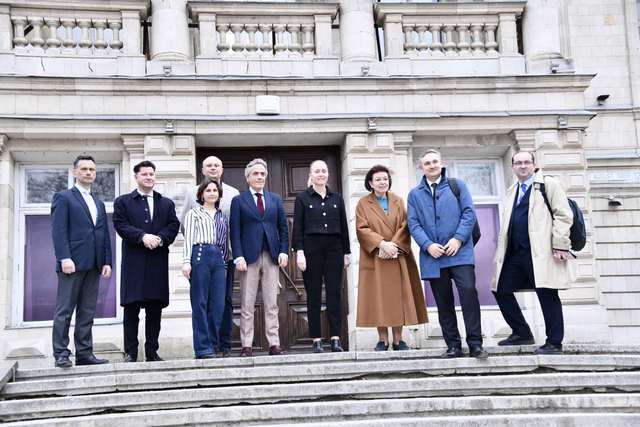
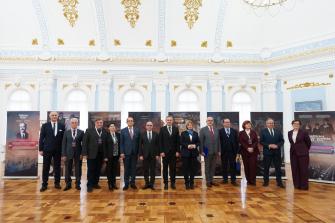
On 16 March 2026, the National Museum of History of Moldova hosted the visit to the Republic of Moldova of the delegation led by Lina Mendoni, Minister of Culture of the Hellenic Republic.

The delegation, accompanied by H.E. Nikolaos Krikos, Ambassador of the Hellenic Republic to the Republic of Moldova, Cristian Jardan, Minister of Culture of the Republic of Moldova, and Corneliu Cirimpei, State Secretary of the Ministry of Culture, was welcomed by the deputy directors of the National Museum of History of Moldova, Livia Ermurachi, Alexandru Argint, and Olga Andranovici.


Details>>

Workshop “The Concept of the Valorization of National Memory: Poland’s Experience in the Context of the Republic of Moldova”

9 March 2026

On 9 March 2026, the National Museum of History of Moldova hosted the visit to Chișinău of representatives of the Polish Presidency and the Institute of National Remembrance. On this occasion, the workshop "The Concept of the Valorization of National Memory: Poland's Experience in the Context of the Republic of Moldova" was organized, dedicated to the exchange of experience in the field of researching and documenting the past. Polish experts shared the experience accumulated over more than 26 years of activity, presenting the institutional model and the mechanisms through which the memory of the periods of oppression experienced by Poland is investigated and valorized.


Details>>

Launch of the work “Take the World into the World” by Mircea Cantor

5 March 2026

On 5 March 2026, the Red Hall of the Muzeul Național de Istorie a Moldovei - in partnership with Ateneul Național din Iași, Institutul Cultural Român "Mihai Eminescu" and Uniunea Artiștilor Plastici din Republica Moldova - hosted the presentation of the work "Take the World into the World," created by Mircea Cantor, in the presence of Cristian-Leon Țurcanu and representatives of cultural institutions from Romania and the Republic of Moldova.


Details>>

Thematic Lessons “War in Peacetime”

4 March 2026

On 3 and 4 March, the National Museum of History of Moldova hosted thematic lessons titled "War in Peacetime" as part of the Day of Memory and Gratitude, dedicated to commemorating the heroes who fell in the War on the Dniester in 1992. Together with students from the "Orizont" Theoretical High School, we discussed the War for the Defense of the Independence and Territorial Integrity of the Republic of Moldova.


Details>>

Symbols of Spring

28 February 2026

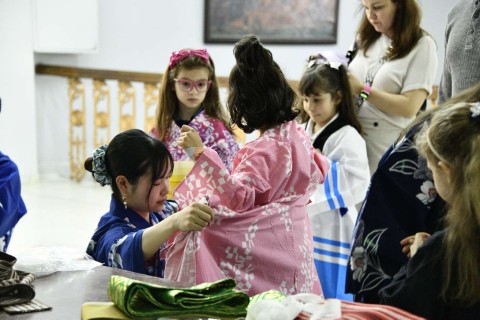
On Saturday, February 28, 2026, the National Museum of History of Moldova hosted an educational activity dedicated to the symbol of spring-the mărțișor. Through an interactive presentation, the participants discovered the origin and significance of the red-and-white string, the traditions associated with March 1st, and the evolution of this custom over time.

Organized by museum curators Galina Mirzac and Alina Parabina, the event welcomed students from the "I. Neciui-Levițchi" Theoretical High School in an accessible and friendly format.

Details>>

International Tourist Guide Day

21 February 2026

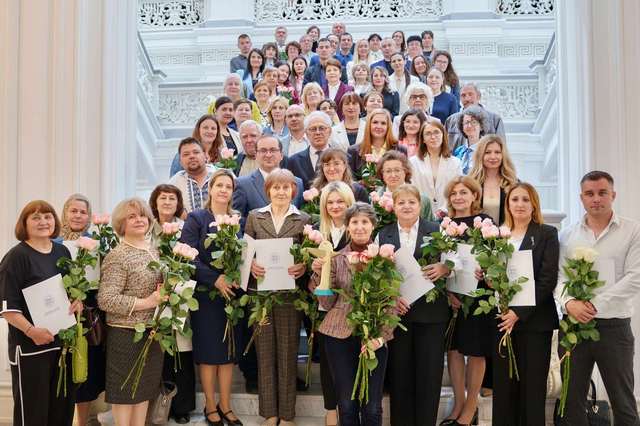
Every year on February 21, the National Museum of History of Moldova celebrates International Tourist Guide Day, which was first observed in 1990 at the initiative of the World Federation of Tourist Guide Associations (WFTGA). This day is an opportunity to express gratitude and appreciation to tourist guides worldwide, as well as to those working in museums.


Details>>

<< 1 2 3 4 5 6 7 8 9 10 11 12 13 14 15 16 17 18 19 20 21 22 23 24 25 26 27 28 29 30 31 32 >>


Independent Moldova
Moldavian Soviet Socialist Republic
Bessarabia and MASSR between the Two World Wars
Bessarabia and Moldavian Autonomous Soviet Socialist Republic in the Period between the Two World Wars
Revival of National Movement
Time of Reforms and their Consequences
Abolition of Autonomy. Bessarabia – a New Tsarist Colony
Period of Relative Autonomy of Bessarabia within the Russian Empire
Phanariot Regime
Golden Age of the Romanian Culture
Struggle for Maintaining of Independence of Moldova
Formation of Independent Medieval State of Moldova
Era of the
Great Nomad Migrations
Early Middle Ages
Iron Age and Antiquity
Bronze Age
Aeneolithic Age
Neolithic Age
Palaeolithic Age


Come to Museum! Discover the History!
  
Visit museum
Visit museum
Summer schedule: daily
10am – 6pm.

Winter schedule: daily
10am – 5pm.
Closed on Mondays.
Entrance fees:  adults - 50 MDL, Pensioners, students - 20 lei, pupils - 10 MDL. Free access: enlisted men (...)

WiFi Free Wi-Fi Zone in the museum: In the courtyard of the National History Museum of Moldova there is Wi-Fi Internet access for visitors.


#Exhibit of the Month

The grapevine plant, now widespread across the globe, traces its origins back to the Upper Cretaceous geological period, when species of Vitis Linn appeared on Earth (Mesozoic era), followed later by Vitis vinifera L., the latter already classified among cultivated agricultural plants. Most researchers link the origin of the cultivated grapevine (Vitis vinifera L.) to the wild forest species Vitis sylvestris Gmel...

Read More >>


The National Museum of History of Moldova takes place among the most significant museum institutions of the Republic of Moldova, in terms of both its collection and scientific reputation.
©2006-2026 National Museum of History of Moldova
Visit museum 31 August 1989 St., 121 A, MD 2012, Chisinau, Republic of Moldova
Phones:
Secretariat: +373 (22) 24-43-25
Department of Public Relations and Museum Education: +373 (22) 24-04-26
Fax: +373 (22) 24-43-69
E-mail: office@nationalmuseum.md
Technical Support: info@nationalmuseum.md
Web site administration and maintenance: Andrei EMILCIUC


The National Museum of History of Moldova takes place among the most significant museum institutions of the Republic of Moldova, in terms of both its collection and scientific reputation.

©2006-2026 National Museum of History of Moldova
Visit museum 31 August 1989 St., 121 A, MD 2012, Chisinau, Republic of Moldova
Phones:
Secretariat: +373 (22) 24-43-25
Department of Public Relations and Museum Education: +373 (22) 24-04-26
Fax: +373 (22) 24-43-69
E-mail: office@nationalmuseum.md
Technical Support: info@nationalmuseum.md
Web site administration and maintenance: Andrei EMILCIUC

menu
The National Museum of History of Moldova takes place among the most significant museum institutions of the Republic of Moldova, in terms of both its collection and scientific reputation.

©2006-2026 National Museum of History of Moldova
Visit museum 31 August 1989 St., 121 A, MD 2012, Chisinau, Republic of Moldova
Phones:
Secretariat: +373 (22) 24-43-25
Department of Public Relations and Museum Education: +373 (22) 24-04-26
Fax: +373 (22) 24-43-69
E-mail: office@nationalmuseum.md
Technical Support: info@nationalmuseum.md
Web site administration and maintenance: Andrei EMILCIUC